
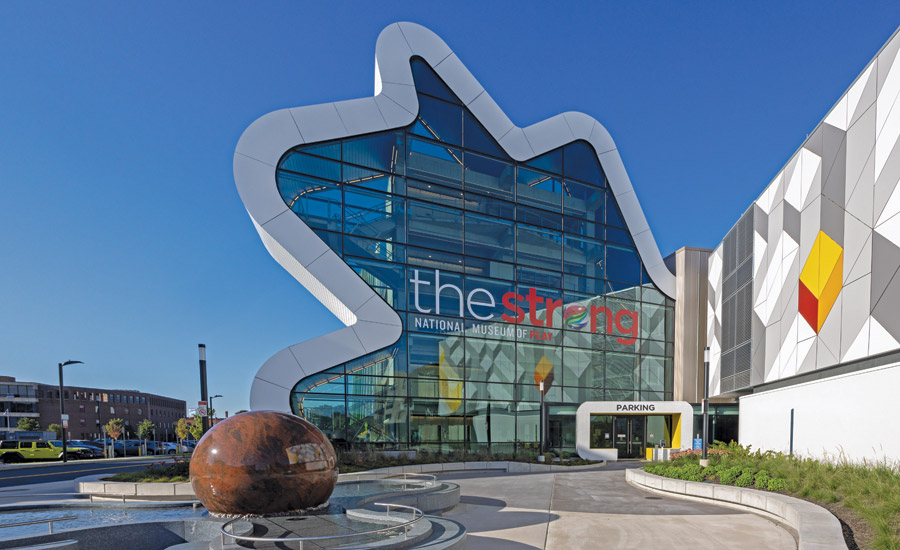
 Game Preservation on a large, professional scale is a relatively new concept. Many video game developers and publishers are just now beginning to understand the importance of preserving game code, design documents, art assets, marketing materials, and other historical treasures involving the creation of their software. Several organizations are leading the charge in this area, including the Video Game History Foundation in Oakland, California and the Strong National Museum of Play in Rochester, New York. These institutions are working tirelessly to keep the history of video games alive and safeguard the legacy of creators and development studios.
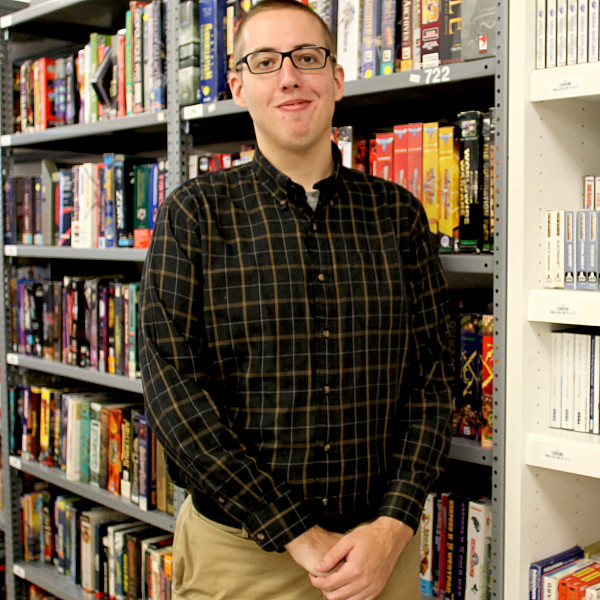
The Strong has a top-notch team, and among them is Andrew Borman, the museum’s Director of Digital Preservation. Since 2017, he has been an integral part of a concerted effort to compile, organize, and maintain the museum’s vast collection of video game artifacts. Borman has also organized two Save the Games symposiums (a third is scheduled for 2028), in which historians and preservationists from around the world have come to The Strong to share their efforts in curating the history of video games.
Mr. Borman was kind enough to chat with Sega-16 about his time at the Strong, particularly his work reviving games originally released on HEAT.Net, SegaSoft’s defunct PC platform.
Sega-16: How did you become involved in game preservation?
Andrew Borman: My story really goes back to just being a fan of video games. We didn’t have a ton of money growing up, so the amount of games that I actually owned was always quite low and more often than not came from a rental store. One thing that was always encouraged was reading, so I often always had at least one subscription to some video game magazine or picked up a random issue here or there. That was the only real insight I had into the industry. The idea of actually knowing someone who made video games just seemed impossible, so I never really knew what went into making them.
 Like many people, I was hyped for Resident Evil 2. I carried around the same issue of GamePro for months, and the one that sticks in my mind is the February 1997 issue with Killer Instinct Gold on the cover (and fittingly, the Sega Saturn SCUD game on the back). On page 36, Resident Evil 2 iconic screen shots that I’ll always remember, from zombies in jail cells, to the cool cop and motorcycle woman, all wrapped up in an interview with an actual developer! Eventually, I would be able to play the Resident Evil 2 demo included with Director’s Cut, and realized that the game looked pretty different than the magazine I had held onto for months. But hey, it was a demo! Then I rented the final game, and basically none of the things in the screen shots happened! Sure, Leon was there, but Elza was gone, replaced by Claire. No zombies in jail. None of it!
That was one of the first times I can recall thinking about the process that goes into making games. Fast forward, and I start to realize there are these games out there, some of which were actually done, scrapped, and no one would be able to play them – games like Half-Life and Propeller Arena on Dreamcast, and a few years later, Stargate SG-1: The Alliance. I realized I could be someone who could find those games. And I did!
Sega-16: Are you involved in any other efforts in the field?
Andrew Borman: I’ve participated on a number of grant projects, a few with the people over at the University of Washington. I’ve given talks around the world about game preservation. I even, occasionally, teach an online class at the University at Albany in Albany, NY all about game preservation, in addition to guest lectures. Time permitting, I like to help where I can, as we need more people participating. I can’t save it all myself!
Sega-16: The Strong has an incredible selection of console and arcade games, with many of the latter being restored for public play. What goes into the process of acquiring these vintage games? Does The Strong buy them at auctions or receive donations?
Andrew Borman: The Strong has a budget to buy things every year. For smaller purchases, like one-off games and the like, we’re able to go out there and purchase them. Bigger items, both in cost and in physical size, require a different conversation, as realistically we can’t afford to have everything. One thing that people outside of an institution don’t often think about is the actual cost of preserving materials; it isn’t as easy as buying a game and sticking it on a shelf. Everything needs to be cataloged, which goes through multiple people, often boxed up in safe, acid-free boxes. All of it needs to be climate-controlled. It needs to be secure. The building needs upkeep. Preservation is expensive, and it isn’t accidental. The long-term cost of preserving any game is often far beyond what the initial item costs. That goes for digital objects too, which have to be monitored, backed up in multiple locations on multiple forms of media, and verified.
That said, donations are really key. We have a ton of really wonderful donors, both for objects and for financial support. They are the core to any preservation institution. Whether it is one person who donates a single time or donors that help us with many things on many occasions, all of it matters. Most of the most exciting materials, development papers, source code, and that sort, are donations, and we couldn’t do it without them. The same goes for people like yourself, who are out there doing exciting work, collecting stories through interviews and weaving the history together. That work is so important. I will never be the Sega expert that you are, but I’m fortunate to have the opportunity to learn from you!
Arcade games themselves are pretty unique. We have an arcade exhibit, a pinball exhibit, and some machines scattered throughout other exhibits. They are actual museum artifacts, that we call “useifacts” (that spelling may be wrong, I’ve never written it down), so we have to think carefully about what we make playable. If a machine has no parts available, that might not be something we provide every single day of the year. We actually charge a token per play, 25 cents, which all goes into the maintenance of the machines. It would be no fun if you couldn’t play some of the games in the collection!
Sega-16: Game history preservation is quite important to you, and you’ve organized two great symposiums on the subject called “Save the Games” at The Strong over the years (the most recent taking place this past summer). Tell us how the event came about.
 Andrew Borman: Save the Games came out of many conversations in the over nine years I’ve been at the museum. Every once in a while, we would have an opportunity to host someone or fly out to an event that was either small and closed off to many doing the work or not focused on game preservation. We knew that there was an opportunity to invite anyone and everyone who is passionate about game preservation to come to The Strong, meet in person, and just talk to one another. COVID delayed some initial plans, but despite video chat becoming common, there is just so much more you learn by being together and chatting. And I do mean that it is open to everyone, that is very important. It’s not just institutions like ours doing this work. The industry itself, despite what you may hear, does care, even if you may never see the results of it, and are doing the work. It was equally as important to extend the invite to those doing this work at home, not for a paycheck, and to give them a platform, as their work is important too. I should know since I started that way!
Sega-16: How has the reception to the symposiums been from the video game industry?
Andrew Borman: Having now done two Save the Games, I think it’s been fun to see those that are, and have been, doing this work come out of hiding. The folks over at PlayStation gave their first public talk ever at Save the Games in 2024, and even Rebellion from the UK in 2026. Add in many people who attended and didn’t present, and it has been amazing to see. There is always some caution. Private companies aren’t known for wanting to share their secrets, but I think most are realizing that if there is any conference to talk about their work, it is this one.
Sega-16: Some publishers, like Sony, seem to be finally understanding the importance of preserving their history. What do you think can be done to get more of the game industry onboard?
Andrew Borman: It starts with simply not keeping things a secret. I would guess that many companies at this point have, at the very least, someone in charge of keeping an eye on their repositories. It might not be their only job, but there is already someone caring. Many others have held onto material, and despite the gamers on the outside thinking material is completely gone, that isn’t always the case, though it has certainly happened. Some might just not know what they have because it’s in four different closets around their campus. Others probably don’t know how to best digitize a floppy disk, but they open up, maybe not the materials themselves, but to conversations. I’ve had many conversations with those in the industry, offering my help where I can. Ultimately, for outside institutions to have a chance of preserving anything, we need someone internally to decide they care first.
People need to stop treating games like completely unique artifacts. There is this want to start from scratch, to say that we, as gamers, have come up with everything, that we will be the ones that will preserve history, and it can only be us. But that isn’t necessary! Digital preservation exists outside of video games. Preserving paper material exists outside of video games. Digitizing old discs and disks exists outside of video games. There have been best practices in the field of preservation long before anyone ever thought that video games are worth preserving. Let’s work together with people outside of video games to at least get us that far. Then that leaves us with what truly is unique to video games, be it the copy protection, the servers, the very idea of interactive media, things that we can apply our attention to. But even still, we shouldn’t do this alone. Save the Games is and has been about building connections as much as it is the presentations to learn from each other. We don’t need more division that pushes people away. The only way we can preserve video game history is through cooperation.
Sega-16: How did the Strong acquire the data for Heat.Net titles?
Andrew Borman: The Strong did not acquire it, I acquired data prior to my time at the museum, around 2016 from a defunct studio, though sooner, rather than later, it will be donated to The Strong.
Sega-16: What kind of process does the data undertake once it’s in the Strong’s possession (cataloging, photos, etc.)?
Andrew Borman: On my end, I digitized the original media, and created a loose inventory of projects contained within them. I then created a loose inventory of projects contained within them, trying to identify titles, people involved, and other unique items along the way. Not every disc could be 100% digitized due to media failures over the 20 or so years prior to me receiving them, but most could be. Identifying the HEAT SDK was key, as without that there would be no documentation to start from, which would make it much more difficult to get working! I would still love to find a later SDK, not knowing what might have been changed in the years that followed, along with any Heat website/client code. Everything right now is the best guess, and really isn’t preserving the experience as it was perfectly, but replicating it the best that I can tell. The lack of recordings due to the time period means there is more guess work than I would like!
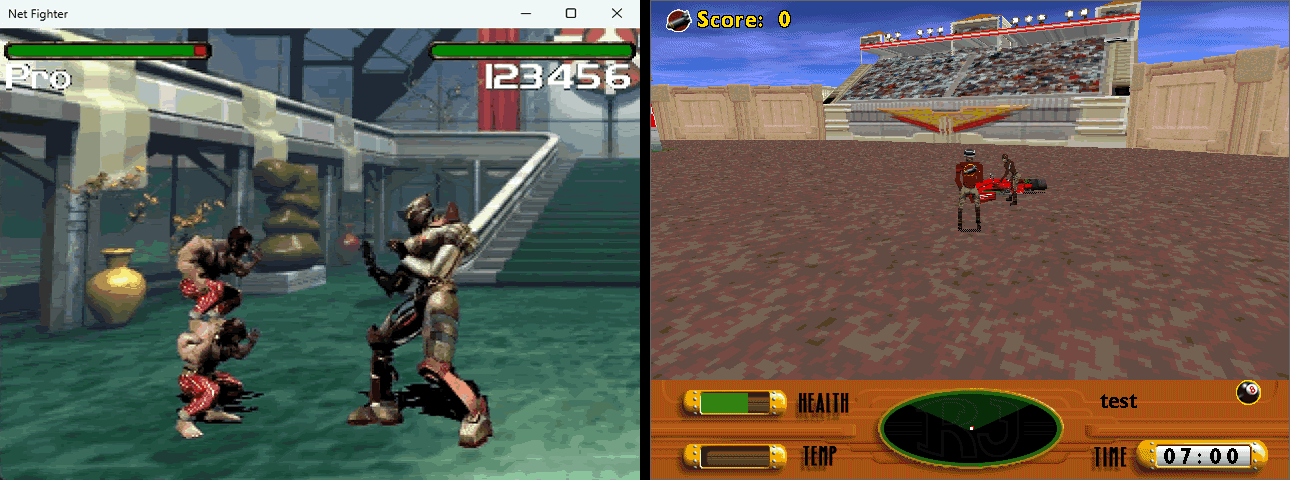
Sega-16: I saw that you have code for games like SCUD: The Disposable Assassin and Net Fighter. Are there any others?
Andrew Borman: I only have code for Net Fighter and SCUD, along with the Heat SDK. Most of my work has focused on using retail versions of the games that are just the standard box copies, as I want it to be as authentic as possible. I have also gone through old HEAT trial discs, website backups, and files included on retails discs to find more games and trials that would have been made available. At this point, I’ve toyed with HEAT for quite a few years, going back to the early days of COVID, with moderate success.
Sega-16: Are they complete or in various stages of development?
Andrew Borman: The code for Net Fighter likely isn’t the final, updated version of the game, based on version numbers I’ve found reference to on the old Heat website, but should be pretty close to the initial release. Similar story with SCUD, where I can’t quite confirm that it was the absolute final version, but it is close enough to be useful.
Sega-16: What kind of process did you have to use to get the games running?
Andrew Borman: The most successful way I have gotten things running is using the original HEAT SDK, and wiring up all of the pieces to run in the proper order. I’m not much of a developer myself, but I can poke around and get things working well enough and am lucky enough to have a few people to bounce ideas off of when something doesn’t work.
The biggest challenge is figuring out exactly what launch arguments a game either wants or needs. Players would sign in on the HEAT website and launch games through the browser, which looks like it would load a local launcher before getting into the game. If you are lucky, the majority of the launch arguments can be seen as strings through a hex editor. Another challenge is the lack of documentation. It isn’t always clear when a game had a specific HEAT launch path or when it used IPX tunneling for multiplayer. The user manuals often aren’t any help, and the Internet Archive didn’t pick up every game that was on the service, though I would be lying if I said it wasn’t a huge help!
Looking ahead, I think this is an area where AI could accelerate things, as at this point the biggest issue is the tedious work of adding one game at a time, knowing that no human developer has done anything with HEAT since it was shut down!
Sega-16: In cases where the Strong acquires software for a new platform, do you have the means on-site to restore software, or have you had to procure special tech like development kits?
Andrew Borman: While this project isn’t related to The Strong, the focus at the museum is to be able to do as much of the digitization work in-house as possible. We have tools to backup many of the most common formats, including cartridges, optical discs, and magnetic media. We have the ability to acquire hardware and software as needed, and have done a number of grant-funded projects that allowed us to rapidly increase what we are capable of handling. Development kits are certainly a tool that we use, though they often aren’t completely necessary now.
Sega-16: You were able to get two computers connected and working for a preview version of an unreleased HEAT.Net RTS title called Heat Warz. What can you tell us about the game?
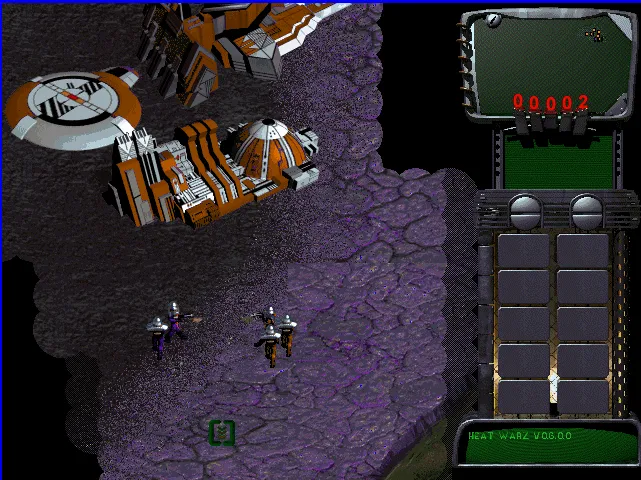
Andrew Borman: Heat Warz seems to have been used in early testing for the HEAT.net service. From what I can tell it didn’t make it to the final service, but if it did, it would have been short lived. The game loads directly into one map, and it doesn’t seem like there are any additional pieces of content to be found. The game itself seems basic at that point of development; I don’t see a way of building additional structures for instance. Instead, you are building more units based on your resources, which go up automatically based on how long you have been in the game. It’s one I would like to dig into some more to see if there are any more hints in the files as to what could have been.
Sega-16: What are the plans for Net Fighter and the other online titles? Will you try to make them available at the Strong for play, or are there any limitations to how you can use the software?
Andrew Borman: After it ultimately gets donated to The Strong, I would love to find some creative ways to make it accessible to people under current copyright law. On the plus side, games like Net Fighter were freely distributed online, so if any game has a chance of having a wider audience, it would be that one. I have a few other ideas in mind to celebrate the game, too, but haven’t had time to follow up on them yet, including bringing the game down to the Rochester fighting game community to put it through its paces.
I am also looking into building a mobile rig that could travel to game conventions and the like, and allow people to experience HEAT multiplayer. Being that the games are old, the issue is just acquiring multiples of the same hardware for consistency’s sake.
Sega-16: Are there any other unmentioned SegaSoft titles the Strong has that might soon be resurrected?
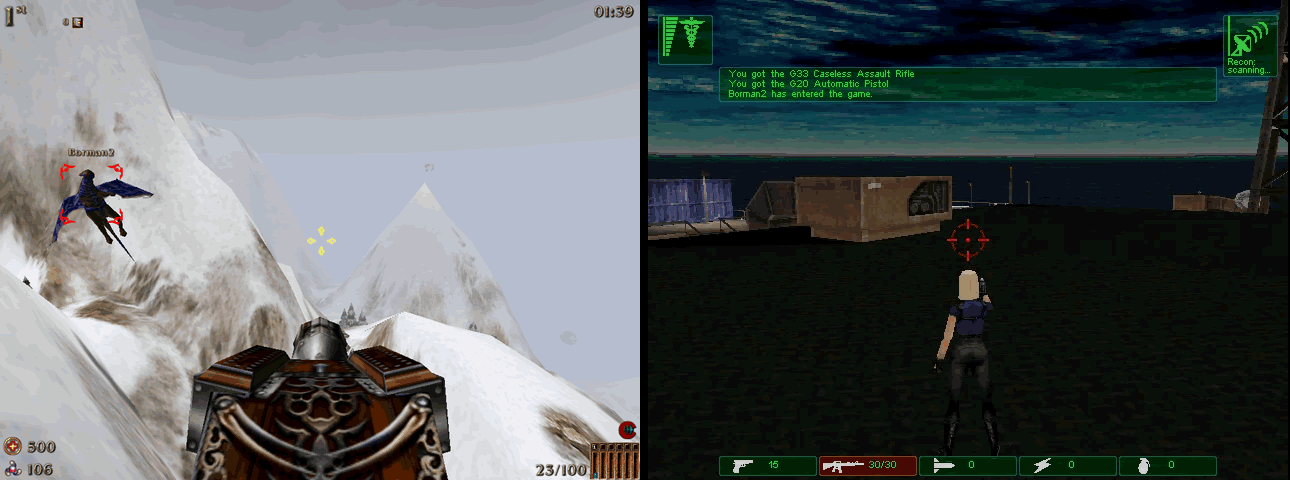
Andrew Borman: Nothing that ran on HEAT is off-limits. There is something like 35 games that work as of when I am writing this, though admittedly they haven’t been tested thoroughly given it is largely just me working on it, but they get in-game, have live chat, and seem to function as they should. Even a demo version of 10six, a massively-multiplayer title that was revived as Project Visitor, loads into game, though that one would require a lot more work to have properly functioning.
One of the more time-consuming aspects is figuring out what combination of graphics wrappers and patches will make a game function properly on modern hardware. Some games are using software renderers, some will use 3dfx, others will use Direct 3d, and even with the exact same files it doesn’t always work identically on modern PCs with different hardware. That’s why, should I do a mobile setup, I want to use identical configurations to limit the amount of tinkering I need to do. You can get past the 16-bit installer using some open-source projects on GitHub, but even that can be inconsistent. Just the reality of dealing with legacy games at this point!
Our thanks to Mr. Borman for taking the time to chat with us! For more information on The Strong’s preservation efforts, head over to their website, and be sure to check out their research archive. If you’re interested in more information about Save the Games, head over to the symposium’s web page.
Recent Comments