
I’ve long been a fan of Capcom’s 1987 arcade classic, Black Tiger, and it was always frustrating that the game never got a home port. Well, not one that I could play, anyway. It was converted for several computer formats. None of my friends had a home computer in the late 1980s, so I hoped it would arrive on the NES or Master system. It never did, but my hopes were renewed with the Genesis, especially after Sega reprogrammed several Capcom arcade titles, like Forgotten Worlds and Ghouls ‘N Ghosts. Again, I was left heartbroken.
After more than three decades, it looks like indie developer rester159 is giving us the home port I always wanted. His project takes Capcom’s action/adventure game and reimagines it for the Genesis, creating a fresh, ground-up version using the robust and popular Sega Genesis Development Kit (SGDK). Rather than simply emulating the original, this version is built from the ground up, running native code to truly capture the essence of the combat, exploration, and stage progression that made Black Tiger so memorable. Doing it this way means accounting for the hardware differences. For instance, to ensure the visuals fit within the capabilities of the Genesis, the art assets were converted into native tile patterns and sprites, all designed for a 256×224 display area. Since the Genesis has fewer color registers available at once, background elements and enemy sprites share limited palettes, resulting in some minor color differences when compared to the arcade version. Lastly, every level from the original coin-op is included, but some adjustments had to be made to suit the Genesis architecture. Building from scratch means that some new features have been added as well. For instance, Black Tiger will now have visual parallax scrolling in certain stages, adding a sense of depth that the coin-op original lacked. There’s also a SRAM feature to save your high scores!
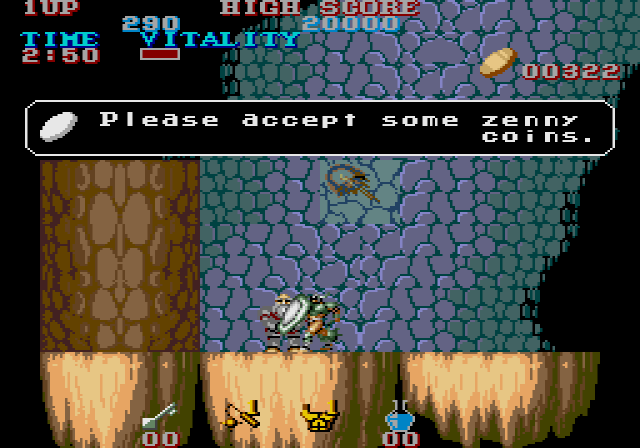
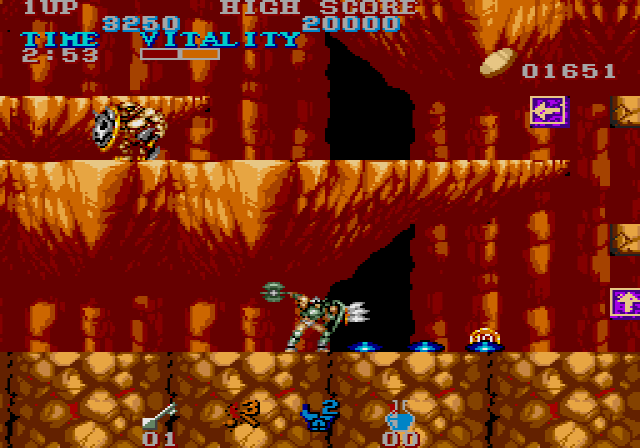
Rester159 is working hard to make the experience as authentic to the original as possible, but he’s gone beyond a purely one-to-one conversion, Players can choose between two distinct gameplay modes, Arcade and Home. Arcade mode is what you’d naturally expect: a faithful recreation of the classic arcade experience, complete with coin credits, initial attract sequences, and simulated DIP switches. The new Home mode is more tailored for console play, skipping the insert-coin mechanics and offering standard options, a dedicated gauntlet featuring all the main bosses, and a classic cheat code that unlocks developer tools like invincibility and level selection. Plus, this mode includes an optional jump assist feature to help players navigate a notoriously tricky platforming challenge in the seventh stage.
The audio has been totally revamped to be compatible with Yamaha FM synthesis and PSG chips, but since the hardware generates sound in different ways – particularly with noise channels and volume scaling – the audio balance does vary a bit from the arcade version. Plus, during those intense battles or when there are tons of sprites on the screen, you might catch some brief hiccups in smoothness, as the internal processing can occasionally have a tough time keeping up with a steady 60 frames per-second.
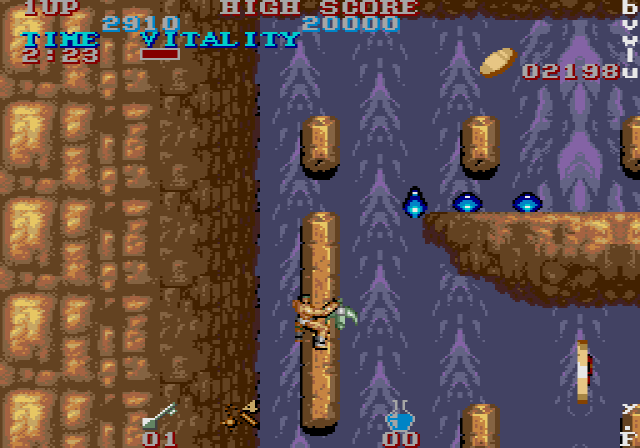
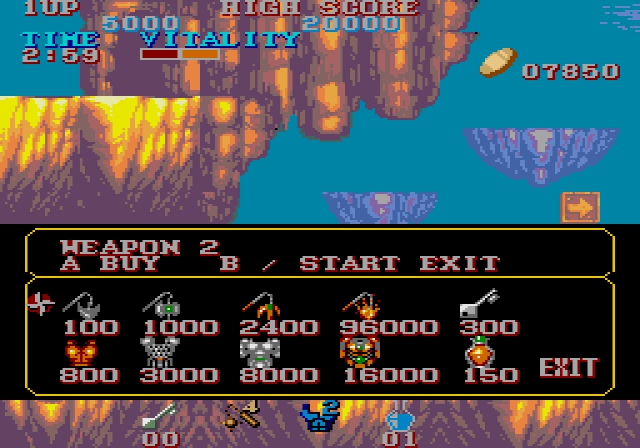
So, what we’re getting won’t be a 100% accurate port, but that’s okay. The other Capcom titles I mentioned were retooled for the Genesis as well, and they turned out great. I’d rather have a port optimized for the Genesis that one that struggles to pull off a direct conversion, and rester159 appears to be on the right track. There’s not timeline for a release, but you can download the fully playable and complete public beta here (compatible with flash carts, emulators, or MISTer FPGA), and even chime about any bugs you find or suggestions you may have. A great deal of progress has already been made, and I simply cannot wait to play the finished product.
Recent Comments