
Halloween is here! That means it’s time to check out what games to play this season. We’ve already discussed a few for the Genesis, so why not try out some of the spookier games for your 8-bit consoles? The Master System and Game Gear may not have as many as their 16-bit brother, but they have enough to keep you playing until you’ve eaten all of the candy you bought for those neighborhood kids who “didn’t show up” (we all know the truth, but your secret is safe with us).
I realize that there are a ton of games on the Master System and Game Gear that have some kind of monster in them, but I didn’t want to just throw any odd creature in here. Being that it’s Halloween, I wanted to keep this list more traditional. Titles like Space Gun and Kenseiden have monsters in them, but they’re not necessarily horror themed. That reality makes this list much shorter but more appropriate to the spirit of Halloween, I think. Give me werewolves, mummies, and vampires for a classic spooky holiday!

 You knew that Alien Syndrome had to be on this list. Undoubtedly inspired by James Cameron’s Aliens, it sets you against a set time limit to rescue your shipmates from ships infested with creepy space creatures just itching to be shot in the face and make for the exit before the whole place explodes. You’ve played it the arcades and on Master System, and the console did a bang-up job of recreating that experience, but the Game Gear version is even better. It’s a sequel that takes place a decade later, and although its only single player, it makes several enhancements to the gameplay that make up for the inability to kill aliens with a friend. There’s a larger assortment of creatures, the map is easier to use, and weapon power-ups can be stacked. It’s a bit short (only four stages), but they’re long enough that the whole thing doesn’t feel like it ends too quickly.
Alien Syndrome is an all-time Sega classic, and the home ports are wonderful ways to experience that arcade magic. If you don’t mind playing alone, the Game Gear release is a great time, but if you have a friend willing to blast some aliens, the Master System cartridge is the way to go. Whichever of the two 8-bit versions you decide to play (note: the Game Gear release is a PAL and Japanese exclusive), you can’t go wrong.
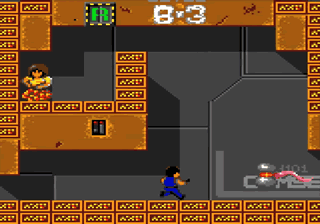
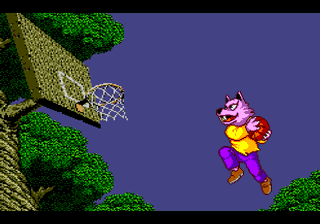 Back in the 8-bit days, fans of the Sega Master System didn’t have a ton of basketball titles to choose from, but Basketball Nightmare tried to make a name for itself in Europe and Brazil as a quirky alternative to the usual sports fare. Instead of the typical licensed NBA teams, the game takes a wild turn, featuring a high school team that gets whisked away into a bizarre dream world. where they face off against six teams of monsters (think vampires, wolfmen, and cyclopses), all in a quest to snag that championship title. It’s odd and simple but entertaining for a while.
Even though it had a fun concept, charming graphics, and some pretty cool dunk animations, the game falls a bit short with its straightforward and repetitive gameplay. It also has just one annoying music track and a rather dull two-player mode that only allows human teams. While it can be a blast for a quick session, Basketball Nightmare doesn’t quite hit the mark, leaving it as a decent but somewhat underwhelming entry in the relatively thin monster-sports genre. Seriously, why aren’t there more games like this? You’ll enjoy Basketball Nightmare for a while, if only for the concept, but I would love to see someone bring it back and give us a monster-led basketball tournament done in NBA 2K style.
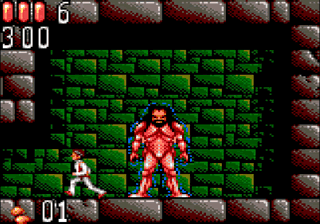 I can already see your face upon seeing the logo above. If you’ve played the Sega CD version of Bram Stoker’s Dracula (the Genesis game isn’t all that bad), then your expectations are probably already low coming in. Well, surprise! This one’s actually pretty good! Developed by Probe Software and released on both Master System and Game Gear, the 8-bit versions are side-scrolling action games that look more cartoony but have gameplay that’s a lot more fluid and entertaining than the Sega CD release. You still play as Jonathan Harker, though he looks more like a hippy, and you go around smashing Super Mario Bros.-like question marked boxes as you chase Dracula down to confront him. Like the other renditions, it only borrows loosely from the film, but the overall theme is intact, and there are plenty of ghosts and other creepy crawlies to put down across seven levels. Each one is divided into two sections: daytime and nighttime. Jonathan always has a dagger in each one, but there are a few power-ups that give him stronger attacks. They’re limited, but Van Helsing can be found during the day stages to get bonus items to make the journey easier.
I think the reason the Sega releases of Bram Stoker’s Dracula are all over the place in quality is because each one was made by a different developer. Probe Software did all the 8-bit versions and managed to create a fun action title that remembers its license just enough to be a decent tie-in. It didn’t set the world on fire, and it didn’t have the intense visuals of the other renditions, but it played well and was actually fun. I know I missed out on it back in 1993 because the Sega CD game practically ruined the license for me. It’s too bad it took me so long to discover it, as it would have been a fun little romp to experience on the Game Gear, and it would have gone a long way towards making me forget Keanu Reeves’ digitized death scream FMV.

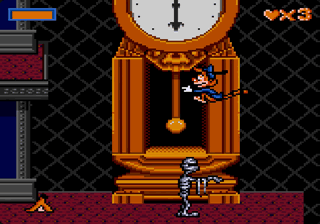 I have to admit, I wasn’t even aware that there was a Bonkers game for Game Gear (and Master System in Brazil) until I began working on this article. I was familiar with the Genesis game, having spent a lot of time showing all the Sega Club titles to my kids when they were little (training begins early for younglings), but I didn’t have a Game Gear then, so this one slipped past me unnoticed. I’m glad I found it, though. It might not be a triple A title, but it was a lot of fun for the short time it lasted.
Inspired by same Disney animated series as the 16-bit release, Bonkers: Wax Up! takes players on a wild adventure with the lovable cartoon character turned cop. In this game, Bonkers finds himself navigating the creepy halls of Madame Who-Said’s wax museum, where a villain has sinister plans for Bonkers’ partner, Lucky Piquel, slowly transforming him into a wax statue to draw Bonkers into her collection.You then follow a trail of pickles left by Lucky, making your way through expansive, multi-level platforming stages filled with spooky foes. To progress toward epic boss battles and rescue Lucky, you need to track down all seven hidden pickle clues in each level using a handy built-in compass radar.
The gameplay goes beyond just jumping and running and encourages a good deal of non-linear exploration for a kids titles through interconnected staircases. There are also some unique bonus levels that you can unlock by saving Bonkers’ friends. In these fun mini-games, you hop on a railbound office chair, dodging obstacles while collecting extra health, lives, or parts for the “Toon Toaster,” a special weapon that can bring back previously waxed cartoons. The solid gameplay and fun stages packed with secrets make Bonkers: Wax Up! a surprise entry on this list for me but one that I’m glad I took a chance on.

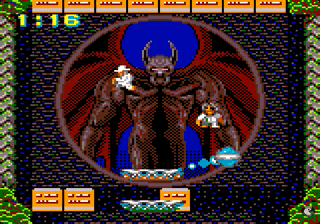 Devilish takes the classic Breakout paddle-and-ball concept and transforms it into an exciting, albeit short, action-adventure experience. Instead of keeping you confined to a single screen, clearing out the initial bricks and enemies makes the stage scroll both vertically and horizontally. This adds a layer of challenge as you must guide the ball through narrow corridors, dodge traps, and race against the clock, often with less than two minutes to spare per stage. To tackle tricky obstacles like shifting waterfalls and pesky monster heads that trap the ball, you can switch between four different paddle setups. The main configuration features a stationary paddle at the bottom and a movable one at the top, which allows for quick maneuvering through bricks and foes.
Even with its inventive mechanics and ambitious design, Devilish does have a downside: it’s quite short. Over the course of its eight brief stages, you encounter only three bosses, with the final showdown against the notoriously tough Gamma being particularly challenging due to its well-guarded weak spot. While options like a Time Trial mode and a Hard difficulty setting offer some replay value, the overall experience feels more like a demo than a fully fleshed-out game. Still, developer Genki has managed to create a refreshingly engaging twist on the genre, setting the stage for a sequel on the Genesis, that was somewhat better but still short of what a 16-bit version of this concept could be.
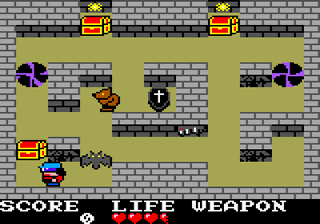 Habit Soft first brought its single-screen action title, Dracula’s Castle, to the Game Boy in 2019 before porting it to the Game Gear and Mega Drive two years later, where it was sold exclusively in Japan by Game Impact. It completely flew under my radar at the time, and when I finally did learn about it, I couldn’t buy a copy because Game Impact doesn’t ship overseas. Thank god for the second-hand market!
Dracula’s Castle isn’t a complex title, and the storyline is quite straightforward: Dracula has kidnapped Princess Psycho from an 8-bit world, and it’s up to you to navigate through various rooms to collect three treasure chests in each stage to unlock the exit door. At its heart, the gameplay is all about quick arcade action, where you must dodge bats, werewolves, and mummies while gathering items from chests (think knives, rescue drops, and single-use fire attacks). Since fire is the only weapon that can take down mummies, managing your resources and moving carefully is crucial to making it to Dracula’s lair.
Dracula’s Castle on Game Gear adds color but lacks the slew of enhanced presentation and two new game modes included with the Mega Drive release. It also has its own issues. The enemy AI isn’t too smart, and the monsters walk around in set patterns without really chasing you. Also, you only have one reusable weapon, the knife, and just like everything else, it’s in a random location. That makes things extra difficult, especially when you unlock a mummy instead of fire. Still, those looking for something to play on their portable in short spurts would do well to find a copy. A word of warning, though. There are a decent number of lives and continues, but there is no password or save feature, so be prepared to traverse all 32 stages in a single go.
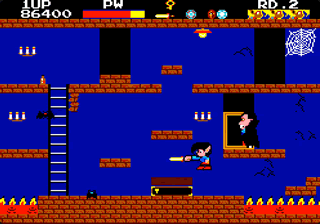 Ghost House perfectly showcases why simple, arcade-style gameplay still holds a special place in our hearts, even in a world filled with complex modern games. In this fun little action romp, you take on the role of Mick, who bravely ventures into a haunted mansion to retrieve his family’s jewels from six pesky vampires. To make progress, Mick has to punch or toss knives at various monsters to snag keys, unlock hidden coffins, and take down the vampires lurking inside, all while making the most of clever house mechanics like lamps that freeze the screen and paintings that warp you around.
While the game has a fun concept, it does come with its share of retro quirks and some pretty tough challenges. You’ll notice things like a limited variety of enemies, reversed attack and jump buttons (why do so many Master System games do this?), and those pesky knock-back mechanics, where getting hit can send Mick tumbling into fire pits or off ledges, demanding a good bit of memorization and that classic old-school practice to really get the hang of it. Still, Ghost House stands out as a delightful, budget-friendly retro gem that offers a satisfying challenge, especially when you’re looking for a quick gaming session.

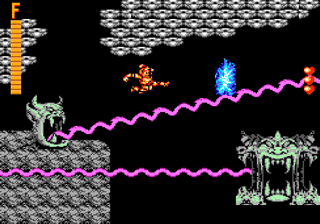 Of course, we included the Genesis version of Ghouls ‘N Ghosts in our piece on that console’s games for Halloween, but the Sega Master System version deserves a spot of its own. Rather than a watered-down port, it’s a remarkable 8-bit “demake” (only 2Megs) that takes the arcade classic and gives it a fresh twist, making it one of the best titles on the platform. Most of what you remember from the arcade game are here (Sega did alter some level layouts and changed enemy placements), but instead of the usual mechanic of breaking treasure chests to upgrade your weapon, when you defeat enemies, they sometimes drop doors that lead to shops where you can buy health or magic refills and upgrade your gear. This port also eases up on the series’ infamous difficulty by changing how Arthur’s armor works: with upgraded suits, he can take up to four hits before they break, which is a big change from the usual one-hit knockouts the series is famous for. To me, this makes the game arguably more fun than both the arcade and Genesis versions.
On the visual and audio front, Ghouls ‘N Ghosts is a technical flex for its time, showcasing bright colors, intricate backgrounds, and impressively smooth character animations, even on Sega’s 8-bit hardware. While you might notice a bit of slowdown and flicker here and there, the stage designs and classic enemies are still easily recognizable. Plus, the fantastic 8-bit soundtrack is a real treat, with arrangements that even outshine the music from the Genesis version, solidifying this port as a true gem in the Master System lineup.

Here’s another one that never made it to the U.S. I would have to loved to play Laser Ghost back in the day because I’m a big fan of light gun games. Any new titles I could find would have definitely made it into my library, and it would been a real treat play the home version of this great System 18 game because it’s a bit different. Unlike the coin-op original, where you play as a trio of monster hunters who are out to retrieve a young girl kidnapped by monsters, the Master system port is a single-player affair that has you answering the telepathic call of Catherine, a young girl who’s been snatched away by sinister specters from Ghost City, an evil metropolis that appears ever 13 years to find human souls. You not only have to help Catherine escape from Demon Manor but also help her save her soul from Ghost City before the place vanishes. She wanders around the screen while you shoot en enemies and projectiles to keep them from hurting her.
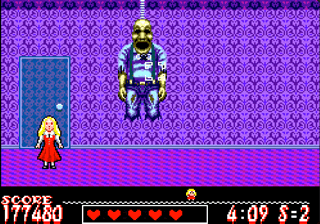 You can dive into the action using either the Light Phaser or a standard controller, but you know the only way to play this is with Sega’s awesome gun. There is some use for that little controller if it gets too lonely, though. Just connect it to the second-player slot if you want to unleash some screen-clearing special attacks alongside your regular shooting. To be fair, the controller is an acceptable alternative if you don’t have a gun or are playing on an HDTV, but I need to play these games the way they were intended to be played. Laser Ghost’s gameplay depends on having the light gun to create the arcade experience more than most of its Master System contemporaries, too. It’s all too familiar to players who enjoyed Exidy’s arcade light shooters of the early 1980s like Crossbow and Cheyenne. Instead of simply shooting everything, it’s up to you to protect Catherine from the onslaught of ghosts and nightmarish creatures that threaten to drain her lifebar as she moves across the screen. Interestingly, one of Laser Ghost’s standout features is the ability to shoot Catherine directly. While it does cause her a bit of damage, it can also cleverly push her out of the way of more dangerous monster attacks. Can’t make an omelette, I guess…
I thought that Laser Ghost would suffer from the downgrade to the Master System, but it still manages to offer an intense, action-packed arcade experience tailored for Sega’s 8-bit hardware. The presentation is great, and you can shoot all sorts of elements of the environment, like windows or even snuff out candles (which make the room go dark). A PAL-only release late in the Master System’s life cycle probably denied it more attention, but now is a perfect opportunity to grab a light gun and go monster hunting.

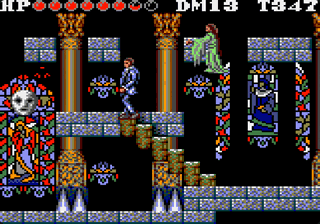 Often hailed as the closest Sega fans got to Castlevania before Bloodlines arrived in 1993, Vampire: Master of Darkness first appeared on the Game Gear before losing the Vampire title for a Master System release. Developed by SIMS, it really captures the eerie, gothic vibe of Konami’s beloved series and almost makes you forget that you’re playing a different series. You step into the shoes of Dr. Ferdinand Social, a psychologist on a mission to uncover dark rituals, solve brutal murders, and thwart an attempt to bring Count Dracula back to life, all while navigating through five unique stages. What really sets Vampire apart is its impressive visual and audio presentation. With comic-book-style cut scenes, richly detailed backgrounds, and responsive controls, it creates a cinematic and chilling atmosphere that’s wonderful on the Game Gear (headphones are definitely recommended to enjoy the soundtrack to its fullest).
All that aside, Vampire does have a few design hiccups that prevent it from fully living up to its NES counterpart. The boss battles, for instance, lack diversity, leading to repetitive showdowns with characters like Count Massen instead of introducing a wider array of classic horror villains. On the flip side, while the regular enemies come with a mix of aggressive attack patterns, the developers went a bit overboard with healing items scattered throughout the levels, making the game feel a tad too easy. Still, it stands out as one of the best alternatives to the Castlevania experience on the Game Gear. The Master System version is just as good, so unless portability is an issue, you can’t go wrong with the console release.
So, there you have it! A handful of spooky titles to play with the lights off and headphones on. Halloween is one of the most fun times of the year, and Sega’s 8-bit hardware does a fine job of giving you options to enjoy it in style. Enjoy your candy, stay safe, and happy gaming!
Recent Comments