
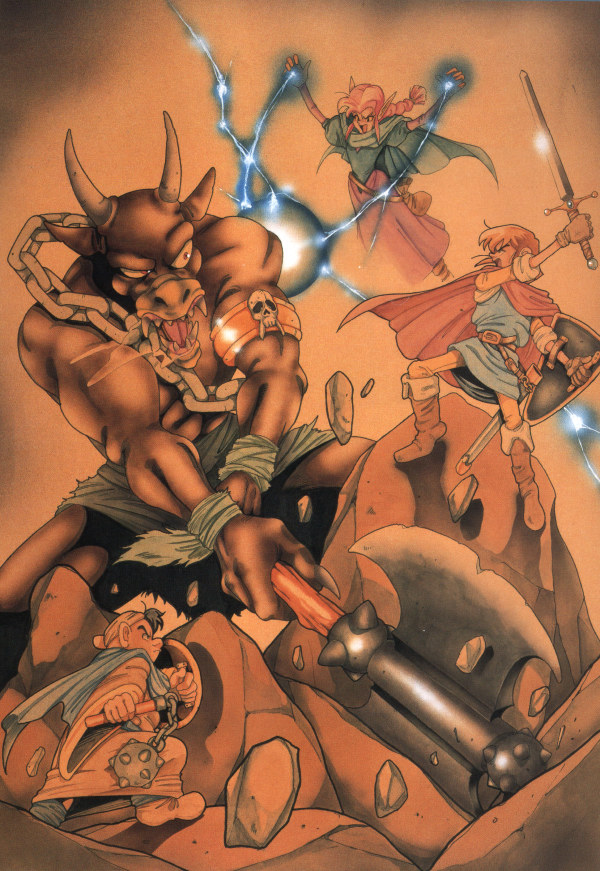
Almost as quickly as Nintendo fans cite The Legend of Zelda or Final Fantasy as one of the premier RPG franchises on their favorite consoles, Sega fans will certainly mention the Shining series of games. After Phantasy Star, the long-running line of titles has remained one of Sega’s mainstays in the genre. Starting in 1991, there have been almost two-dozen entries across a multitude of Sega hardware platforms. In fact, only the 32X and Dreamcast bear the unfortunate distinctions of not having a Shining game (Timestalkers isn’t an official entry).
One of the things that makes the Shining series so popular is just how diverse it is. Over the years, there has been everything from dungeon crawlers to action/RPGs and strategy games. The variation in gameplay made every title feel fresh and distinct from the others, but the fact that they were all part of a shared universe kept each new entry familiar. Moreover, the entire series used the same menu system, which meant that once you played the first game, you could easily navigate around every other one afterward.
There have been several developers of Shining releases, but all of them continued a line begun with the 1991 Genesis classic, Shining in the Darkness. Crafted by a small team known as Climax, it set the foundation for every other release to come, and it introduced Genesis owners to a dungeon crawling masterpiece that awed them with its cartoony visuals, amazing magic effects, memorable characters, and stellar soundtrack.
Different Paths, Same Destination
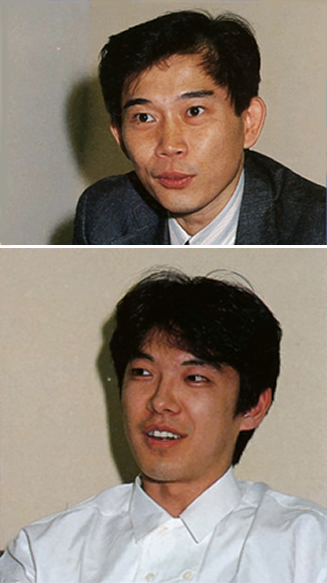
For a series so readily identifiable with Sega, it’s amazing to think that its base DNA originates in an RPG brand that most fans of the 1990s equate with Nintendo. Sega may have published Shining in the Darkness, but the game emerged from the minds of a new studio started by two men, Hiroyuki Takahashi and Hiroshi (Kan) Naitō. They met at Chunsoft, the company that made the Dragon Quest games for Enix, a publisher long-associated with Nintendo. Their combined experience in the video game industry before setting out on their own was surprisingly short (less than three years), and it seems incredible that either man ever even became involved in game development at all.
Takahashi certainly didn’t appear to be destined to create one of the seminal RPG series of the 1990s. He got his start in TV production, a logical choice for him given his time in high school theater. He then moved on to other jobs, like working as a ski instructor, before landing a corporate spot managing an executive planning committee. As time went on, he became impatient – a definable trait that would influence his creation process later on – and he decided to quit. He spent much of his free time playing video games, particularly the Famicom he had just bought. The experience gave him a lot of insight about the game industry. “This was just before the Famicom boom, and I believe I bought Super Mario Bros.,” he told Famitsu in 1992. “When I played it, it was the first time I experienced how fun games could be; however, I didn’t think then that I would ever be making games myself. It was later, when I was reading articles about people like Shigeru Miyamoto and Masanobu Endo [Xevious, Tower of Druaga], that I was intrigued by what was going on inside their minds, and wanted to get involved in that.” He ended up buying over 120 games over the next six months, but although video games were a fun way for a 28-year-old to spend the day, Takahashi eventually had to deal with the reality that playing them didn’t pay the bills.
The realization was timely. A newspaper job ad for Enix gave him the opportunity to start a new career at a major brand, one he knew well. He was a big Dragon Quest fan, having enjoyed Akira Toriyama’s artwork in Shonen Jump each week. He was, however, concerned about his lack of industry knowledge. Sure, he played Gradius while in school, but his insight didn’t extend much beyond that. Takahashi was more into sports, like bowling and tennis. Still, he applied and hoped for the best. He was excited when Enix offered him a spot on Dragon Quest III… but not in any developmental capacity. He was assigned to public relations to do promotion and advertising – not something that typically affected game development. Takahashi felt he could contribute more and wanted to pay his respects to a series he loved so much. “So, I thought long and hard, and what I ended up doing was creating an extremely detailed notebook of all the dialogue, every single line, of Dragon Quest III,” he explained. “I annotated the messages with a sort of flow chart that showed how the dialogue was connected, and this way you could see where more info might be needed for a certain quest or whether there were adequate hints and clues.” His notes were a boon to the development team, and he was rewarded with a chance to join on the next sequel as an assistant producer.
Takahashi’s detailed notes on Dragon Quest III also marked the start of his collaboration with Naitō, its chief programmer. Video games had long been an obsession for Naitō, starting with Breakout when he was in fifth grade. At home, he loved his Pong clone console, which is where he did most of his early gaming. Soon enough, he got swept up in the Space Invader boom of the late 1970s and started going to arcades daily, often without his parents’ consent because of the reputation such places had as dens of delinquency. It was there that he found Namco’s Pac-Man, the game that made video games a full-blown obsession for him. Naitō claimed it changed his life and set him down the path of becoming video game developer.
It happened one day at a bookstore, where he bought an issue of the computer programming magazine I/O because he saw Pac-Man on the spine. As he devoured the issue’s content, Naitō learned that one could program games that could be played at home for free instead of pumping quarters into arcade machines. He took an interest in computers and convinced his parents to buy him a PC-6001. Of everything he played, he found the bad games (kusoge) to be the most interesting because modding them was more enjoyable than actually playing. “You’d go home and play them, and almost every single one was just terrible, really awful,” he recalled in a Q&A video on his YouTube channel. “The controls were the worst, and everything about them was bad, but I started thinking, ‘Isn’t there some way to make this interesting? Can’t I at least improve the controls?'” Through the experience, he managed to learn BASIC programming language all on his own. Programming was so much fun that he chose to enter Tokyo Denki University High School, which had an electronics department. To his surprise, the school offered no programming courses! Instead of writing code, Naitō and his classmates became certified in things like electric work and handling hazardous material, becoming frustrated that that they were doing menial tasks like connecting wires and measuring electrical currents. They often bounced their programming ideas off each other, and when one of them started a part-time job at a software company, Naitō saw an opportunity. He bought a copy of local newspaper and found an ad for a gig at a studio called Ample Software Co., Ltd. in Yoyogi, Tokyo, where he applied during his lunch break.
Now, it may seem odd that software companies would consider high school students for programming jobs, but the practice is quite common in Japan, and there just wasn’t a large pool of unhired people with software programming knowledge around this time. Ample Software gave Naitō an interview, and he got the job when he mentioned that he had submitted some BASIC programs to I/O magazine. Luckily for Naitō, I/O’s editorial office was also in Yoyogi, and Ample’s president was friends with one of the magazine’s editors who had shared Naitō’s work. He was at the meeting that day and hired him.
The job would give Naitō plenty of time to dive into his burgeoning love of 3D imagery, which had been slowly growing since he was in middle school. His amazement at wireframe roller coasters on TV evolved into trips to local computer stores to type programs into the high-performance machines and save them to floppy discs to play the next day when he returned. It was at one of those stores that he saw a game called 3D Maze for the NEC PC-6001. Even though it was just a wireframe version of its name without enemies or traps, Naitō was completely enamored. His fascination only grew from there, culminating with the purchase of a bundle that included two computer games, Orion and Quest, for 2,800 yen. He saw the bundle at a bookstore while wandering Shibuya after school and was floored by how the single screen shot of Quest on the back of the box showed the split-screen moment when players changed direction. “When you were moving and turned to the right, it didn’t just instantly display the image of the corridor on the right; there were proper in-between frames (while you were in the middle of turning). Even people watching from behind could clearly understand what it was like to walk through the maze,” he explained in 2001. That moment was incredibly impactful for Naitō, solidifying his desire to make a 3D game. He gathered up back issues of I/O magazine and taught himself Assembly language.
At Ample, Naitō spent a lot of time practicing his programming, and his first commercial product was a game called Car Race for the MSX. He had spent long hours to get it ready, and his devotion to his work almost got him into trouble when the Japan broadcasting Corporation (NHK) came to Ample to film a documentary on game development. Students could be expelled for holding jobs, but Naitō was allowed to stay after his homeroom teacher, who had seen the documentary, explained to school officials that the work was in line with the school’s technical teachings. Another high school-age programmer, Manabu Yamana, saw the documentary and applied for a job at Ample as well. The two men would collaborate on software development and later end up working together at Chunsoft on Dragon Quest.
As Naitō became more and more adept at programming, his interest in video games was slowly replaced with a love for motorcycles, which is where most of his salary went. After graduation, he enrolled in Toho Gakuen Media Training College, keeping his part-time job while he studied photography. There were computer classes, but his programming experience caused friction with his professors since he was more skilled than his classmates. After some negotiation, Naitō was allowed to work for class credit (providing proof, of course). As he became more skillful, he began to appreciate how video games were made. The Famicom boom cemented his decision to become a game developer, and it rekindled his passion for playing video games.
The next big step in Naitō’s life came when his colleague Yuichiro Itakura left Ample at only 19 years-old to form his own software company, Zap Corporation. Naitō, who was only 18 at the time, was one of the handful who left with him. Zap would host several developers who would later make names for themselves, including Demon Souls producer Takeshi Kajii. Naitō made two games while at Zap, Midnight Brothers and Super Rambo, before he and Yamana departed for Chunsoft. Midnight Brothers was a 3D maze game and Naitō’s first attempt at making his own version of the computer games he loved.
Some time later, he moved on to Chunsoft when the Famicom became popular, as he understood that while a PC game might sell a few thousand copies, a Famicom release could sell hundreds of thousands. Naitō had called every game company he could for a job, using the phone numbers listed on their games’ boxes and manuals. He contacted all the big names – Nintendo, Konami, Capcom, Hudson – but Enix was the first to answer. He was greeted at the interview by Producer Yukinobu Chida and was offered a job with Chunsoft doing debugging work on Dragon Quest II as development was wrapping up. From there, Naitō became a full member of the team for the third game, reunited once more with Yamana. It was also here that he met Takahashi.
A Series Born of Dragons
Takahashi and Naitō spent some quality years at Chunsoft, producing Dragon Quest III and IV. They also became close friends. Still, Takahashi wasn’t satisfied. He had all kinds of ideas for different types of games, going all the way back to his pre-industry days. Years later, many of those ideas remained unrealized by other developers; no one else had made games like he imagined. “For a long time, I wondered why that was,” he contemplated in a 2001 interview. “I mean, you had all these popular games… wasn’t the next step forward in gameplay and design obvious? But instead, the majority of games released just tried to imitate and ride the coattails of what was already popular.” Making sequels was fine if each one does something different and stands out, but imitation, even outright copying, has long been one unfortunate characteristics of video games. Takahashi didn’t want to go down that route. He wanted to make software that was memorable for its originality. He often shared his ideas with Naitō, who felt the same. Both men wanted to make original games, and although they had some opportunity to add a creative touch to what they were producing at Chunsoft, their artistic freedom was still restricted. Additionally, the Dragon Quest teams had lots of people involved, and there was no real way for the one person to gain any recognition for their work. As part of a team, they had to do the work assigned to them, and no one would ever know what their individual contribution truly was. “I wanted to be someone children could look up to,” Naitō commented in a 1990 interview. “In the past, kids had baseball heroes like [Sadaharu] Oh or [Shigeo] Nagashima. I want game creators to be that kind of presence, people whose names are known and admired.”
Takahashi was equally concerned about how Japanese developers were viewed by consumers and believed they weren’t doing enough to appeal to overseas audiences. The Japanese market was beginning to get noticed, but he didn’t consider its games as respected as those made by western creators. He felt a certain degree of validation while in Seattle for focus testing for Dragon Quest III’s U.S. launch, where he spent time interacting with American gamers. As he observed them play, he saw what he considered to be a level of disrespect for Japanese games. “They would casually say rude things like, ‘The basic concepts of game systems come from Commodore or other foreign software, right?’ or ‘Japan just copies our cars and electronics, so games are the same, right?’ or ‘Japan makes very usable copies, huh?'” U.S. gamers seemed to love their NES consoles in general, but their appreciation of Japanese software seemed reserved for only a few top-tier titles like Super Mario Bros. or The Legend of Zelda. The thought infuriated Takahashi, and it only reaffirmed his belief that too many Japanese games were just copies of each other. It made him more determined than ever to create something that would earn respect worldwide for its originality and innovation.
Then one day, Takahashi had a wild thought: Why not go off on his own and do it himself? If no one else would make the original games he had long envisioned, why couldn’t he do it? Naitō agreed. He had been doing interviews in several general interest magazines, trying to raise the profile of game developers in Japan, and he wanted more creative freedom. In April 1990 Takahashi and Naitō decided to leave Chunsoft and go independent. Takahashi wanted their departure to make a splash, and he thought it would be more impactful if a handful of Dragon Quest staff left Chunsoft instead of just two people. Along with Naitō, he invited several colleagues, including Assistant Producer Shinya Nishigaki, who would eventually create the Dreamcast titles Blue Stinger and Illbleed. Yamana, however, declined. He was skeptical of Naitō’s pursuit of fame. “I just didn’t understand what he was doing. Why are you trying to set up a company now?” he detailed in volume three of The Untold History of Japanese Video Game Developers. “He was always trying to do interviews for magazines and such, trying to get his name out there, and I found that a little… hmm.” Yamana knew that Naitō wanted recognition for his work and was trying to elevate the profile of game development, but he didn’t feel the same way. He just wanted to make video games. Yamana would eventually leave Chunsoft in 1992 to start his own company, Heartbeat, to continue making Dragon Quest sequels after Chunsoft shifted focus to original titles.
Shining in the Distance
Takahashi and Naitō formed their own development studio, called Climax Entertainment, with Takahashi serving as Representative Director and Naitō as Executive Managing Director. They now had their space and the freedom to make whatever kind of game they wanted, but there was still the issue of exactly what form their first project would take. Takahashi had plenty of concepts, but which was the right one with which to start? There was one idea that stood out in his mind. Long before entering the game industry, he had seen a screen shot of the computer RPG Wizardry, an extremely popular game in Japan, in Famimaga (Family Computer Magazine). In it, there was a thief character who was posed diagonally, facing the player. Takahashi misunderstood the image, thinking that the thief was speaking to the player. That image, misinterpreted as it may have been, stayed with him during the development of Dragon Quest III, and the idea of players being right in the action from a first-person perspective would become central to his new concept.
Naitō was thinking along the same lines and wanted to expand on what he did with Midnight Brothers. “While the Orion/Quest that shocked me used line art,” he described, “Midnight Brothers featured solid-color walls. From there, I wanted to create something for the Mega Drive that felt more like what we’d now call textures – proper wall graphics attached to the space – to make a more realistic 3D dungeon maze game.” Climax took those ideas and forged an early design that involved a story-driven adventure in a haunted mansion, a concept Takahashi had been considering since before his career in game development began. He described it as a “real-time haunted house fantasy.” A 3D, first-person perspective like in Wizardry would have been a wonderful way to create tension and suspense, with players wandering around, not knowing where danger lurked. Sadly, it proved too ambitious because Climax still didn’t understand the Mega Drive architecture enough, so the studio had to change direction. Takahashi considered the popularity of RPGs in Japan and hoped that perhaps the game could spark greater interest in the genre in the U.S. The project changed to a dungeon-crawling RPG, maintaining the same perspective as Wizardry because it was so popular and would be readily identifiable to RPG gamers, but that would be as far as any similarities would go. Takahashi wasn’t going to retread that style nor was he going to emulate the action/RPG approach of games like The Legend of Zelda or Ys. “I’ve always felt that there are many more ways to approach RPGs,” he explained. “This new approach is what this game represents. It’s not some grand or lofty idea, but rather something like, ‘Oh, I see, so this is another possible stance. There’s another way of thinking about how to make things.’ That’s what I really wanted people to see.” A 3D perspective, like in Wizardry or the dungeons in Sega’s own Phantasy Star, would be perfect for conveying a sense of realism and immersion.
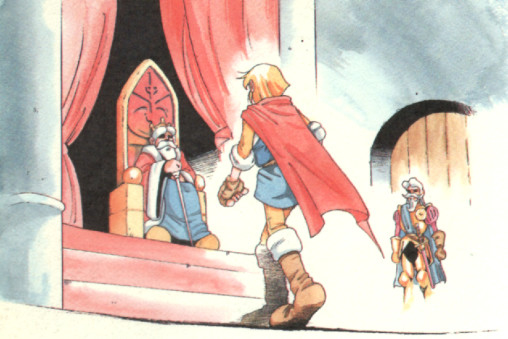
Climax also wanted its game to distinguish itself visually. Most Japanese-developed video games used a manga-like art style, another example of why Takahashi considered them too Japan-focused. Instead, Climax would go in the opposite direction and use a more universal style. Both Takahashi and Naitō were fans of Disney’s early black and white silent cartoons, as well as its animated features like Sleeping Beauty and Alice in Wonderland. That level of quality was what they sought for their new project. Could they bring that timeless cartoon design to a video game? Takahashi believed so. It had been done in films, and he was inspired at how the Steven Spielberg/Robert Zemekis film Gremlins had been able to reproduce the same heart-pounding, nerve-wracking excitement of a Disney feature.
What attracted them most to Disney’s classics was how they were able to integrate fantasy settings and beings without always resorting to themes of swords and magic. However, such tropes were quite popular in video games, especially RPGs. Takahashi didn’t mind. Since childhood, he was a voracious reader and loved classic fantasy like Lord of the Rings and Robert E. Howard’s Conan stories, so he was familiar with the genre’s traditional elements. They were also universally recognizable to both boys and girls, so the choice was sensible.
Everything was beginning to coalesce, but there was still one question? Which console would they work with? The answer would lie with a new generation of hardware.
Adventuring in Twice the Bits
With all their experience on the Dragon Quest games, it would be easy to question why Takahashi and Naitō didn’t just make their game for the Famicom. After all, they were extremely familiar with the hardware, had ties to Enix, and had a good relationship with Nintendo. Releasing their new RPG on the Famicom seemed like a no-brainer; however, it was precisely because of the experience of working with the 8-bit machine that Climax opted to bypass it. By 1990, the console was almost a decade old, and it was already technologically far behind newer machines like the Mega Drive and PC-Engine. For the kind of game Climax wanted to make, the Famicom was incapable of creating the sense of spatial awareness players would require in a 3D dungeon. The limited ways it could visually present things like monsters and traps was also troublesome. Nintendo had already released its replacement, the 16-bit Super Famicom, but new console architecture takes time to learn, and Takahashi wasn’t keen on dealing with the growing pains of a brand-new system. On the other hand, the Mega Drive had no such issues. It had been out for two years, and the ins and outs of its 68000 CPU were well documented (the microprocessor had been around since 1979, and various consoles used it).
Naitō was still at Chunsoft, deep in programming Dragon Quest IV, when the Mega Drive launched. Although he knew about it, he never actually played it until after he joined Takahashi and formed Climax. He was eager to see what its 16-bit hardware could do. Naitō was more familiar with Sega’s game business. Besides feeding tons of money into its arcade games, he had also been privileged to see a prototype of the SG-1000 during his time with Ample Software. His boss took him to Sega’s headquarters one day, and the young programmer, still in his high school uniform, was shown the machine and asked if he could make games for it; however, company plans changed, and he instead got an MSX board, on which he made Car Race.
It was while doing his magazine interviews that Naitō finally got the chance to work with a Sega console. He theorizes that the person who arranged them likely had connections to Sega’s president, Hayao Nakayama, and put together a meeting behind the scenes. Sega was eagerly looking for new developers for the Mega Drive, desperate to build up those ranks against the huge stable of third-party allies Nintendo had created. Naitō arrived for his meeting at Sega to find that the company apparently already considered his involvement a done deal. “When I first went to Sega, there were already several people around Mr. Nakayama. It was like things were already set in motion. He was yelling at the head of the PR department, like, ‘How are we going to announce this?’ I was watching him thinking, ‘Wow, this guy is something else,'” he recalled.
Neither Naitō nor Takahashi had experience with the Mega Drive architecture, and Naitō wasn’t sure he could learn to use the hardware quickly enough. Sega reassured the pair that it wouldn’t take them long to get going and provided instructions (Naitō went to the Haneda Airport to meet with a pair of Sega engineers to get started). He was relieved to see that the Mega Drive’s development tools were generic and weren’t specifically tailored to the system. Any machine running 68000 hardware could use them. They were a sharp contrast to the Famicom-specific tools he had used on the Dragon Quest games, where burning a ROM took a tremendous amount of time and kept the team from doing any other work. Sega’s machines were faster, but still not fast enough for Naitō. He needed a as much speed as possible to reduce development time and asked Sega R&D head Hisashi Suzuki for an upgrade. Suzuki agreed and provided Climax with a high-performance Hewlett-Packard workstation that was much faster than what Naitō had used at Chunsoft. It arrived a few months after work started, making the early work slow going, but it at least came with one perk: 24-hour phone support from the manufacturer. “In urgent cases, like if the machine developed a problem in the middle of the night, we could get instructions for fixing it over the phone from Hewlett-Packard’s support center,” Naitō remembered. Climax used the same workstation configuration all the way through the development of Landstalker, but its phone support was cut much earlier. Apparently, Climax was the only one with the privilege, and it cost Hewlett-Packard a lot of money to keep an engineer on standby for a single customer.
Aside from losing its phone support, the only real problem Climax had was with Sega’s in-circuit emulator (ICE). It was designed for use with the same 68000 processor the Mega Drive used, but even though it let developers see the state of the CPU, it didn’t provide any information about the graphics. Things like color output and aspect ratio were different between a PC and the Mega Drive, and for Naitō, not knowing how the graphics looked was unacceptable. He found it inefficient to transfer pixel art created on his computer to the actual machine, check it on the TV screen, and then modify it on his computer again. Still young and brash, he angrily told Suzuki that there was no way they could beat Nintendo with such tools, an outburst he still regrets.
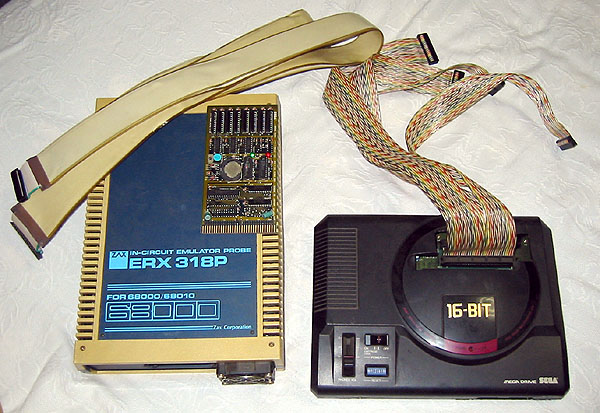
Ironically, it would be Climax that would help Sega with its developmental tool problem, thanks to these kind of issues. As well-known as the Mega Drive’s general-purpose 68000 brain was, there were still things that were difficult to accomplish, much to the chagrin of third-party publishers. According to Takahashi, as easy to learn as they were (and when Naitō could finally see the graphics), the development tools provided to Climax weren’t capable of achieving the kind of visual presentation needed. “Sega and the other third parties just didn’t have the basic know-how when it came to making home console games,” he alleged. “That’s why we decided to start with creating a development environment ourselves. So, actually, the first thing we created on the Mega Drive wasn’t Shining & the Darkness [the game’s final Japanese title], but a graphics tool used for game development.” Takahashi was pleased with the overall performance he could get out of the Mega Drive; he just found the development environment to be substandard. He credited the skill and experience of his Dragon Quest colleagues, many of whom were now at Climax, for creating the advanced software tools that made it possible to do things like creating larger characters. For instance, for Dragon Quest IV, the team had been able to line up eight monsters onscreen, something Takahashi claimed other developers couldn’t do then on the Famicom. As several Climax alumni had been on that team, their ability to now squeeze every trick out of a platform was something that would serve the studio well on the Mega Drive.
Bringing the Darkness to Light
Now with better tools, Climax could focus its energy on actual development. The game was tentatively titled Shining & Darkness, a name that would be only slightly altered before release when a Sega manager insisted there the name be grammatically correct and include the article “the” before the word “Darkness” (for the purpose of this article, the game’s western title will be used henceforth). While Naitō directed and handled the design work, Takahashi would produce and write the story, and he spent the better part of a month building the game world and plot. It was his nature to flesh out details like the role of the knights, and he felt he couldn’t produce a quality story unless he had chronicled the history of the setting and how its characters interacted with one another.
Sega had never collaborated with an outside studio on such a large project, and the company didn’t really know how to calculate the production costs. Similarly, Climax had never negotiated a contract with a publisher and had no idea what development would cost. So, Sega offered Climax the same amount of minimum funding it gave all out-of-house developers, enough to get started but hardly the substantial amount needed to implement all the team’s ideas. Even so, Takahashi was under a lot of pressure to meet the publisher’s expectations, which were the same as those it had for any other developer. It had been less than three years since he first got into game creation, and by this point, he had assumed the roles of both designer and scenario writer.
The job of establishing the Disney-esque aesthetic Takahashi and Naitō wanted would go to Yoshitaka Tamaki, an 18-year-old freelance artist Takahashi had met back during his time at Chunsoft. Tamaki also had a Disney influence steeped in classics like The Sword in the Stone. As a child, he watched a lot of Disney cartoons and tried to imitate their art styles. Manga was also an inspiration, particularly Hara Tetsuo’s Hokoto no Ken (Fist of the Northstar). Tamaki enjoyed it so much after reading it in magazines that he bought the whole collection.
The chance to join Climax came at just the right time for him. Tamaki was convinced he had failed his university entrance exams and felt his life was meandering. He had only done a bit of side work helping some friends with manga art, and though he regularly played video games, he had never worked in the industry. He decided to risk looking for a job anyway and entered the graphic/character design category in a game designing event sponsored by Enix, which he won (Takahashi was one of the judges), earning him work at the company on pixel art and monster design. Things were looking up for him, but he now found himself suddenly bombarded with career options. Not only did a friend offer him a job as a manga artist, but he had also actually passed his university entrance exams! Tamaki chose to go to college for a while but soon gave up. He stayed with Enix for another four years but also did freelance illustration and even wrote and drew children’s books. Right around the time that Takahashi was putting his new studio together, he saw Tamaki’s drawings and asked if he wanted to join him (Tamaki alleged that several other well-known character designers had already turned Takahashi down because joining a new studio was too risky). Thrilled, Tamaki didn’t hesitate and took the job at Climax.
He was excited to be part of the team, but it wasn’t exactly clear from the start what he would be doing. Apparently, it wasn’t apparent to Climax either. Yes, he would be doing art, but what kind and how much? They held regular meetings to work out his particular duties, and throughout it all, Tamaki listened to everyone involved and absorbed their input. He was nervous about his designs, particularly that of the main character, Max (“Hiro”in the Japanese version), who Tamaki at first thought was too small. He decided to leave him as he was to provide a proper perspective in relation to the other party members, Milo and Pyra. Still, he was able to pin the art style Takahashi and Naitō sought. “I would say that Shining in the Darkness had a feeling of an action/adventure film, and the dungeons that were the focus kind of had a stiff feeling to them. That’s why the character designs looked like caricatures,” he detailed. That distinctive “caricature” look, the result of Climax’s decision to forego traditional manga-style art for a more western-friendly design and the spacial limitations of all the action occurring in dungeon corridors, would define not only the look of the game but that of the entire Shining series to follow.
Interaction Is the Name of the Game
Climax set Shining in the Darkness in the mythical kingdom of Thornwood. Neither Princess Jessa nor her bodyguard, Mortred the Knight, had been seen since they left the castle to visit a shrine so Jessa could honor her mother’s departed soul. The wilderness in which they disappeared also served as the training ground for the kingdom’s knights, and the king feared they were taken by the horrible creatures that dwelled within. As Max, a 16-year-old loyal knight and Mortred’s son, players volunteered to find and rescue the pair, who were held prisoner within the labyrinth by the evil Dark Sol. Together with his two companions, Milo Brax and Pyra Myst, they had to tackle the many levels of the labyrinth, conquer the trials, and return the princess and Mortred home.
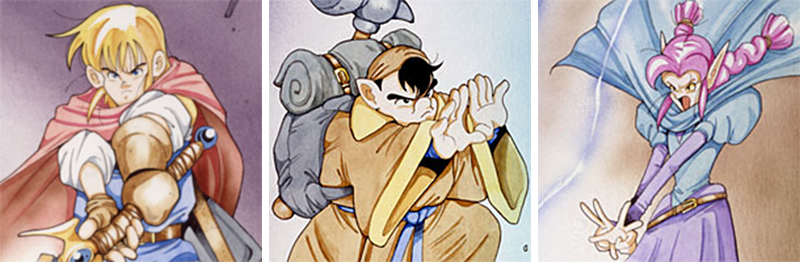
Players could name the hero however they wanted (it would default to Max if a name wasn’t chosen), but Milo and Pyra were fixed characters, and both were as equally talented – and inexperienced. Milo, a hobbit priest-in-training, was Max’s best friend and a flexible character with good attack power and healing abilities. Milo’s name in the Japanese version was “Bilbo,” and both the name and his race were likely references to Takahashi’s love of Tolkien. Pyra the elven mage was also a close friend of Max and joined the quest whether he liked it or not. Her offensive magic was as powerful as her fiery personality. Like Phantasy Star, players began the game alone and recruited their companions only after completing a specific objective. Here, a large crab that surprised Max at a hallway corner in the labyrinth had to be defeated before Milo and Pyra would appear in town. A few other NPCs could temporarily join the party, often after players found them lost in the labyrinth. The elf Dai (tallyho!) and Gila the mercenary are two that appeared, occasionally helping out during battle until they were safely escorted back to town.
And what a town it was! Shining in the Darkness only had one other location beside the labyrinth and castle, but Climax packed it with a cast of memorable locals that served as more than just background NPC scenery. Players could interact with them, and thanks to an auto-check system, they would examine the status of the party at as the plot progressed or whenever players entered a location. Based on a variety of factors, such as the characters’ condition or what part of the story they were in, their replies would change. These events transpired in all areas of the town, such as the inn, where, for instance, the shrine priest could tell if a party member was poisoned or cursed and would recommend treatment. In another instance, if Milo and Pyra returned to town after Max died in combat and tried to rest at the inn, the innkeeper would notice he was dead and tell them to revive him first. With only the one town, it was important to keep things interesting, and such interactions brought some life into the players’ conversations with the NPCs. Takahashi’s high school theater background was a big influence to that effect, factoring into the imagery of the game’s castle and town locations. “On a stage, the location doesn’t change, but just by changing the set, it never gets boring, right? And even those sets don’t change all that much. So, I thought that if, like on a stage, the game’s characters could perform their ‘acting’ within the screen, it would be enjoyable,” he detailed. Climax included multiple events of this nature into the game, more than it had anticipated due to its size and length. The result was that Shining in the Darkness became something of an event-based experience. Lots of attention was paid to these small sequences. Climax called it “Panorama 3D,” meant to visualize everything that could be visualized, and designed the experience to have all interaction be from the player’s perspective.
Naitō demanded the same attention to the creation of a lifelike 3D environment for the game’s other two areas as he did when creating its dungeon. Much like that section, it would prove to be a huge challenge. The visuals for the town and castle were supposed to enhance the sense of depth by showcasing locations and menus from different angles, with images being resized and dynamically displayed in real time during gameplay. Tamaki and Artist and Graphic Designer Hidehiro Yoshida meticulously crafted these angled views by manually placing them pixel by pixel, but since they didn’t have precise previews of how the images would animate on the system, the final outcome sometimes looked a bit uneven or awkward. Naitō demanded better. “I rejected them repeatedly, driving the designers to tears,” he admitted.
Climax was ultimately able to apply its Panorama 3D technique with great success. Take the tavern, for instance. Finding a way to bring realism to such a static, 2D location was causing the team headaches, but Tamaki made it happen. He brought in a sketch he had made of a tavern scene where he applied perspective to the bar counter that was teeming with patrons. Behind the bar, there was a separate room, and the camera angle Tamaki chose gave depth to the tavern and made it appear three-dimensional. When added to the game, Climax was able to enhance it by changing the sizes of the tavern owner and other characters behind the bar as they entered and left the back room.
This cinematic aspect factored into each of the town’s vendors as well. Like any RPG, players would need to periodically upgrade their equipment and buy items, and Thornwood had four such shops, three that were available outright and a fourth opened when the story reached a specific point. Each one had a spirited seller with a unique personality (I’ll be damned if that weapons vendor wasn’t based on Gilius Thunderhead from Golden Axe), but what made them so different was how players approached their purchases. Rather than have them simply scroll down a menu of assorted items with prices, Climax made it appear to be more interactive, and while it may look quick and simple onscreen, it was a difficult thing to implement. In fact, just deciding how to do so took an entire week. Takahashi jokingly attributed the delay to the fact that no one took any notes during their meetings, meaning that they had to start over each day from scratch. Finally, they agreed on a design that made it seem as though the players were picking up each item themselves and inspecting them.
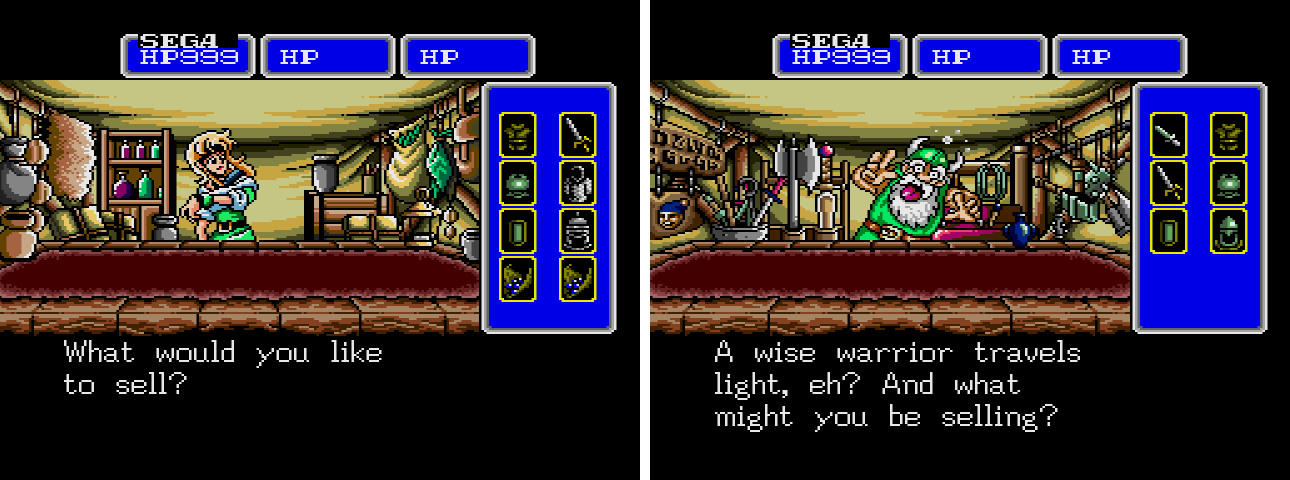
A neat touch was the changes in each seller’s expression when players sold something, as if they were breaking the fourth wall and acknowledging the opening window. The idea was Naitō’s, and while it seemed funny to the team, he admits that some players might not have seen the humor. “Most users probably didn’t really understand what that meant and may have thought, ‘Why is the shopkeeper doing this?’ This was another one of my playful ideas, and I had the designer painstakingly dot out multiple surprised-expression patterns, but… I’m sorry about that,” he confessed.
“Into the Dungeon Core of That Wild Wood”
At the heart of Shining in the Darkness was the multi-floored labyrinth that players would have to explore to find Princess Jessa. It’s possible that the smooth 3D movement Climax achieved for navigating its winding corridors had its roots in the first Phantasy Star game, as the perspective used is similar to that of the original Master System classic. The incredible difficulty of making it work on a machine not designed for 3D was also something inherent to Phantasy Star. When that game was first being conceived, no one at Sega knew how to make RPGs at that time. Chief Planner Kotaro Hayashida made a presentation using Dragon Quest II as an example of what they were and why Sega should make one. Much like Climax’s title, Phantasy Star also bore heavy influence from Wizardry (as well as Ultima), and one of the improvements it made over its inspiration was with the in-dungeon 3D movement. Programming wizard Yuji Naka didn’t like how the dungeon screens in PC titles were limited to small boxes and wanted to make them larger. Hayashida made a point about also making Phantasy Star’s 3D much more fluid. “I thought the movement in Wizardry’s 3D sections felt clunky, since the game simply pasted a new screen without any kind of transitional effect. There was often no way of telling if you’d moved at all. I guess this was meant as a sort of trap mechanic for the player, but I found it annoying and often couldn’t figure where I was or what direction I was facing,” he said in a 2018 interview.
Climax also had to address the riddle of building fluid and natural movement in a first-person perspective. Unlike Phantasy Star though, the dungeon in Shining in the Darkness wasn’t presented full-screen, despite the more powerful hardware and larger 8-megabit cartridge size. This was because Climax wanted to display more and better-animated enemies and more elaborate magical effects. Also, the larger cartridge size was absolutely necessary, as the release of the Super Famicom, with its powerful hardware effects, made the need for steady dungeon movement more urgent. Naitō bought Nintendo’s new machine on launch day and brought it into the office to show his colleagues (he even stopped working on Shining in the Darkness for two whole days while he passed all the stages in Super Mario World). He was impressed with the Super Famicom launch title F-Zero, a futuristic racing game where players dashed around a pseudo-3D track. The impressive effect was done using the machine’s Mode 7, a nifty graphics technique that rotated and scaled a background layer, adjusting it per scanline to simulate depth to create a perspective illusion that made a flat image appear three-dimensional. It was a spectacular visual display in F-Zero, and it made Naitō want the dungeons in Shining in the Darkness move just as naturally – a tall order on a console without any 3D hardware or even a Mode 7-like trick of its own. Any attempt at something resembling 3D would have to be done within the software.
Naitō, who drew the 3D dungeons, was determined to make them run as smoothly as possible, but he found them to be the hardest component to create. He did them all himself, even drawing the pixel art for the walls. It was a herculean task that he had to redo three times before he was satisfied. Yoshida, another former Dragon Quest team member, also found them to be an immense challenge. “I’ve been involved in quite a few game developments up until now but working on Shining in the Darkness really gave me a firsthand feel for the difficulty and terror of a 3D smooth-scrolling dungeon,” he mentioned to the Japanese magazine Mega Drive Fan. Fortunately, Takahashi had an idea where to get the kind of engine Climax needed. While he was still at Chunsoft, he had seen a 3D dungeon game by a young freelancer named Yasuhiro Taguchi. “I was very impressed. I thought that if he was in charge of programming, we’d definitely be able to make something special, and so I started to plan,” Takahashi told Games magazine in 2010. Taguchi was hired as the Special Effects Programmer, tasked with making Naitō’s beautiful dungeons move naturally.
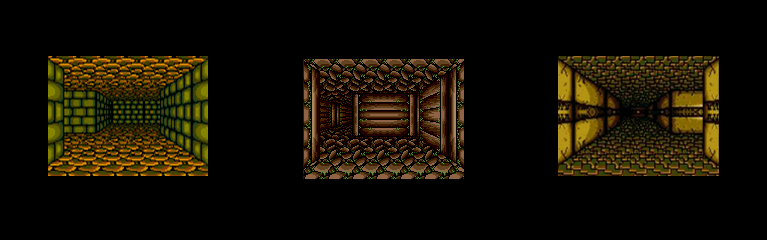
To pull off the first-person dungeon view in Shining in the Darkness, Taguchi leaned heavily on a deep understanding of what the Mega Drive could and couldn’t realistically do. Instead of chasing full real-time 3D, which would have been technically possible only with severe compromises, the engine was designed around tile-based tricks and a carefully controlled perspective that played to the strengths of the hardware. The dungeon view was built on a strict single-point perspective, assembled from pre-drawn wall segments, and the walls were composed from tile patterns that changed based on distance, giving the illusion of depth in discrete steps. As the player moved or turned, the game rearranged and scrolled these wall segments to simulate motion through space. Naitō made the floors and ceilings much simpler, often repeating a small set of tiles to help keep the illusion stable and avoid unnecessary VRAM churn. The result wasn’t true 3D, but it made a convincing and fluid approximation that worked well within the Mega Drive’s limits. This approach was different from what games like some of Sega’s other Mega Drive RPGs, like Sword of Vermilion, did. That game also used first-person dungeon views but relied more on static screens with abrupt transitions. Shining in the Darkness aimed for smoother motion and continuity, which required far more dynamic tile updates and scroll manipulation, even if it meant shrinking the playable window and simplifying certain elements.
Climax constantly wrestled with memory and bandwidth constraints, so rather than loading large unique graphics, Taguchi reused wall tiles aggressively, flipping them, reusing palettes, and layering sprites to add visual touches such as decorations, torches, and traps. The Mega Drive had no hardware support for scaling or rotation, so visual effects like shimmering, movement, or subtle lighting changes were achieved through palette changes and per-scanline scroll adjustments. These kinds of tricks were the same used in other technically-ambitious Mega Drive games, such as the water effects in Sonic the Hedgehog, but here they were applied in a pseudo-3D context.
The monster design followed the same philosophy. Shining in the Darkness included a large number of enemies, including bosses and trap creatures, but many of them were variations of the same creatures and either shared base artwork or were just palette swaps that were mirror-imaged. This strategy was common, but Climax pushed it further to maintain variety without exploding memory usage. Compared to something like the pulsating and flashing creatures of Phantasy Star II, enemy animations were minimal – not an indication of a lack of effort but of a conscious trade-off.
Instead of multi-frame animations, many enemies used positional movement to simulate life. Sprites shifted, bounced, or lunged slightly on screen, creating the impression of motion without requiring additional animation frames. This kept VRAM usage low and allowed multiple enemies to appear at once without hitting sprite or memory limits. Some special enemies, particularly the trap monsters that emerged from chests or puddles, received more multi-frame and elaborate animations, which made their appearances all the more impressive precisely because they were so infrequently encountered.

Taken as a whole, Shining in the Darkness was a strong example of Mega Drive-era design discipline. Climax embraced the hardware’s constraints rather than fight against them and used them to shape a cohesive visual style. It may not have been real 3D, but it delivered a sense of space, motion, and atmosphere that was rare on the system at the time, especially when compared to more static Mega Drive dungeon crawlers.
Who Needs a Menu?
Another idea that Climax had been incubating since its members were still at Chunsoft was a streamlined command system. The wordy and obstructive menus that were constants in so many PC RPGs just wouldn’t work for this project. The repetitive nature of the genre, one full of random battles and level grinding, was often tedious. Climax considered that navigating a complex menu system would ruin the sense of immersion and bog down gameplay too much. The team instead wanted a command system that would pop up quickly and react instantly to the players’ input. It had to be intuitive and obvious, preferably one that could be used with a single hand. Of course, a Mega Drive controller required both hands for inputting the selected commands, but the system would still have to be comfortable. Players shouldn’t have to consult the game’s manual to figure it out. Climax came up with a delightful solution. “We make it a policy to reduce the burden on the player as much as possible. That’s why the icon layout corresponds to the arrow keys,” Naitō explained. He operated under the belief that no one really looks at the manual anyway, so the amount of command text needed was minimized to make the control scheme easy enough to understand on its own.
Indeed, the menu system Climax implemented was no burden on players at all. When brought up, it flew onto the screen with a cool “whoosh” sound. Each icon corresponded to the directional keys on the control pad and had a small, animated image on it representing possible actions. For example, a building meant “enter,” a little wizard holding a staff was for magic, etc.
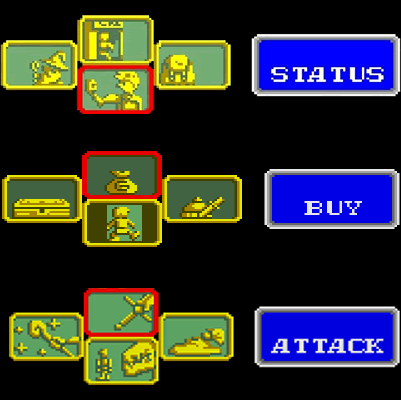
Some fans are quick to point out the similarities between the menu system in Shining in the Darkness and Phantasy Star III, contending that the former was inspired by the latter. The entire premise seems based on a comment made in a review of Shining in the Darkness in issue 178 of Dragon magazine where the author stated that the Climax’s game “combines the icons and combat of Phantasy Star III, the first person perspective of Phantasy Star I, and the great close-up graphics of Phantasy Star II.” It’s unclear why anyone would use this quote to argue that the menu system was copied but then ignore any comparisons between the 3D dungeons or combat. Were those copied as well? Admittedly, although there is no evidence of interaction between the Climax and the Sega team, and neither Takahashi nor Naitō have ever mentioned any influence, it is possible that some degree of evolution was involved. Shining in the Darkness was released almost a full year after Phantasy Star III, and its menu icons are much more detailed and complex. The menu system in Sega’s RPG was quite rudimentary, giving Climax a lot to improve upon if it did indeed use that system.
It’s also necessary, however, to remember that Phantasy Star III was the not first RPG to incorporate an icon-based menu system. PC RPGs, like Times of Lore (1986), had been using them for years. Takahashi and Naitō were both fans of the genre, so their experiences as players of those older games were logically going to factor into their decisions in making one of their own. Climax – and later Camelot and Sonic! Software Planning afterward – all made revisions and improvements to the system, and developers borrowed from and improved upon these processes all the time. I’m sure no one would contend that the radial icon-based menu in Square’s Secret of Mana was based on the system used in Shining in the Darkness, for instance.
Maps (No No No)
Players loved Climax’s decision to go with icon-based menus, and exploring the labyrinth was exciting, but one aspect of the game that has long confounded fans is why it didn’t have an auto-mapping system. A multi-story dungeon in which players could easily get lost doesn’t sound like the most intuitive way to navigate through a story. Older PC games, even those that were being ported to the Genesis like Might and Magic: Gates to Another World, had them. Even Sega saw the need for helping players avoid frustration. Two of its earlier mammoth RPG titles, Phantasy Star II and Sword of Vermilion, came packed with 100+-page hint books that had maps for every location.
Climax deliberately chose not to include maps of any kind in the game. The decision was not made out of cruelty but rather because it would have undermined Takahashi and Naitō’s vision of what they wanted players to experience. This new RPG was supposed to invoke a sense of realism, not in the sense of emulating our own environment, but by creating a world that seemed alive, one where players could enter buildings and witness different events at different times or have characters in the game react differently to them at different points in the story. There should be no hand-holding; players should have to figure things out naturally and for themselves.
It was also meant to force players to learn the in-game environment. Naitō didn’t consider most RPG maps to be interesting. He thought they were done without much thought, with paths added simply to make dungeons longer. He wanted players to have to remember where things were and use those landmarks to find their way without relying on the game to guide them. They might get lost once or twice (or 50 times), but they would soon learn the correct path. “It’s not just meant to be easy; it’s also meant to be satisfying to play. In the dungeons, there are certain spots that are designed to challenge the player. If everything is too user-friendly, some might feel the game is ‘spoon-feeding’ the player, right?” he argued. According to Takahashi, Naitō used the same technique while driving, learning roads and landmarks through trial and error. It seemed the most realistic way to proceed, though many players likely found navigating that first level a bit too difficult until they grinded a few levels.
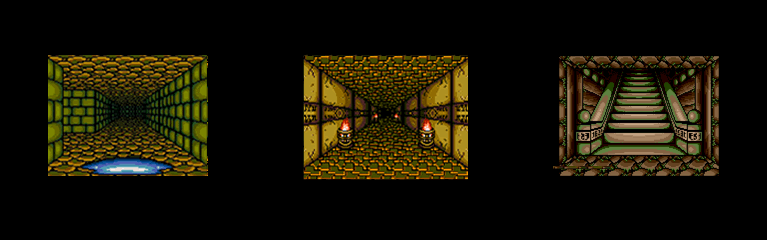
The philosophy wasn’t new. As head programmer on Dragon Quest III and IV, Naitō used the same design for their dungeons: logical layouts and traps and secrets that made sense. Things may have seemed complicated at first, but with a bit of practice they became natural. Climax’s title had little details that revealed locations and pathways, things like puddles on the floor and torches on the walls. Each marker would excite players as they discovered a new location or found that they were on the correct path.
Even so, it wasn’t like Climax gave players zero navigational options beyond some graph paper and a pencil. There were a few ways to track one’s progress within the labyrinth. A consumable item called a Wisdom Seed would show players their current location, with information about all the corridors they had traveled and which cardinal direction they were facing (north, south, east, west). Pyra also had a spell called View that could do the same. It was a little impractical in that players needed to have an item in their inventory or use spell points to find out where they were, but they weren’t supposed to rely on such tactics to navigate.
Even so early in the process, Climax achieved impressive results, enough to convince Sega to show it off publicly. At the time, the game was only around 30 percent complete, so Takahashi and Naitō were understandably nervous when Sega convened a press conference solely for Shining in the Darkness on September 20, 1990, at the ANA Tokyo Hotel in Akasaka to announce an anticipated release date of March 1991. Only the labyrinth was shown to press, but there was enough for Sega to promote it as an ambitious new concept called an “immersive RPG,” a role-playing game that emphasized realistic experiences through a rich presentation that directly engaged players. To a room full of Japanese press, Takahashi and Naitō demonstrated the game’s fluid navigation through the dungeon corridors, its monster designs, and battle scenes while explaining how their product differed from traditional releases in the genre. They touted its realism in areas such as the transition between floors and how its visual presentation obviated the need for a map system. The press appeared excited as the men showed off different enemies and magic effects.
Six months… that was all Climax would have to complete Sega’s most ambitious RPG to date. More than just sales were riding on its success; Climax’s fledgling reputation, its relationship with Sega, and everyone’s livelihood was on the line. Shining in the Darkness had to do more than just launch on time. It would need to launch big.
Drums… Drums in the Deep
Anyone who considers themselves a fan of old school RPGs knows that the soundtrack is an integral part of any adventure. Shining in the Darkness stepped up and delivered one of the more memorable scores of its eras through the impressive talents of Masahiko Yoshimura. A graduate of the Shōbi-Gakuen Junior College School of Music Business in Kawagoe, Yoshimura studied under Komori Akihiro, who wrote and released an orchestral interpretation of the classic Japanese memoir Tottochan: Little Girl at the Window. He later spent some time as an audio mixer for the Japanese pop band Dream Come True’s Wonder 3 album tour in 1990. Despite the fact that the group had released three albums and sold over three million copies by that time, its bass player, Masato Nakamura, is likely best known to western Sega fans as the composer for the first two Sonic the Hedgehog games.
It’s unknown exactly how Yoshimura joined Climax, but it wouldn’t be far-fetched to speculate that it came out of his relationship with Nakamura. Their work together overlapped with Nakamura’s time on Sonic the Hedgehog, so he was in a position to provide Yoshimura with an introduction at Sega. As Climax began work on Shining in the Darkness, he would have had a chance to join development early on.
Yoshimura’s score ranged from the soft lullaby that greeted players at the start to the pulse-pounding boss themes where players realized they were in for a tremendous fight. He wanted each of the game’s areas to have a its own identity, so he focused on defining the contrasts between each one. The strong, regal tones of the castle were a clear opposite to the claustrophobic and mysterious themes of the labyrinth. It wasn’t always easy for Yoshimura to achieve the desired effect. He was frustrated that the Mega Drive’s YM2612 sound chip wasn’t capable of realizing the richness of his score, going so far as to rearrange and record them for special CD releases, such as the Sound Story of Shining & the Darkness CD, a now-rare compilation of 18 themes released in Japan in June 1991.
Despite his dissatisfaction, Yoshimura managed to create an excellent soundtrack that was an integral part of making the Kingdom of Thornwood such an amazing place. Its distinctive sound became the benchmark for the series, a style that fans could instantly anticipate whenever a new game in the Shining series was announced. Yoshimura collaborated intensely with Tamaki to ensure that each theme had the right tone for each scenario. The two often clashed about how to proceed, and Tamaki recalled they once spent eight hours at a Denny’s going back and forth about ideas.
Sega Let Your Light Shine Down
As development wound down, Climax still had to contend with the seemingly never-ending battle with memory constraints. Shining in the Darkness was unlike many other console RPGs in that it had intricately-detailed locations that couldn’t simply be downgraded or cut without drastically affecting the remaining content. Thus, adding or trimming anything was a delicate process. Thankfully, most of these wrinkles were ironed out just before the game shipped, and even though Climax pushed the limits of its compression routines, it even considered including some eye-popping effects. “We’re thinking of doing things like scaling, enlarging, or rotating graphics to compete with the Super Famicom,” Takahashi boasted. Indeed, Climax managed to add scaling and rotating graphics to the transitions between the dungeon, town, and castle just before the game’s release (Japanese press first revealed they had seen the effects in March 1991. With a lead time of around four to six weeks between issues, that means they were probably sent that ROM version around January). It certainly was surprising to many players to see such effects on the Mega Drive in 1991, and the fact that it was all done in software made it all the more impressive.
When released in Japan on March 29, 1991, Shining in the Darkness was an immediate hit, selling 300,000 copies (about 16 percent of the Mega Drive’s 1.9 million installed units at the time), making an immediate impact in the RPG market of the early 1990s. Yet even though consumer feedback was positive overall, there were still some fans who complained that the story was lacking and that the music was subpar (?). One fan postcard even reportedly claimed that too much memory had been wasted on the developer credit screens during the ending! Regardless, Climax was mostly satisfied with the overall quality of Shining in the Darkness, though team members did lament the project’s short development time and its memory restrictions. The final game was only about half the size of the original haunted house concept Climax began with, and many compromises had to be made to bring it to market. Some team members, like Taguchi, wished more time had been allotted for improving sound quality. As for Naitō, after seeing how the game ranked in sales shortly after its Japanese release, he was content that so many players enjoyed the intuitive controls, but he felt it was unfortunate that so much content had to be cut. Takasashi was perhaps the most critical of Climax’s first effort (he gave it a personal score of 70/100), and while he was happy to see it in the hands of gamers, he knew there was much more that could have been done.
With its first product now shipped, fans assumed a sequel would follow. Takahashi had every intention of closing out the story begun in Shining in the Darkness and implementing all his unused ideas (such as starting battles in a more gradual way where players could see enemies from farther off), but he wouldn’t be able to revisit them until Shining the Holy Ark for the Saturn in 1996. By then, much would have changed within Climax, with the Shining franchise evolving into something quite different.
Shining in the Darkness sold well abroad, but Takahashi contends that Sega of America didn’t promote the game at all, likely because RPGs were a niche genre on the Genesis. He believed that products that weren’t pushed sold poorly, and he expected Shining in the Darkness to tank overseas because of its lack of marketing. He was shocked to learn that it was a hit with RPG fans abroad. Most surprising was its popularity with the same people who enjoyed Wizardry as much as he had. “We received some of the highest praise from Wizardry fans,” he proudly recalled. “Some said things like, ‘Everything I played on my Mac until now was just practice for playing this game.'” Many players, including some in the gaming press, couldn’t believe that Shining in the Darkness was made by a Japanese team.
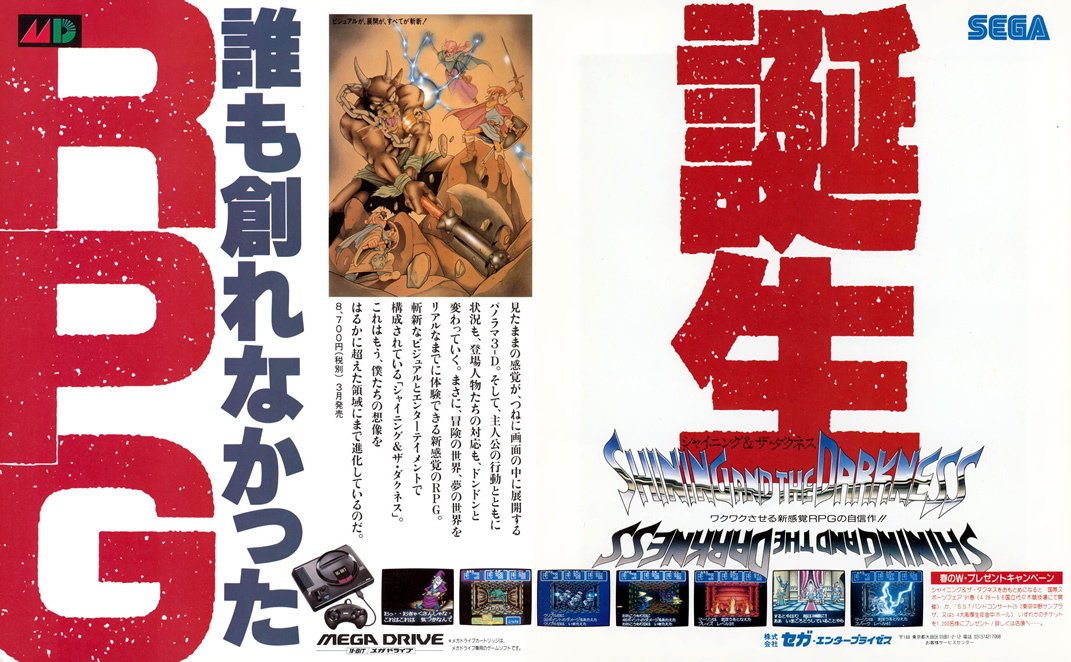
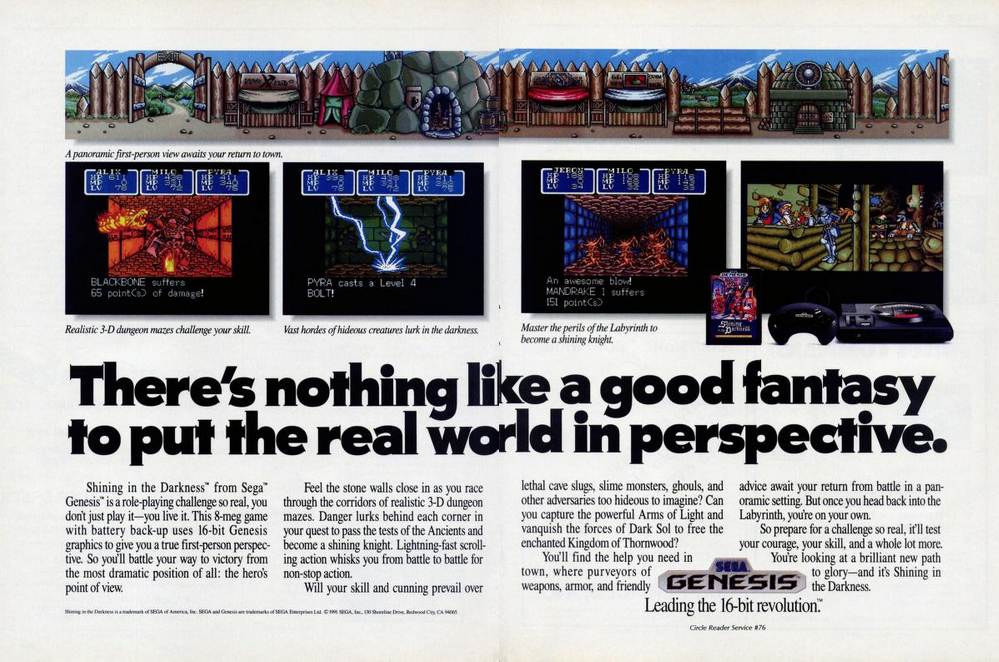
According to former Sega of America marketing head Al Nilsen, Shining in the Darkness was successful for an RPG in the U.S., even with a higher price due to its 8-megabit cartridge size and the inclusion of a battery backup feature. He contends that SOA’s advertising was enough to generate sales for the Genesis RPG lineup overall. “From what I remember, it did well for an RPG, not huge numbers but a good loyal dedicated audience. They weren’t titles that got TV promotion, but they usually got magazine ads,” he told the author. Indeed, both Genesis Phantasy Star games, Fatal Labyrinth, and Sword of Vermilion all saw printed ads. As expensive as TV time was, Sega of America needed to reserve its limited marketing budget for titles with a larger potential audience, such as a certain blue hedgehog who would arrive in the U.S. a scant three months after Climax’s Genesis debut. Unlike those other RPG titles, however, Shining in the Darkness had but one print ad in U.S. magazines, and it didn’t run too frequently. In fact, ads for Phantasy Star III, which was released in North America four months later, were already running when Shining in the Darkness debuted, appearing in several prominent magazines like GamePro and Electronic Gaming Monthly.
The Light That Shines Twice as Bright…
Apparently, the success of Shining in the Darkness wasn’t enough to make Sega of Japan rethink its stance on the kind of development budget Climax should receive going forward. It remained unchanged for Climax’s next project, Shining Force, a decision that would not only affect that title’s development but also the relationship between both companies for years afterward. Takahashi attributed the lack of financial backing to the steady change in Sega’s corporate environment as its console presence began to grow. By 1990, the Mega Drive was available in the U.S., and the Game Gear had launched in Japan. This growth resulted in a changing management, and many of the profit-driven new hires apparently didn’t appreciate second-party developers the same way. “When Sega’s managers were replaced,” Takahashi lamented, “we came to be seen as just a small, unruly subsidiary that wanted things its own way, and because of that we were forced out of Sega’s main line of business. From that point on, I felt that Sega had ceased to be a true software-oriented company.”
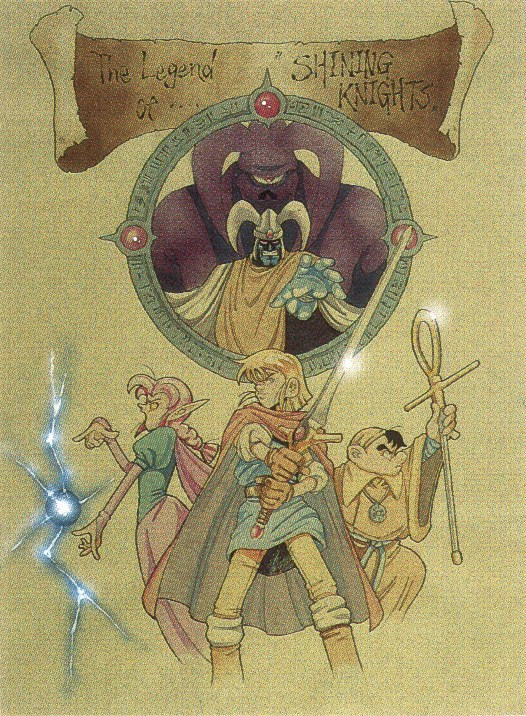
Budgetary issues aside, Climax was a new studio full of young and enthusiastic talent that had tackled Sega’s most ambitious RPG to date without any experience developing for the Mega Drive, and it had found scored a hit. It now had momentum it needed to make its next project a reality, which wouldn’t be a direct sequel to Shining in the Darkness. Takahashi would instead revisit an idea that had been brewing in his head since he was at Chunsoft. He had the rough idea for the story, which he wanted to have a progression similar to Dragon Quest, and it could use many of the concepts that had been cut from Shining in the Darkness. Climax’s plan hadn’t necessarily been to turn its success into a series, but Takahashi did want to do more with the world it had created. “For example, in the Disney world, you can enjoy approaching it from different perspectives,” he analogized. “So, I want to create a well-established, enjoyable world and try approaching it from multiple angles.” Tamaki would try to connect both games in his 21-chapter Doom Blade: Shining & the Darkness Gaiden manga series that first hit the shelves in Mega Drive Fan between February 1992 and December 1993). Some elements from his comic even left their mark on other related games and characters, like Feda: The Emblem of Justice on the Super Famicom (1994) and Shining Soul II (2002).
Tamaki wouldn’t be the only one trying to establish a chronology to the Shining series. Although Shining in the Darkness was the first game released, chronologically, it’s the sixth in the series. Shining Force is the earliest entry, followed by the the two Game Gear titles (later compiled as Shining Force CD), and then Shining Force II and Shining Wisdom. Fans have spent years looking for clues that ties everything together, from the map in Simone’s book at the beginning of Shining Force to the ages of characters from all the games. Climax obviously didn’t have a set chronology back in 1990, but subsequent installments from Sega’s console era have done a good job of linking everything together.
It’s when Sega went “platform agnostic” that things got a bit hazy. Entries like Shining Soul on the Game Boy Advance threw a bit of a monkey wrench into the sequence of events, and fans have speculated that those games could occur in an alternate timeline. Taguchi further muddied the waters by suggesting that events after Shining the Holy Ark belong to a different era than the previous games. “If you see characters with the same name, please consider them as different people, but they do look very similar. Perhaps people in Shining Force and Shining Force II came to the world of Shining Force III through metempsychosis? [the soul passing into another body]” he opined. Yeah, that’s not much help. This page does a great job of trying to put it all together, though.
Wherever it’s placed in the timeline, Shining in the Darkness set a clear path for Climax, one born from learning the idiosyncrasies and abilities of the Mega Drive and raised on squeezing the most out of a modest budget. Soon, the team would tackle these challenges to forge a game that would become one of the most popular RPG titles of its era and spawn several sequels of its own.
Be sure to check out the second part of our Climax retrospective, Shining Force, next month!
Sega-16 would like to thank Andrej Preradovic for his translation work with sources for this article, as well as Agostinho Barone, CRV, ftb1979, and Ladios, for their research contributions.
Sources:
- “Attack Special – Shining & the Darkness Kouryaku Note.” Mega Drive Fan. April 1991.
- “The Creators of the Shining Series.” One Million Power. November 15, 2018.
- ” Beep21 Hiroshi Naito’s Deep 00 Part 6: The Story of the Game Development Environment at the Time. Beep21. September 26, 2023.
- “Beep21 New serial Column Deep O Hiroshi Naito 2.” Beep 21. June 3, 2022.
- “Beep21 New Serial Column: Takahashi Brothers Return to Sony Presented by Camelot – Part 1.” Beep21. May 25, 2022.
- “Beep21 Second Issue Special Feature: Interview with Hiroshi Naitō.” Beep21. April 1, 2022.
- “Beep21 Special Contribution – Hiroshi Naitō: ‘In Memoriam: Yoshitaka Tamaki.'” Beep21. December 18, 2023.
- “Beep21-Sponsored ‘Mega Drive 35th Anniversary Commemorative Party’ Event Report!” Beep21. October 31, 2023.
- “Be-Mega Hot Menu Part 1: Shining & the Darkness.” Beep! Mega Drive. January 1991.
- “Be Mega News: Sega’s Immersive RPG ‘Shining & Darkness’ (Tentative Title) Is Currently in Development and Is Scheduled for Release in March Next Year!” Beep! Mega Drive. November 1990.
- Davies, Jonti. “Behind the Scenes: Shining Force.” Games. March 30, 2010.
- “Game Culture Academy: Shining in the Darkness Reflection Meeting.” Mega Drive Fan. July 1991.
- “Golden Sun – 2001 Developer Interview.” Shmuplations. D.
- “Interview with Yoshitaka Tamaki.” AnimeLand #71. May 2001.
- “Mega Drive Game Design Part 1.” MD Shock. September 26, 2018.
- “Mega Drive Game Design Part 2.” MD Shock. October 7, 2018.
- “Mega Drive Game Design Part 3.” MD Shock. November 8, 2018.
- Naitō, Kan (@Kan_Naitō_JP). “I found this in a part-time job news article during my first year of high school.” X. May 27, 2024.
- –. “The Road to Becoming a Programmer.” Streamed live on July 31, 2021. YouTube video, 11:37.
- “Sega Creator’s Note 17: Yoshitaka Tamaki.” Sega. July 24, 2003.
- “Shining Force – 1992 Developer Interviews.” Shmuplations. N.D.
- “Shining Force III – 1998 Developer Interview.” Shmuplations. N.D.
- “Shining in the Darkness Developer Interview.” Beep! Mega Drive. December 1990.
- “Special News” Shining in the Darkness Magic Attacks.” Mega Drive Fan. March 1991.
- Szczepaniak, John. The Untold History of Japanese Video Game Developers, Vol. 3. SMG SZCZEPANIAK, 2018.
- “T-Game Market Frontline: Interview with Climax.” Beep! Mega Drive. June 1991.
- VGDensetsu (@VGDensetsu). “A little sum-up of the 3rd Game Business Archive conference, featuring Masato Maegawa (Treasure), Masamitsu Niitani (Compile) and Hiroyuki Takahashi (Camelot):” X. October 27, 2017, 11:36 a.m.
- “What Is This Newly-Created RPG Experience?” Mega Drive Fan. November 1990.
- “The Witness of History: Kan Naitō Interview.” Sega Consumer History. Tokyo: Enterbrain. 2002.
Recent Comments