
 The Sega Channel was an exciting time in Sega’s history. The company was at its business peak in the U.S., and it wasn’t afraid to try new things. Lots of talented people overcame major technological and business hurdles to produce what became the first complex and robust online service in gaming, years before Xbox Live and PlayStation Network. News games were made available to try out, and there were news and other features that made kids with the Sega Channel the envy of their neighborhood friends.
One of the major players in its creation was Doug Glen, a Sega of America executive who arrived at the branch just before it exploded in sales and popularity. During his tenure, Glen worked to bring the Sega Channel to life, take on Nintendo, and expand Sega’s software offerings to a wider audience.
Mr. Glenn was kind enough to take some time to chat with Sega-16 recently.
Sega-16: Was Lucasfilm Games in 1986 your first experience in the games industry? What brought you into the working with video games?
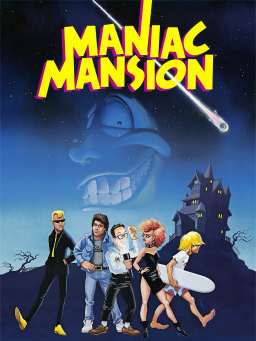 Doug Glen: Lucasfilm Games was my first adventure into game development, but I had fairly extensive experience in game marketing, distribution and consumer research as an advertising guy. I helped create campaigns for Atari, Intellivision, and Starpath. With Starpath, I got to open the hood and play with the tech. I’m an MIT engineer who never did any actual engineering, but it’s still in my blood.
Sega-16: Lucasfilm Games released Maniac Mansion shortly after you arrived, which was the first game they both developed and published. Video games were trying to make a comeback in the U.S. at the time. Did its success influence your opinion of video games as a viable industry in some way?
Doug Glen: The success of Maniac Mansion reinforced my belief that to compete in a crowded market, you need to create products that are remarkable, delightful, and easy to communicate (i.e. market). Maniac Mansion made you smile the minute you started playing it, and that smile stayed there for thirty or forty hours.
The video game industry didn’t tank because kids stopped loving games; it tanked from a failed business model. The entertainment industry goes through many boom-or-bust cycles. Movies, games, television all have their up and down cycles, but regardless of the point in the cycle, genuinely great products will break through and succeed.
Sega-16: How did you make the jump to Sega?
Doug Glen: When I left home in Marin County in the morning, I turned south on US-101 instead of north.
More seriously, the thing I missed most at LucasArts (the name had changed during my tenure as GM) was a big advertising budget for TV advertising. My first assignment at Sega was an agency search. We narrowed down the finalists to Weiden and Kennedy, Foot, Cone & Belding, and Goodby-Silverstein. Goodby-Silverstein won the shootout. My old friend Jeff Goodby was and remained, in my opinion, the most extraordinary creative director on the planet. He proved it with the SEGA!!! Campaign. Watch “Punk Zoom” for proof.
Sega-16: I’ve seen you listed as “Group VP” at Sega. What was your role, exactly? I ask because I’ve also seen you named as Senior VP of Business Development.
Doug Glen: As I became close to Tom Kalinske (the absolute best boss I ever had), he made me his unofficial chief strategy officer. This meant managing various new projects, helping Tom with deal-making, building the Sega Channel, rearranging plates in the dishwasher, etc. My role of Group VP was created by Tom Kalinske and me to enable me to manage and/or create special projects. The Sega Channel was one such project. While working on special projects, I stayed very involved with Goodby and the television ad campaign.
Sega-16: The Genesis never had a proper Star Wars game, while the SNES had the whole trilogy. Given your history at Lucasfilm Games, would you be able to speculate as to why?
Doug Glen: Although I was good friends with Howard Roffman, head of Lucas licensing, the Star Wars license would have been so costly that it didn’t make sense as ROI. Money was better spent on stuff the market couldn’t get elsewhere.
Sega-16: You joined Sega just as the console was hitting its stride with Sonic the Hedgehog.
 Doug Glen: No, just before Sega hit its stride. The combination of great games like Sonic and Goodby-Silverstein ads winning over teens changed market dynamics profoundly.
A year after I joined Sega, I got a call from Howard Lincoln, head of Nintendo USA. At one point we considered each other friends, but on this call, he was seething, demanding that Sega pull the ad campaign off the air because it was so rudely disparaging Nintendo. That’s when I knew that we had won. Take a look at the “Tom’s Dog” and “Bug Zapper” spots, and you’ll see what I mean.
Sega-16: Sega was supporting a lot of hardware platforms during the mid-‘1990s. Did this make your job more challenging in any way?
Doug Glen: I had nothing to do with manufacturing, inventory management and logistics. So, no, not really.
Sega-16: How challenging was it to get cable providers to sign on to the Sega Channel? As innovative as it was, it must have been difficult to convince them of the viability of downloading video games from their cable boxes.
Doug Glen: Sega Channel was a three-way partnership between Sega, TCI and Time-Warner. Other cable operators were a mixed bag, but some signed on. The Sega Channel idea was groundbreaking, but it was a way’s away from “games on demand.” From an operator’s perspective, it was like adding a narrow (3MHz) interstitial between two VHF channels and constantly broadcasting a two minute “wheel of data” over and over again. The home adapter enabled the game player to choose one of the 50 games. Then the adapter plucked the chosen game data from the cycling wheel, and the game was loaded.
Of the several hundred games available for Genesis at the time, only the top few dozen made any money, so it was easy enough to convince third party publishers to participate. They didn’t make much money from the Sega Channel (nobody did), but their games got visibility and consumer trial. When the titles were swapped out every month or so, people who had fallen in love with no-longer-available games were more prone to go out and buy them. So, third parties used the Sega Channel in part as an advertising and promotion medium.
Sega-16: Given the implementation of SegaNet with the Dreamcast and the rise of online networks on Nintendo, Microsoft, and Sony consoles, Sega was way ahead of the curve in bringing downloadable content to gamers. Is there anything you wish had been done differently with the Sega Channel, or was it just too ahead of its time?
Doug Glen: There were lots of technical hurdles which took much longer to sort through than they should have (largely because Sega’s Japanese engineering management was loathe to disclose glitches in the Genesis hardware that, while they didn’t affect regular game play, crashed the first few Sega Channel adapter versions from Scientific Atlanta and General Instrument).
Other than that, I am enormously proud of what Sega Channel accomplished. The team we built with Sega and Time Warner people was an absolute joy to work with – a dream team, and one of the best experiences of my life. So, strategically and team-wise, there’s nothing I would have changed.
Sega-16: Sega of Japan didn’t seem to embrace the Sega Channel like the U.S. did and had already launched the Saturn by the time it arrived there. Was it ever a part of their plans with that console? If not, why release it at all there, then?
Doug Glen: What Sega of Japan liked most about Sega Channel was its positive impact on Sega’s share price.
Sega-16: Sega of Japan wasn’t really interested in the Sega Channel? We hear these stories online about how SOA and SOJ didn’t see eye-to-eye on a lot of things, and I just want to clarify if it was a business issue and SOJ was merely looking at its bottom line.
Doug Glen: SOJ’s lack of interest in Sega Channel related, more than anything else, to the very low penetration of homes with cable boxes. As I recall, it was under 5%.
Sega-16: You left Sega while the Genesis was still on top of the market. What made you move to another position elsewhere?
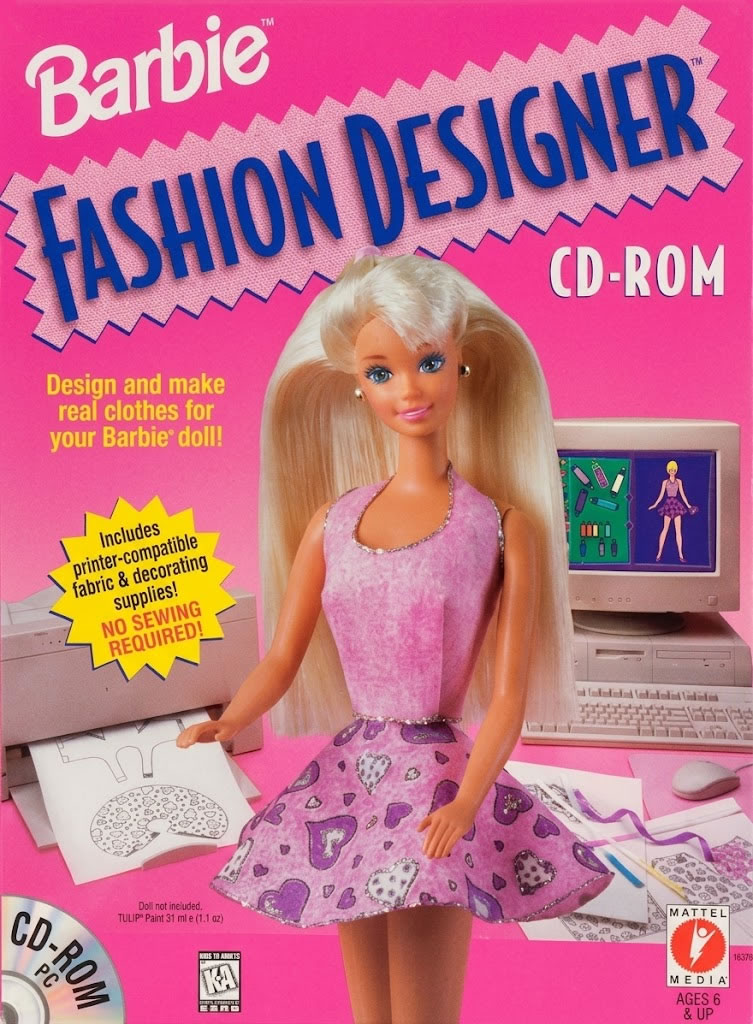 Doug Glen: I was recruited by Mattel to hold dual positions of Chief Strategy Officer and President of Mattel Media. I was intrigued by the challenge of building a thriving market for games for girls. My friends in the game industry teased and even ridiculed me for believing that girls could be a mass market for games. Nothing’s more fun than proving everyone wrong, particularly as the proud father of three girls. The million-unit Barbie Fashion Designer phenomenon outsold all the top video game titles in 1996 and 1997. Other Barbie-branded games prospered, too. It surprised everyone except me. At the time Barbie Fashion Designer was released, there were over 2,000 games designed for boys on the market. There were but a handful designed for girls. Easy math.
In some ways, my attraction to Mattel was like my attraction to Sega Channel. Doing something that has never been done before almost always beats doing the same old thing again.
Sega-16: The Genesis had a few Barbie titles, but otherwise, it doesn’t seem like there many titles aimed at girls. Did you try to open that market for Sega while you were there?
Doug Glen: I was just one of many SOA people trying to engage with more girl gamers. The Ecco the Dolphin franchise is an example.
Sega-16 would like to thank Mr. Glen for taking the time to speak with us.
Pingback: Sega-16 interviews former SOA executive Doug Glen on Sega Channel - Retro Game Wire