
This interview originally appeared in the August 15, 1980 issue of the Japanese magazine Game Machine. It’s an intriguing piece in which Sega’s Executive Vice President Nakayama shares some insight on the company’s business policies in Japan and abroad. Interviews with Nakayama are uncommon, and this one gives us a good look at what Sega was thinking during the golden age of arcades and the early days of the console market.
* * *
Sega/Gremlin Focused on TV Games: An Interview with Executive Vice President Nakayama on Sega’s Business Policies
It has been six years since Sega Enterprises, Ltd. (headquartered in Tokyo, led by President Rosen), became part of the G&W Corporation group. Japan and the United States are now the main production hubs for TV games, and the Sega Group appears to be aiming for new developments by incorporating the strengths of both Japan and the United States. In light of this, we asked Mr. Hayao Nakayama, Executive Vice President (in charge of marketing) and Representative Director of Sega, to clarify the company’s business policies.
Game Machine: Please tell us about the relationship between Sega and its affiliated companies, particularly Gulf & Western.
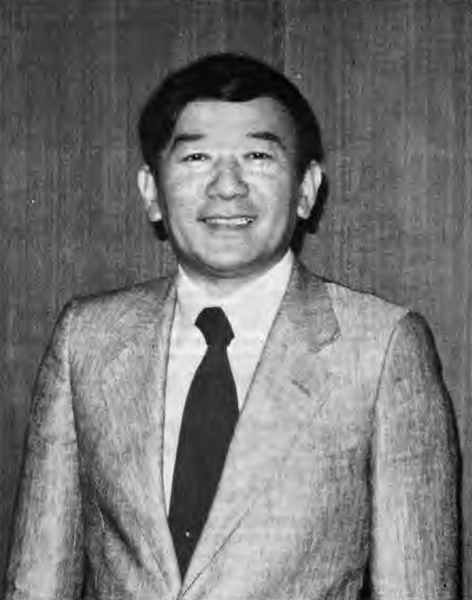
Hayao Nakayama: Gulf & Western Corporation (G&W, headquartered in New York, led by President Bluhdorn) is one of the leading conglomerates in the United States. In this year’s corporate rankings, it posted sales of 5.3 billion dollars and a declared income of 230 million dollars, placing it 52nd in the United States. The core business sectors are in manufacturing, including energy, automotive, and household appliances. Recently, the development of an automotive battery, hailed as a “dream battery,” has been making headlines. In the leisure sector, it’s well known for owning Paramount Pictures. However, G&W Corporation is not involved in the oil business.
Sega of Japan (Sega Enterprises Ltd., President Rosen) came under G&W’s ownership in 1974. However, due to various circumstances, the company was listed on the stock market in the United States, and Sega of America (Sega Enterprises Inc., President Rosen) was established. This resulted in G&W owning Sega of America, and Sega of America, in turn, owning Sega of Japan. In other words, technically, Sega in Japan is a subsidiary of a subsidiary (a “grandchild company”) of G&W, but functionally, it’s no different from being directly under the G&W group.
And so, in 1976 and 1979, Sega of America acquired Gremlin Industries (led by President Fogleman), while Sega in Japan acquired Esco Trading (led by President Kenjiro Mori).
Game Machine: How are the Sega Group and the U.S.-based game center chain “Sega Center” and the recently launched pizza restaurant chain “PJ Pizzazz” (previously reported in our “Overseas News” section) related?
Hayao Nakayama: Both Sega Center and PJ Pizzazz are divisions of Sega of America. Sega of America’s main operations involve the management and administration of those businesses, as well as coordinating with G&W. Their headquarters has around ten people.
Game Machine: Both Sega in Japan and Gremlin in the U.S. are manufacturers. What is the relationship between the two?
Hayao Nakayama: Both companies develop, manufacture, and sell products from their respective positions, but they do cooperate with each other in various ways during the process. Additionally, there are cases where one company develops a product, and the other takes on the manufacturing and sales. In such instances, Sega in Japan handles the Japanese market, while Gremlin handles the U.S. market.
Game Machine: In the fiscal year ending in 1979, sales reached 24 billion yen, with a declared income of 5.37 billion yen. Please introduce the current business operations of Sega in Japan.
Hayao Nakayama: Currently, Sega’s core operations are as a manufacturer, so the main departments are R&D, Manufacturing, Trade, Sales, and Operations. The results for the fiscal year ending in April 1979 showed steady growth with sales reaching 24 billion yen and a declared income of 5.37 billion yen. The company now has 1,200 employees. We have three branch offices in Sapporo, Osaka, and Fukuoka, along with four sales offices and 89 operational offices.
Game Machine: How should we understand the seemingly contradictory position of being both a manufacturer and an operator?
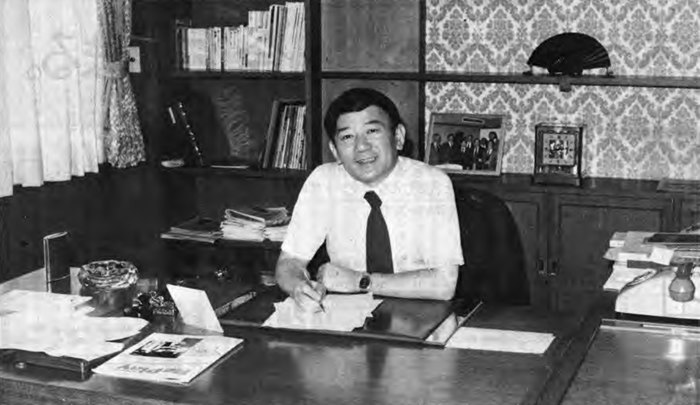
Hayao Nakayama: Whether it’s good or bad, the history of Japan’s amusement (AM) industry shows that all major manufacturers started as operators. Now, they have reached the point where they can act as both manufacturers and distributors. Therefore, Japanese manufacturers tend to have a strong operator mindset. However, since Sega positions itself as a manufacturer, we believe it is naturally our duty to support and protect the operators. Sometimes, our operator perspective takes priority, but maintaining balance and harmony is key. The balance between operations and manufacturing determines a company’s direction.
Game Machine: By the way, we often hear comments about Sega’s operations, such as whether there are better business methods that could be employed…
Hayao Nakayama: Yes, some people are wondering that. However, Sega’s position is that we must operate a large number of game centers across the country in a balanced manner. In other words, while pursuing a method that satisfies the greatest common denominator, we aim to leverage economies of scale and focus on long-term business sustainability. Our operational philosophy at Sega is to maintain a balance between consistent revenue and detailed, attentive service.
Sega/Gremlin at the Center of the Global TV Game Boom
Game Machine: What are your general thoughts on future product development?
Hayao Nakayama: As Sega, we will focus 70-80% of our efforts on TV game machines, which aligns with global trends. I believe that the strength of game machines is recognized through their novelty and entertainment value, and TV games make this possible. There might be criticism that we are focusing too much on visual content, but the positive aspects far outweigh the negatives.
Game Machine: So, I would like to clarify the question of which is superior, the current TV game manufacturers in Japan or those in the United States.
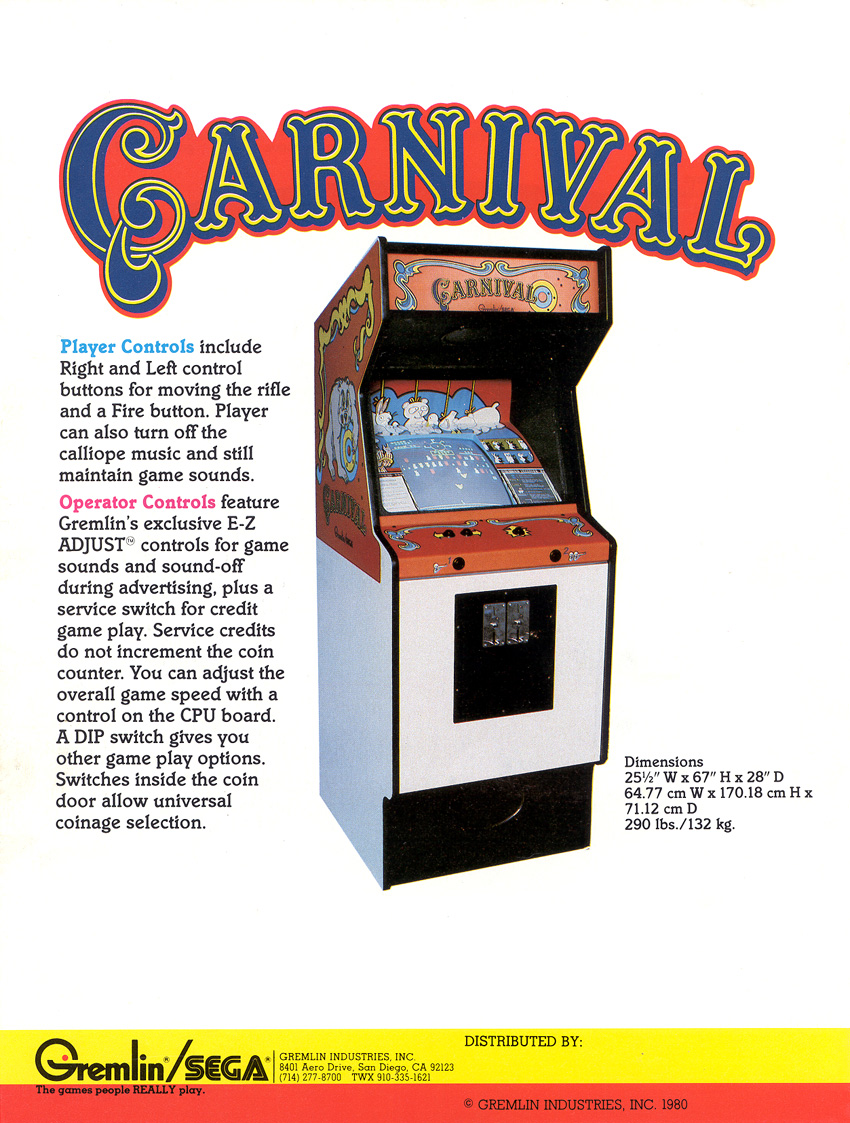
Hayao Nakayama: Europe has already become a buyer’s market. The only sellers are in Japan and the U.S. In the U.S., the big three are Atari, Midway, and Sega/Gremlin, along with companies like Exidy, Cinematronics, and Allied Leisure. Amidst this landscape, Sega/Gremlin is developing products one after another as a leading manufacturer, while also importing technology from the U.S. and licensing products from other Japanese companies for overseas markets (for example, Astro Fighter). Titles like Carnival and Mini Monaco have unexpectedly become big hits in Europe and America!
Game Machine: In Japan, table-type games have become the mainstream for TV games. Is there any consideration for reviving upright machines?
Hayao Nakayama: I think there are still issues to address, but we have no choice but to focus on table-type machines for now. Since Head-On, Sega has responded to market demands by first developing table-type machines, and then moving on to upright models with several products (such as Car Hunt and Deep Scan). We’ve tried to adapt through conversions and trade-ins based on the operational circumstances at the time, but from a broader perspective, it may seem like trial and error.
The key with tabletops is that the game screen is everything. Upright machines can be said to have more added value, including the cabinet itself. We are still exploring whether it is the right move to revive upright machines, but at this point, we have no intention of abandoning them.
Game Machine: At the recent Gremlin seminar, the IES (Idea Exchange Seminar) emphasized changing how we think about video games. What does that mean?
Hayao Nakayama: For example, Mini Monaco is currently a big hit in the U.S., but it was a flop in Japan. This shows we need a change in mindset. It succeeded in the U.S. because there had never been such a small cabinet before, and because even large locations now care more about efficiency. Two-player competition made it appealing. It’s also a hit in Europe.
Regarding Carnival, I was confident during its development that it would definitely succeed. However, it was poorly received in Japan. In contrast, it has received better reviews abroad, especially in the U.S., even more so than Missile Command. This leads to the conclusion that there are far too many confusing factors.
As for pinball and medal games, we are looking into improvements and will refocus our efforts on them.
Game Machine: What about pinball machines?
Hayao Nakayama: In Japan, the market for pinball is somewhat established, and we will continue to supply them consistently in the future. The reason we haven’t focused on Gorgar is due to internal circumstances at Sega. We will concentrate our efforts on good machines. Not only Williams, but Stern has also recently released a number of high-quality products.
As for other arcade game machines, we plan to introduce one or two prize machines and sports-related games each year.
Game Machine: Sega has been selling significantly improved versions of traditional medal games lately. Are new models possible?
Hayao Nakayama: For the benefit of both operators and Sega, we aim to eliminate waste by improving machines that are just sitting in storage and offering them at lower prices. The improvement efforts are extending to the game content itself, but once we have thoroughly optimized what we currently have, we will begin developing new models. So far, the conversion of Blackjack has been completed, Faro II is currently on sale, and Punto Banco is undergoing improvements.
We will continue to work towards eliminating copies and respecting originality.
Game Machine: Now, the issue of copying has become a significant problem in recent years. What is Sega’s current stance on this?
Hayao Nakayama: During the “invader” boom, there were some arguments on the side of those who copied games because there was a shortage of supply, making it hard for people to purchase them. At that time, there was no law against copying TV games. However, the situation has changed, and now there is an abundance of supply. While copyright for TV games has not been established, trademarks are recognized, and copying without infringing on trademarks can still raise suspicions of unfair competition. Just because TV game copyrights are not currently established does not mean they will never be, and we should strive to establish them.
Copy modifications were rampant in the U.S. last year, but it certainly did not improve the situation for operators. Easy copying and modifications have led to a decline in product image and excessive competition, which ultimately has not been beneficial. It could be said that this approach is fundamentally wrong. Manufacturers should aim for high-quality machines that sell well, even if they are expensive.
In the U.S., copyright for TV games was not established in the past, but it is now firmly in place. Regarding Head-On, Sega/Gremlin sued Exidy, and Exidy ultimately admitted fault. That was a pivotal case, as it has empowered manufacturers to confront copy products using trademarks, copyrights, and unfair competition prevention laws. In other words, what would have been considered an acceptable level of copying a year ago is now grounds for a lawsuit.
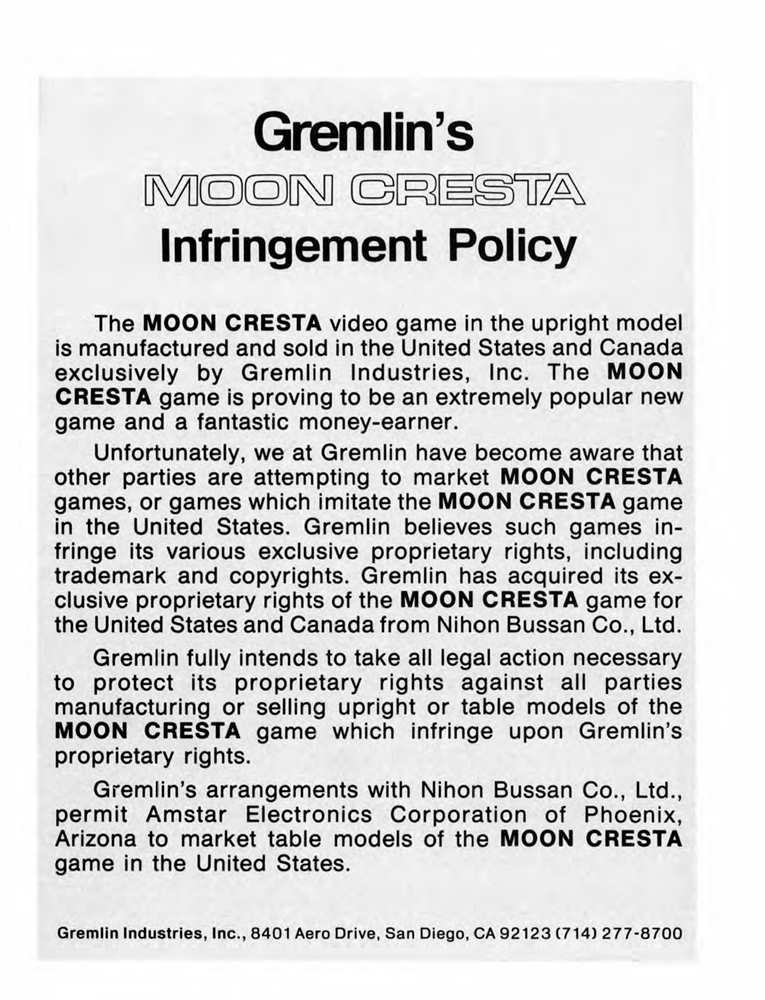
The situation in Japan is also gradually changing. When we approach companies that have copied Sega’s products, there used to be instances of defiance, but that is no longer the case. We are specifically catching copycats, which is a challenging task, but I believe it is a duty for manufacturers to undertake.
On the other hand, as a manufacturer, we are continuously striving to develop products that cannot be copied or are difficult to copy. However, I want operators to understand that this effort will lead to increased costs. The more popular copy products become, the higher the costs of future products will rise.
We are strengthening our distribution network as a detailed sales strategy by reinforcing distributors in each region.
Game Machine: Recently, Sega has been talking about training distributors. What does that mean?
Hayao Nakayama: The market is becoming increasingly diverse and expansive. As a result, Sega will only be able to handle the most common sales strategies. For more detailed sales approaches, we need to position major local companies as distributors. We’re approaching this with a clear direction.
Game Machine: Finally, do you have any requests or comments for the readers of Game Machine magazine?
Hayao Nakayama: Since it’s a newspaper read so widely across the industry, I think it’s time it took a more active role in leading the industry in a positive direction. It’s very easy to read and visually clear, which is great. I’m especially impressed by how few typographical errors there are.
Game Machine: Thank you very much for taking the time to speak with us.
Our thanks to Andrej Preradovic for his help translating this article.
Recent Comments