
 Sega’s transition from the Genesis to the Saturn was a turbulent period in the company’s history that we’re only now beginning to understand, thanks to translated documents and former Japanese executive’s sharing their experiences. There was a lot of good happening, but there were also looming troubles. It’s for that reason that Sega-16 tries to speak as many former Sega employees as possible. We want to help piece together events, and while anecdotal accounts aren’t ironclad, they give us a great point of reference to solve a lingering mystery or create a greater understanding of the inner workings of Sega.
Over the years, Sega-16 has spoken to a lot of former Sega of America management, but this time we had the chance to speak with someone who worked at both Sega’s American and Japanese branches. Mike Fischer began his Sega tenure at a young age and spent his first few years in Japan before transferring over to Sega of America. He went on to executive positions at Namco, Square/Enix, and Xbox. One thing that made Fischer’s experiences so unique was that they were at key points in each company’s history. He spent the better part of two hours telling us about his time at Sega and Namco and some of the historic events he witnessed.
Sega-16: Was Sega your first job in the game industry?
Mike Fischer: Yeah. I graduated from California Polytechnic State University in San Luis Obispo in 1988. I wanted to work in toys and game but started out as an electronic engineering student. I like to say I saved thousands of lives in college by dropping out of engineering to get a degree in economics, and my school was very focused on the defense industry. That wasn’t for me. So, I sort of had that moment where I asked myself what I wanted to do with my life, and I didn’t want to make bombs. I wanted to do things that brought people joy, and I love video games. So, I said I want to either work in the toy business or the games business, and so I wrote my graduation thesis on an econometric modeling of average revenue in the toy and games industry.
I had written about the rise of Nintendo and Atari and about the dynamics of companies like Mattel and
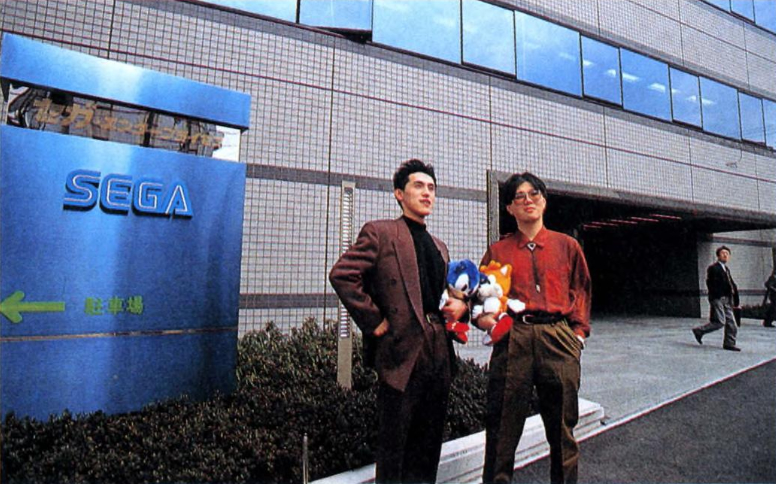
Hasbro. I realized I was not going to get a job at any of these places, coming out of college with degree in quantitative economics, but I had heard about teaching English in Japan. This is before the Internet, mind you; I’m not going online and googling how to teach English in Japan. I sent away for a brochure. I sent like, $10 in cash and a self-addressed, stamped envelope, and someone sent me back this brochure about what to do. So, I did it; I went to Japan. I got a one-way ticket because couldn’t afford a round trip ticket. I taught English for two years, banging on the door of every toy or game company in Tokyo, and I guess Sega was desperate enough or their standards were so low that they hired me. So, I joined April 1, 1990, entry level in the Overseas Consumer Products Business Division.
Sega-16: Just about everyone else that I’ve spoken to from Sega of America started there and then perhaps went to Japan later. You’re the first one I’ve spoken to that started in Japan and then went to the U.S.

Mike Fischer: Yes, I was in Japan from 1990 to about midway through 1994, and then I was transferred. Actually, I asked to be transferred because my father had a heart attack. One of the many wonderful things Sega did for me is that they allowed me to find a job at Sega of America and then sent me there as an expat. So, I transferred to Sega of America midway through 1994 and stayed at there until 1997.
Sega-16: So, you joined in April, a few months before the Game Gear was released, and you were there for the Sega CD debut.
Mike Fischer: Yeah, I was there for all of it. I was there for the birth of Sonic the Hedgehog, and when the memo came out, they said to every employee, “We want to come up with the new Mario-killer mascot character. We want everyone to come up with an idea.” I watched them pick the winners. I watched Yuji Naka steal credit for it, and yeah, I was very hands-on. The Genesis had already shipped in America by the time I joined, but the Game Gear still hadn’t come out. I was there from the start, translating the repair documents for the service teams. I named the Gear-to Gear cable; that was my contribution! Yeah, I was there for everything for the Game Gear.
For the Sega CD. I was I was definitely involved, and I remember working with Sato-san on a lot of stuff behind the scenes for that. I was very much what they call in baseball a “utility player,” when you can play more than a couple of positions. I basically just went where they told me to go and didn’t speak any Japanese when I joined, but I learned it pretty quickly and then actually ended up doing translation for people like Sato-san and Nakayama-san. I did translation for Michael Jackson when he came to visit, and they just kind of… they threw me at anything and everything, and I was happy to do it.
Sega-16: So, you were there when Michael Jackson came the first time?
Michael Fischer: I was at the desk, minding my own business and the head of PR called and said, “Would you be free today to help us out? Michael Jackson is coming in.” My boss was just… I appreciate him more now, but he was just a curmudgeon, and I knew that if I asked him, he would say no. So, I said yes, and I just left the office for the day, and I worked a couple of days with him. I think the first day, we just hung out at an arcade, and I played video games with him for about four hours. They kicked everyone out of the arcade, and it’s just me and him playing every video game in the Roppongi Sega GiGO Game Center (I met him the first two or three times he came to Tokyo, so GIGO may not have been on the first trip). Then, I think it was on a separate trip that he came, and I just translated for him with the head of the team that eventually made Moonwalker. We even went back to his hotel, and we hooked up a Genesis to his TV (the hotel TVs were harder to connect stuff to). He was asleep in his suite. So, I wasn’t hanging out in a house hotel with them, but yeah, Ayrton Senna, the Formula race car driver also came visited Sega. I arranged his trip. It was really a magical time to be at Sega.
Sega-16: For a Sega fan, that’s like saying, “I was there when the Apollo astronauts landed,” or “I was on the sidelines during the Kennedy assassination.” You know, when it comes to Sega’s history, these are huge events.
Michael Fisher: My industry nickname is “Forrest Gump” because people say, “He doesn’t seem smart enough to have done all of those things, and how did he always manage to be everywhere when something big happened, right?” I was at Xbox when Xbox was at its peak, I was at Epic for Fortnite. I was at Namco during the glory days of Ridge Racer, Tekken, and Soul Calibur. So, yeah, I’ve been fortunate to have impeccably lucky timing, for sure.
Sega-16: That’s amazing. When you joined Sega, you didn’t have designated position? Most people usually started as a tester or something like that.
Michael Fischer: No, I didn’t even have a title. I think my business card just said, “Mike Fisher, whatever. Consumer Overseas Sales Department.” There was no title for me at that point, and they really didn’t know what to do with me. Again, I spoke very basic Japanese because I had been an English teacher for two year, so I was trying my best. I really didn’t speak very passable Japanese, but I think I was the only person that they interviewed who actually knew about the business from the business standpoint. So, I did everything. I had to play the games in development and sort of write sales brochures for our distributors and subsidiaries around the world. When I had to copy the ROMs, which was the most horrible experience in the world because they had these little ROM copiers, and you had to squeeze the ROMs into the copier, copy them, make sure that the copies were correct, and then push them onto these cartridge PCBs, these cartridge computer boards. There were 12 little tiny legs on every chip that you had to squeeze in the 12 holes. If you pushed them down wrong, you broke a leg. It was just the most miserable job. I also took screen shots. I didn’t take the screenshots for the instruction manuals, but I took a lot of the screenshots for all the marketing materials. We literally would have a camera with a machine where you could freeze the frame on the TV screen. You’d freeze it, and you’d just take 36 pictures of the same frame and then send a transparency of that were 36 frames.
So, I was doing just literally anything and everything, but little by little my Japanese became better. My girlfriend, who became my wife, was a bit of a career coach because she worked at a Japanese office, so she could help me figure things out. Then, little by little, they gave me more responsibility. I’m very grateful to Sega because when I came in, I knew nothing. I had no business experience. I had no job experience. I didn’t speak Japanese, and all of those skills I learned on the job at Sega from very patient and tolerant co-workers, many with whom I’m still friends and forever grateful to.
Sega-16: Then you transferred to Sega of America where you became a product manager?
Mike Fischer: I always wanted to work in toys, and after three years, I finally had a chance to go work in the Sega toy division. They had a very successful toy division in Japan, and then they came out with a product, Pico, that they thought was something that had the potential to also go overseas. They needed some support in the U.S. My father had a really big heart attack, so I went to Executive Director Dai Sakurai, who focused on the overseas business, and he said “Do it. We’ll send you.” So, in 1997, I think it was, I went over. I remember [Executive Vice-President and Chief Operating Officer] Shinobu Toyoda was like, “Okay, what’s your title? We need to put it on your business card.” So, I gave myself a promotion. I’m a product manager! That’s how I became a product manager, and I was basically a liaison between the U.S. and Japan.
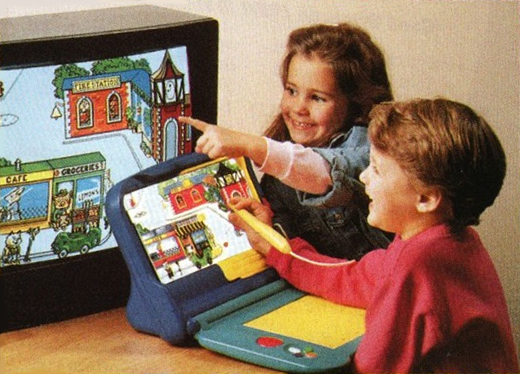
Again, I had wonderful American boss at Sega of America, Lydia Gable, who was super smart. She came from Mattel and taught me everything that you would want to know about product management and retail marketing. Pico ultimately wasn’t a successful product. It lost money in the U.S. because the the costs are so high and the the pricing pressures were so hard. but in as far as life experience goes, yes, it was fantastic. I was the product manager. I sat with all of the the Genesis and Sega CD people. We were all in the same area, and even though I wasn’t working on those products, they were people that I had come to know over my first four years. I had always been on the Japan side sending faxes to them, and now I was working with them as as colleagues, which was which was wonderful.
Sega-16: Your introduction to Sega was on the Japanese side, and you were there through the earliest hardware releases. The Mega Drive had been out since 1988, but 1990 is when it finally began to hit a stride in terms of software offerings. The Game Gear arrives at this time as well, in 1991. So, by the time you come to the U.S., the Genesis is number one and there’s the Sega CD, the Game Gear, and everything. It must have been kind of a corporate culture shock, I guess, to go from seeing Sega entirely first from the Japanese side and then seeing how they do it in the United States.
Mike Fischer: Yeah. I remember my biggest shock was going into the the copy room because Sega had always been very frugal and hadn’t been particularly lucrative or successful until the last few years. I remember walking in, and there’s a coffee machine, and some guy printed like, 300 sheets of something. He said, “Oh, it printed on the paper with the holes” and just picked them up and threw them in the trash can. In Sega of Japan, we had a special box that you put the stuff that you copied but didn’t need so you could turn it over and use the blank side as scratch paper. I’m in a different world now!
To be honest, I think a lot of people in America looked at me and went, “Oh, he’s Japan’s spy. He’s here to keep an eye on us,” which wasn’t true. People there were saying, “Please help us support them better. Why would he be a spy? Are we are we hiding something? Aren’t we like all on one team?” Those were the exceptions. I mean, by and large, Tom Kalinske had assembled this amazing talented team, and a lot of them were people that he knew from from his Mattel days. I think he also just had had a good eye for talent. You talk about the people like Joe Miller and Diane Fornasier – just an incredible team of confident superstars that Tom really empowered and gave very clear direction, strategy, and inspiration, but he also gave the teams a lot of empowerment. So, I learned so much from that team that he put together. I don’t think I’ve ever worked with such a a talented team before or after.
Sega-16: I’ve heard stories about people thinking that Japan was sending people over to spy on them, report back, or at least keep an eye on them. There’s this whole mythology out there about how Sega of Japan and Sega of America had this internal rivalry or jealousy. We’ve spoken to so many people on the American side, and there are a lot of people on the Japanese side who are speaking or whose documents are being translated. I don’t think it was much of a rivalry as it was a difference in corporate philosophy that sometimes caused some friction. It wasn’t that one side was trying to outdo or or sabotage the other side or anything like that. I think it was differing philosophies that sometimes caused a little bit of of friction, but I have heard that from other people.
Mike Fischer: There was definitely a lot of awkwardness because the the Japan team had not been very successful with the Mega Drive, and the U.S. and Europe had been. So, there was always this weird thing where the middle managers would be trying to tell Tom what to do, and Tom knew more than they did. Nakayama really trusted him implicitly.
One of my favorite stories was – again, I got to be a fly in a wall – I got to be in meetings that normally someone at my level in the organization wouldn’t have been invited to. There was one where Tom and the team were coming to talk about Pico. I mean, this was perfect for Tom because it was a toy product We had like a Sega movie day or something, where they took us all out to the movies to celebrate something. There was a Toys ‘R Us not far away, so I went there after the the movie, and I saw Tom. He was hanging out there, and I was looking for a toy for my son called Jibba Jabber. You know what it’s like to try and get help at Toys ‘R Us; there’s nobody there. So I ask Tom, “Do you know where Jibba Jabber is?” He didn’t even look it up and said, “10-C.” He knew where every product was, of course, from his Mattel days, where Toys ‘R Us was critical. Even in the games business, toys were 25 percent of our business. That’s how on-point Tom was.
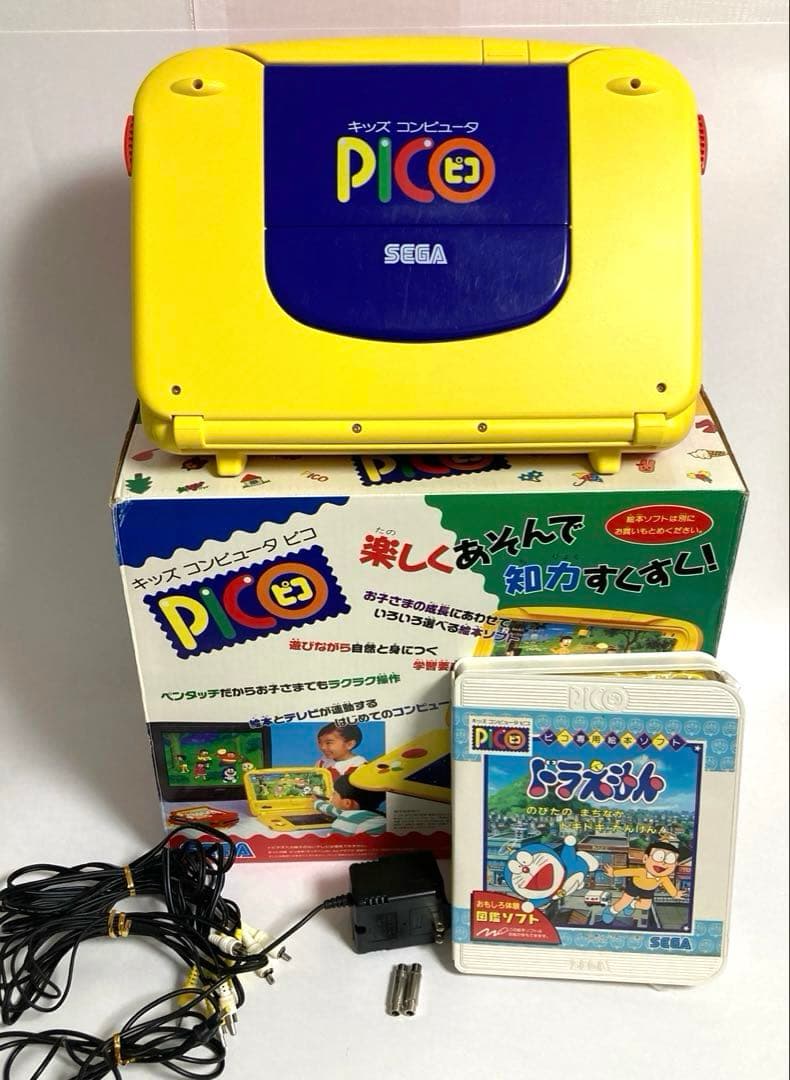
So, Tom and his team come, and he had said to them on an earlier trip that this thing could be the biggest thing ever, but it’s got to be $99. When they bring out the final version, they’re like, “This is going to be $149,” in the U.S. is what they were telling us, it might have been more than $149. I think the cartridges, the storybooks, were like $49. and Thomas is like, “Guys, this is this is going to be really hard to sell at this price.” Nakayama walks in and he sees it and he’s speaking in Japanese to the team, so I can hear what he’s saying, but the the Americans translator can’t keep up. Nakayama says to the Japanese, “You idiots. You have the most knowledgeable person in the world on this topic who’s been telling you from day one what you need to do to be successful, and you’ve systematically ignored everything that he said.” He grabs the handle, and I don’t know if he pulls it off, but he bangs it and goes, “Really? You need this strong of a handle? You need a handle like this on the top of this product? Why?” Then he picks up the the software, which is like a cartridge and a book formed into one, and he goes, “You need this much plastic in this cartridge?” and he slams it on the table like a like a gavel. Bam! Bam! Bam! Tom’s eyes are as wide as plates because he doesn’t know what’s happening. As far as he knows, Nakayama was mad at him. Nakayama then says, “He told you to keep the price down!” Bam! Bam! “And you didn’t listen!” Bam! Bam! “Go back, and pay attention next time!”
Nakyama, at that point, just had so much respect for Tom and his team. I don’t think it was necessarily professional jealousy, but I get irritated sometimes. They were like, “This is the tail wagging the dog. They’re the subsidiary. Why are they telling us what to do?”
Just one one more anecdote – I don’t remember what the game was; I wish I could. When I was trying to get some information on a game in development so I could tell the U.S. side, “That this was the game that’s in development. What do you think? What’s your feedback?” It was a big part of what I did, and I’m trying to talk to the game designer, and he’s not even really paying attention. I went over to his workspace, and he’s playing his alpha version of the game, and I’m trying to get some information about it, and he’s just not into it; he doesn’t really want to talk to me. He’s being an ass and and I go, “I’m trying to get information so that the overseas subsidiaries will want to order this game.” Remember, these are cartridges. They had to order them from us. He basically said, “If they don’t like my game, they don’t have to order it.” Okay. So, I gave them a very perfunctory summary, and they said, “Pass.” The guy came to me and goes, “No! They’re going to cancel my project because the overseas teams don’t want it!” because, of course, the overseas partners are like, 90% of the market, and he couldn’t put two and two together until they canceled those projects. I’m like, “Too late now!” so they canceled his project. So, those were some of the dynamics that were were going on.
What eventually happened was that the market peaked, and Super Nintendo came out. It became more competitive, and at the same time, the Japanese domestic market had fallen even further. There was more pressure on the U.S. and Europe to to perform. I just remember there was one time where Tom, Shinobu, and the team came in, and they did their forecast. Nakayama wanted them to reach some number. I don’t remember which, but it was some fantastically higher number, and Tom was like, “That would be like, 70% market share versus Nintendo, based on the market growth projections that we have, and those growth projections are pretty pretty robust,” and Nakayama, of course walked out after he gave his missive, and Sakurai-san and the others were sort of left to clean up. They’re just like, “Well, you’re just going to have to hustle a lot harder.” That’s when there became a gap between Sega of America’s performance and then the expectations for it, along with Saturn underperforming, the 32X, and Sega CD. So, the the honeymoon didn’t last forever, but it it wasn’t as simple as “they were jealous,” but there was definitely some resentment, particularly because I think Nakayama respected Tom and gave him so much autonomy to do what he needed to do.
Sega-16: When I look back on it, it seems that at as time went on, Nakayama was kind of in a bit of a bind because he had his loyalty and respect for Tom, but he was also pressured by his board of directors. He was kind of between a rock and a hard place when he had to make decisions there.
Mike Fischer: And yet, Nakayama was brutal. I saw him just tear people to shreds, and yet he was always so kind to me. I was terrified of the guy, and every time I had an interaction with him, he just treated me with kid gloves. I mean, I was a kid, and what I realized was that if you were a junior person, or especially if you were a creative person, he was really easy on you. But if you had like any kind of management title or you were on the business side in a management role, he was merciless. I was a young guy, and I never got to see the mean side, not even later in my career when I had to engage with him in another job – nothing but the best of experiences. But man, you did not want to get on his bad side. But yeah, I think it was exactly what you said. He was under pressures himself. Costs had ballooned, and Sega of America and Sega of Europe as well… you can’t overlook their contribution. They were the engines that were keeping it going. So, yeah, it was really challenging at the end.
Sega-16: I recently did an article about the making of Shining in the Darkness, and the person who who did the actual dungeon designs, Kan Naitō, explained in a translated interview about when he met Nakayama. One of the things Naitō wanted to do was to raise the profile of game developers in Japan, so he was doing interviews for magazines and on TV. Apparently, the person who was setting up those interviews had contacted Nakayama and Sega and set up an interview as a surprise. He said that when he first got there, there were people all around Nakayama and he was screaming at the head of the PR department. So, Naitō was freaking out because his first introduction to Nakayama was the man chewing out somebody for the way he was doing things.
Mike Fischer: That sounds very familiar to me. There was this one time with a German reporter, and I’m just there for the ride, and the European business manager was doing the translation. In the middle of the meeting, Nakayama says, “Your translation is shit,” and he turns to me and he says, “You translate.” Fortunately, it was one of those situations where whatever conversation they were having was within my comfort zone. The vocabulary they were using was all the vocabulary that I had, and it went really well. Then, instead of saying “good job,” he just turned to the other guy and goes, “See how much better he is than you?” That was his compliment to the other guy. So yeah, he did not hold back, even in those those interviews.
Sega-16: I don’t know if you’ve seen this article about a lecture Irimajiri gave in 2022, where he talked about Tom Kalinske’s departure and SOA’s financial troubles around 1995-1996. I was wondering if you knew anything about that or had something to add. There’s a lot that’s still unclear.
Mike Fischer: I was still a junior team member back in those days, so I got to sit in on some amazing executive sessions, but I wasn’t a key participant and wasn’t privy to any of the discussions you mentioned. Also, I was pretty focused on Pico at the time and wasn’t involved with Saturn/32X at all; however, I do have some general observations.
All the stories are pretty consistent and ring true to me. Keep in mind that the Mega Drive was already dead in Japan while the Genesis was still going strong. That’s why the US team wanted to keep reaping the benefits of the Genesis active installed base while Japan wanted to quickly move on to the next generation and have another shot at success. In retrospect, the introduction of the Super Nintendo meant that Sega Japan was right to quickly prepare for a next-gen battle.
I think the criticism of Tom for not managing the U.S. inventory and the price protection issue is a little bit of “victim blaming.” At this point, Sega still had an export-driven model. Sega Japan sold and shipped hardware and cartridges to Sega of America, and kept most of the added value on the Japan P&L (profit and loss). Of course, it all evened out on the consolidated P&L at the end of the day, but the Overseas Consumer Products Division (my division) only knew how to do one thing: push the subsidiaries and distributors to buy more product. A subsidiary like SOE or SOA really can’t refuse. Europe doesn’t have price protection in its markets, and it also has more global outlets it can use to clear old inventory, but the SOA team is stuck with what gets shipped to them. SOA pushed back hard, but at the end of the day, it needed to order quantities big enough to satisfy its HQ counterparts.
Sega-16: I want to shift back to the Game Gear for a second. What did you think of it when you first saw it?
Mike Fischer: When I first saw it, it was huge, right? It was just like this… I think they called them bread boxes back in the day, right? It had a color screen, and it was the most incredible thing ever. We didn’t know how short the battery life or some of those other things would be. It was just this miraculous device because remember, the spinach-green Game Boy was all we had at that point. The Game Boy was incredible when it came out, but it had been out for a few years. So, this was fantastic and it was interesting to see how much of the Master System was in it. It was basically a Master System inside, right? That was how they they managed to do it. Then of course, I learned to hate the Game Gear because for whatever reason, it was my job to translate the repair instructions. So, again, there was no Internet; there was no Google Translate. I had this giant paper Japanese/English dictionary. I had to look up words like, “heat pressure machine” or “benzene solution” and all of these things, and then I had to do all the pieces. So, there all of these computer components. There was the cable for connecting to two Game Gears, and my boss is just like, “Name all these products.” I’m like, “Okay.” TV Tuner? I didn’t have to worry about that. Then the cable, I just called it the Gear-to-Gear cable, and I was so proud of myself. I named a consumer product! I remember they had this huge external battery pack. These are like nickel-cadmium batteries, right? It just weighed a ton and was this weird pill-shaped, you know, a rounded long thing.
Sega-16: The one that you could clip to your belt?
Mike Fischer: I don’t remember if it went on your belt or not, but it almost looked like a miniature scuba tank. It was that shape, and it weighed a ton. It was just so fun for me because again, the Mega Drive/Genesis shipped before I joined. So, it was just amazing for me to see the whole process from beginning to end and see the little fluorescent light tubes that sat behind the LED screen. And when the TV Tuner came out, that was just magical. I remember my boss didn’t have a TV at home, which at the time was kind of revolutionary. So, he watched TV constantly on the TV Tuner, and it was just magical. We were just doing doing things that you didn’t think could be done.
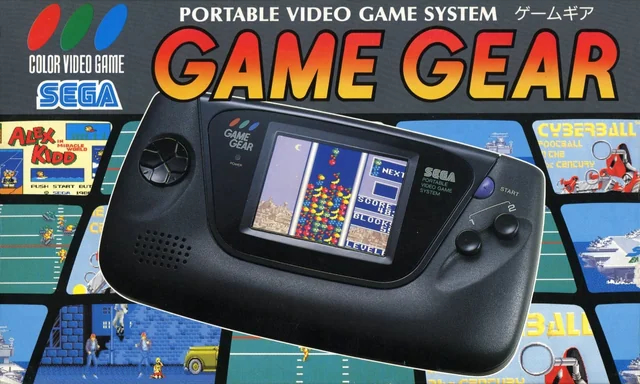
What’s always remarkable to me is that the Game Gear is often portrayed in the media as an unsuccessful product. I think, and you can’t quote me because I don’t know what the real numbers are, but I think we made more money from Game Gear than we did from from Genesis by the time the Game Gear had come out. So, not cumulatively. And I always remember that they had these incredible tracking studies in the U.S. that showed that when Nintendo would run a big campaign for Game Boy, Game Gear sales would go up because people would go to the store to buy a Game Boy, see Game Gear, and buy Game Gear, to some percentage. Nintendo was selling more Game Boys than we were Game Gears, but our our product was more expensive, so we ended up sometimes getting a higher lift from the Nintendo campaign than Game Boy did. It was a really remarkable phenomenon. I think because it was basically a Master System inside, we were able to bring a lot of Master System content to Game Gear. Also, if you were developing some of the late life cycle Master System games like Sonic or something, it was very easy to to put it on Game Gear. And again, the cartridges were much cheaper to manufacture because they were smaller. It was just an incredible device.
I eventually worked in the toy division. There’s some interesting crossovers from the toy division to the game division. I’ll tell you a story about them. The toy guy was the guy who invented the the TV Tuner. Where did he come up with such a genius idea? You probably heard the story I’m told about the the inspiration for Sonic the Hedgehog, which is an amazing story. Like, “I just woke up one day, and it was in my head.” I was so disappointed. That’s your story? “That’s my story.”
Sega-16: Referring to the TV Tuner, was it Hiroshi Yagi? Is that who you’re talking about?
Mike Fischer: No, the guy I mean didn’t design the game, but the TV Tuner for the Game Gear was Makoto Ohara, who was a toy guy. He was the key guy behind Pico as well. So, he was just the TV Tuner guy.
Sega-16: That’s right.
Mike Fischer: Again, forgive me for getting off topic, but one of the interesting crossovers between my toy and game experiences was that I learned how toy plastic molding work. They just took the time to teach me stuff that they had no obligation to teach. One day, I’m walking by the Saturn design office. I don’t know why, but I was probably meeting someone for lunch. They had had these mock-ups of what the Saturn was going to look like. You know how like hot rods have the little sparkly flakes in the paint? It looked like that, just gorgeous. This is hand-painted work. I looked at it and I go, “One of the things I learned in toys is you can’t put sparkly stuff in your plastic because when you injection mold it, you will see the flow lines. The sparkles are not evenly distributed because they come into the mold from certain holes, and it’ll look like the Kīlauea volcano.” They looked at me like they didn’t know who the hell I was, and they’re like, “Yeah, saying thanks for your point of view, young foreigner. Don’t let the door hit you on your way out.” Okay, whatever… not my circus, not my monkeys. Then, just by sheer coincidence some number of months later, I was there when the pre-production shell came off the assembly line – literally grown men with tears in their eyes. And guess what? It looked exactly like what I had told them. It looked like shit. It was like something from a manufacturing class because you could see where the plastic came in the holes in the mold and then flowed through to fill out the rest of the mold, and it was useless. I’m very proud of myself for not saying, “I told you so.” I just kept my opinions to myself. To this day, I think about what an amazing coincidence it was that I was there for both of those data points. It was an interesting crossover between the toy division and the games division.
Of course, you’ve spoken with Diane Fornasier, who was really the mother of Game Gear and really drove that that entire product launch from start to finish and did a wonderful job. Tom is, of course, legendary for doing the Sonic versus Mario campaigns… very unconventional (in fact, illegal in Japan to do competitive advertising). They did it, and it was a success. So, when Game Gear came out in Japan, they kind of did the same thing, which was an amazing tribute to Tom. I don’t even know if he knows, but they they didn’t show Game Boy – they couldn’t show Game Boy – but it was a TV ad you can probably find on YouTube. I don’t remember if they filmed it in black and white. Maybe they did; I can’t remember, but they showed a guy from behind playing what was clearly a Game Boy, but they didn’t show the Game Boy product. There’s the guy with the Game Gear, and in my memory, it was in color, but I don’t trust my memory. He’s looking over and saying, “Oh, yeah. Still playing the game in black and white, huh?” Then he holds up the color Game Gear, which is very cheeky because it fit the letter of the law in Japan that said you can’t show a competitor’s product in advertising, but it definitely broke the spirit of the law. It was pretty funny.
Sega-16: When I talked to Diane Fornasier, I asked her about how some people considering the Game Gear to not be a success. Hideki Sato also talked about that because people think that if you’re not number one, you failed. Well, that’s true in terms of striving to be number one, yes, but products that aren’t number one can still be profitable. He said that the the Game Gear was quite profitable for Sega, and it was a successful product. They supported it for seven years.
Even before I spoke to her, I spoke to Robert Botch who launched the Game Gear in the U.S…
Mike Fischer: Holy smokes, you talked to everybody! Bob Botch, there’s a name I haven’t heard in a long time.
Sega-16: He told me that it was a kind of a struggle sometimes for Game Gear to get the same share of marketing because the lion share was always going to go to the Genesis because that was the the big thing. I wanted to ask you if you saw anything like that in Japan? Did they get even shares, or did Mega Drive get a larger portion? Was it perhaps put in a more prominent position in regards to marketing?
Mike Fischer: Well, you’ve got to understand that Mega Drive was just dead in Japan almost from the outset. I mean, they kept pushing Mega Drives out the door, but no one was buying them. As happened later with Dreamcast, their market was primarily completionists who just bought every product that Sega made so that they could have the perfect collection. So, there really wasn’t much to compare to. Any Game Gear marketing would have dwarfed Mega Drive marketing because Mega Drive was dead in all by name by then.
This time also I have to be fair. I was very focused on the overseas market. So, I saw domestic marketing as a consumer, but there was very little synergy or communication that I ever saw with the domestic marketing guys. I really never really interfaced with them at all. I’d come home and watch TV on the weekends and see the Game Gear ads. That’s that’s the reason that I know. Of course, by that point even like the game development teams in Japan were kind of like, “Well, I’m making a game mostly for Japan, or I’m making game mostly for the U,S.” There were exceptions, like Streets of Rage or some others, that really didn’t have a market in mind, even Streets of Rage 2. By the time it came out, the U.S. team was designing some of the characters, like the rollerblading character, to make the game more appealing to the U.S. So, even when I was doing work between the Japanese teams and the U.S. teams, there was usually a sense that this game was already being built with primarily the overseas market in mind.
Sega-16: Were there any games for the Mega Drive that you thought should have been localized in the U.S. but weren’t?
Mike Fischer: No, I mean at that point, we were selling the games as fast as we could make them. So, there was just a hunger to get any kind of game that we could, that we could find. I’m trying to think. I mean, the games that I was the most deeply involved with are the ones like Ayrton Senna Monaco GP, the Disney games, or Michael Jackson’s Moonwalker that were very much designed with the overseas market in mind. Usually, they parachuted me into the projects because there was somebody who needed to approve elements of the game either Disney, Michael Jackson, or Senna. Smoother communication between the teams was really important, and these teams are just usually led by people who are good communicators even to other Japanese people. So, it was always a challenge to get people to really communicate what was going on in the game to the overseas partners. “I’ll tell you when it’s finished,” was something I heard a lot from them, so I didn’t usually focus on the games that were like that. I always wish we could have brought the game Rent-A-Hero to the U.S, if you’re familiar with that one, because it was a game with so just many inside industry jokes, and inside Sega jokes. That was one of those few domestic teams where I got to know the guys, and they were just like really cool, really fun guys, I love them. I love them a lot.
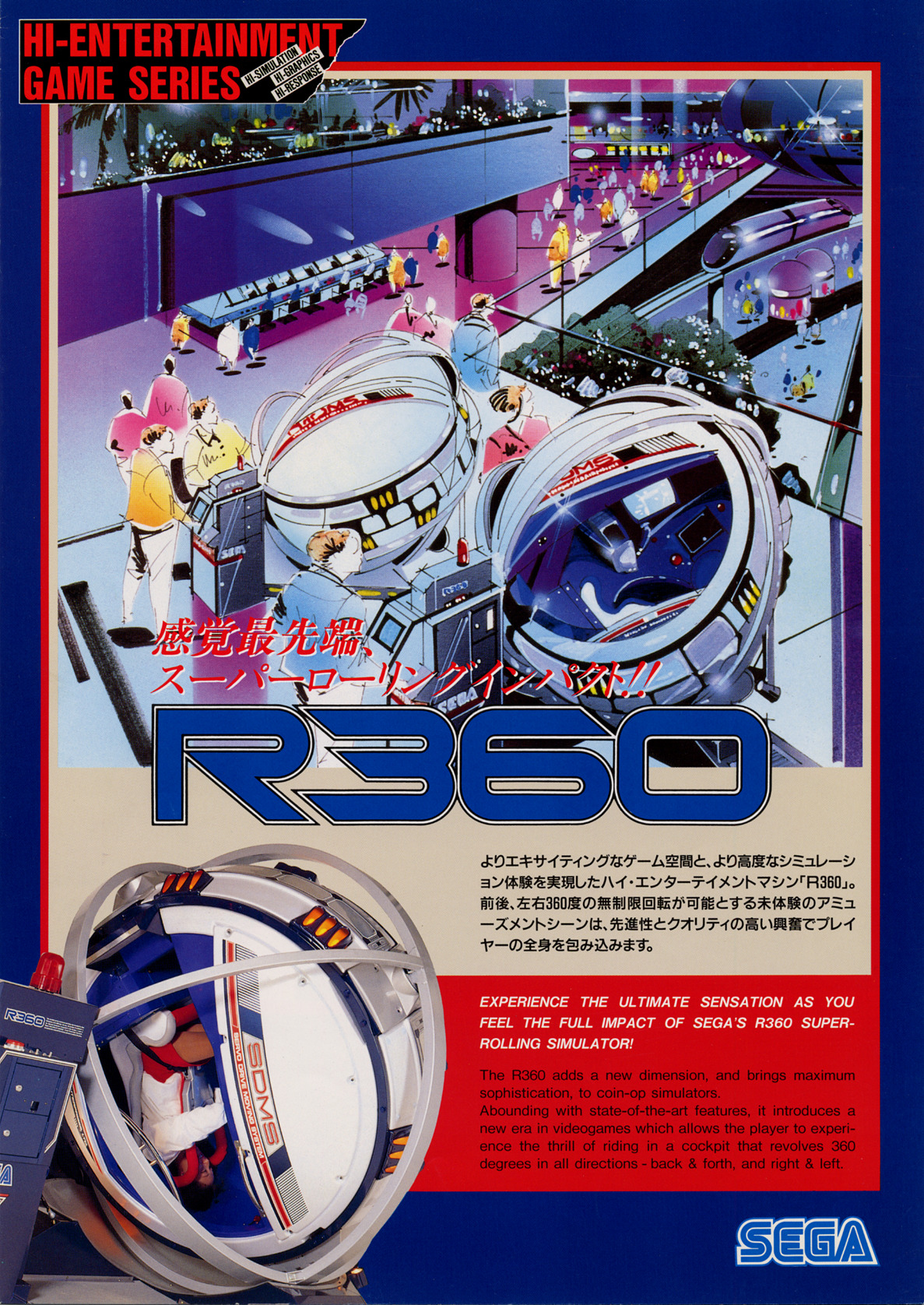
They eventually brought R360 to the US, which was fun for me because they photographed me and scanned me as the safety guy to go inside the machine. They didn’t tell me! This was a typical day for me, and I go to work, and they’re like, “Hey, go to the AM1 division. They need you for something.” Okay. I go over there, they go, “We need to take some safety photos. Get in the machine.” I just looked like a dork, you know? I was wearing my suit and tie or something. If they would have explained to me that we’re going to put this in the game, I would have borrowed a leather jacket or something. I looked so stupid that when they made the U.S. version, they put the letters over my face so I wouldn’t look so goofy.
Most of the games that I was I was dealing with the most were very much focused on the on the overseas market. I think I had to translate the strategy guides for Phantasy Stars two and three because where I ended up using a lot of my my Japanese. I learned my language skills there. I worked very closely in all the the Disney games and Emiko Yamamoto, who was the designer and is still a friend of mine. If you’ve never spoken with her, you should. She’s an incredible talent.
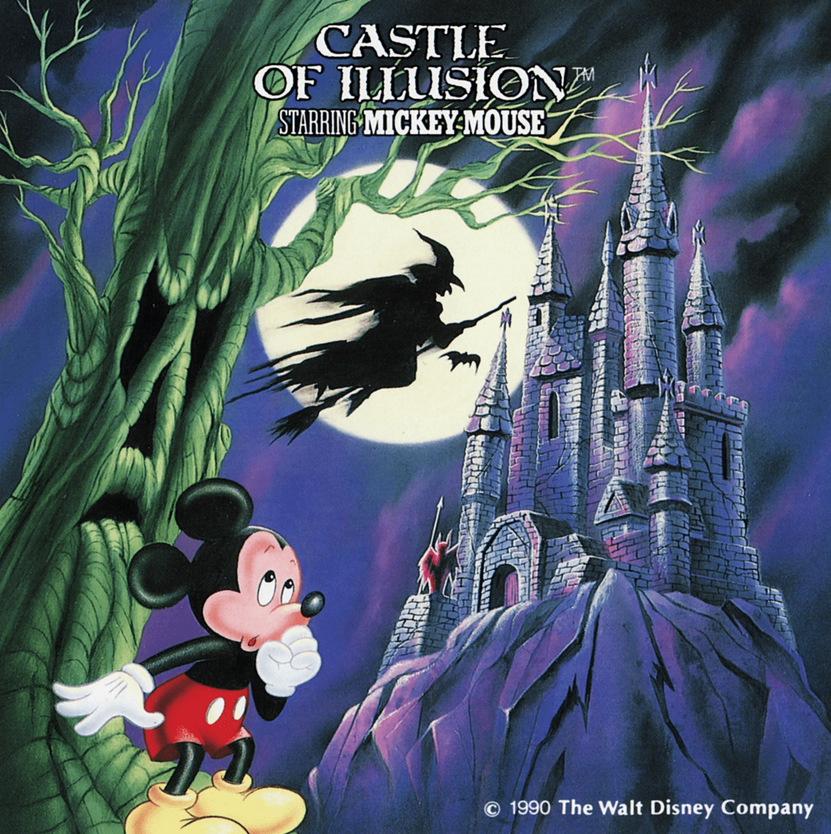
Sega-16: Castle of Illusion is my favorite Genesis game of all time.
Mike Fischer: Oh, me too, absolutely. It’s in a lot of people’s list of the top 10 games, but because Mickey Mouse is perceived as a kids game, some hardcore gamers probably missed the chance to play it. Some of those modes are great, like where the up and down are reversed or even things like the kids mode. I really am disappointed that more people haven’t picked up on this idea of a children’s mode which was entirely an idea where it’s just the first level of the game really simplified, and it was perfect for me because my kids were very young at that age and they couldn’t play other games, but they were able to play the kids mode of Castle of Illusion and got an incredible sense of accomplishment and pride from being able to do that. It was just one of the most interesting and innovative things ever done in games, and it hasn’t been picked out. I don’t think anyone else ever did it after that.
Sega-16: Sega Japan had some incredible talent who made the Genesis shine from the start. I was in heaven with games like Golden Axe, Phantasy Star II and The Revenge of Shinobi.
Mike Fischer: Remember the original version of that game? It had Batman, Spider-Man, Terminator, and Godzilla? Hilarious! Batman sprouted wings and flew around the game screen. I mean, that was before I joined, but they had no concept of IP.
I’ll tell you one more story about that. I walked into the art department while they were making the game Wrestle War, and the guy’s painting the cover, right? He’s painting this picture of Hulk Hogan in in the wrestling ring, and he’s got a photo of Hulk Hogan that he’s using for reference. I’m like, “Oh, wow. This is great. Wrestle War,” and I say, “This is not a licensed WWF game. I don’t think you can do that.” Literally, I’ve been at the company like six months, so I didn’t know shit, and the guy is just like, “Okay, none of your business. Don’t let the door hit you on your way out.” They published the game with Hulk Hogan on the cover, and they got a cease-and-desist letter the moment it hit. So, if you look at the revised cover of Wrestle War, they basically just painted a black wig on Hulk’s face! It’s just so awful.
Sega-16: I love to hear all these behind-the-scenes and inside stories because they give you a great perspective of what people were thinking and how things were being done. That’s one of the reasons why I do this. I was in high school when the Genesis came out. You would just look at a game and wonder who made it since Japanese developers weren’t allowed to include their full names. Yuji Naka was “Muu Yuji.” If the music of a game was done by “Bo,” that was Takuhiku Uwabo, but he was listed as “Bo.” That was all we knew. All you knew was that the soundtrack was going to be great because Bo did the music.
As the years went on, I wondered, “Who are these people?” They made so many amazing games that have stayed with me my entire life, and I really would like to know how these games were made. It’s just really gratifying to be able to to talk to them and tell them how much I enjoyed their work or how I still play it or still have it.
Mike Fischer: Well, and you’re taking down some important oral history as well, right? Because these stories need to be told and recorded. It’s meaningful art, and that’s an important part of our cultural history, but at the time they came out, they weren’t really respected as art. So, a lot of those important, behind-the-scenes stories are at risk of being lost. As I’m sure you’ve heard, some of the code itself has been lost. Preserving this this old code is another really important thing that we have to do. So, you’re doing an important service.
For the names in the game, the first games that that someone gave me a chance to put my name in was Emiko’s Disney games. My name’s in hundreds of games now. It doesn’t really mean anything anymore, but oh my goodness, the first time… and again, she said, “You can’t put your real name in,” and my son had just been born. So, I put my son’s first and middle name into the game. Of course, as my kid grew up, tough luck for my second kid! He never got his name in anything, but Jackson got his name in in the Disney games. He grew up hearing these stories, and at GDC (Game Developers Conference) this year he met Emiko. My son’s 35 now. She was like, “That’s the kid whose name you put in Castle of Illusion?” So, it was a wonderful, kind of full circle event for the three of us.
Sega-16: I was just looking at the credits for Castle Illusion to see if I could spot who it might be.
Mike Fischer: You’ll know when you come across it in the special thanks. I’ll give you a hint: it’s very presidential.
Sega-16: Jackson Yu.
Mike Fischer: That’s my boy!
Sega-16: I’m looking online at Sega Retro. It says, “Jackson is the son of Mike Fischer, a former Sega of America employee. His name has been used instead of his dad’s own due to reasons unknown at Sega Enterprises.” Not anymore!
Mike Fischer: Yeah. I mean, you think back that was what? When?
Sega-16: It says his name appears in Castle of Illusion and World of Illusion.
Mike Fischer: That’s what, 30 years ago, right?
Sega-16: Yeah.
Mike Fischer: And you know, Emiko is still a friend. I’m still in touch with Tom and those guys, and we all have a really special bond. In fact, two two years ago, I was really lucky. I was still in the U.S. at that point, and they had a Sega reunion up in San Francisco at the former Sofitel Hotel, which was next to our office building. That’s where we had all of our meetings and social events. Almost everybody was there – Tom, Paul (Rioux), Shinobu – it was incredible. I think that for all of us, really, Sega wasn’t just a job we had at a certain point in our lives. It was the most important job that we had in our careers. It’s really a wonderful fraternity that we all have because we were this ragtag band of losers who turned it around, and for a while, we were on top of the world. It didn’t last, but what an incredible ride it was So, I’m very happy you’re telling the story.
Sega-16: People have talked about a change in the environment during the Saturn period. The Saturn wasn’t doing as well as expected, but like did you notice a change in the atmosphere or the work environment there during that period? What was it like compared to perhaps when you got there while the Genesis was still the main product?
Mike Fischer: That’s a harder question for me to answer because I had moved to the toy division. I wanted to work in the toy division from the start, and it was always funny because I had a friend who was another American guy who was sent to the toy division while I was sent to the game division. He wanted to work in games when I wanted to work in toys. Then, after three years, my division was basically, sort of disbanded, and then I was free to go to the toy division. That was about the time that Saturn was was heating up, so I didn’t have as much visibility as to what going on with Saturn other than the sort of occasional engagements like the the flow lines thing I was talking about.
At that time, of course, a lot more of the games were being made in the U.S., and other than Sonic Team, which was in the U.S. but was still basically a Japanese team. With the games that were being made in the U.S., the costs were outrageous because developers were more expensive. There was not a real sense of frugality in in the U.S. either, and the teams were much more experimental, whereas on the Japanese side, the roots were always in the arcade business. It was all about taking a Virtua Fighter game or something that was technically incredibly challenging and porting it over to Saturn. In the U.S., it was more about doing something designed for Saturn from the start and taking it from there.
The thing about Saturn is they had really poor documentation. It was just such a more complex machine, and it came out so quickly that a lot of the technical documentation couldn’t keep up. They tried their best. They even had developer conferences in Tokyo where they brought people in. They tried their best, but it was more complicated to develop for.
The thing that I always wondered – and this is pure speculation on my part – but so much of the success with Genesis was because of that workhorse Motorola 68000 chip that they had in there. I sometimes I compare it to the Nvidia 1080 GPU which just punched above its weight for so many years after it came out. There was a sequel or a successor to the 68,000 chip (I forgot what number they gave it, 68,000 and something) that they could have used that would have made the Saturn so much easier to develop for, and there would have been continuity. I think it would have been a more powerful chip, but they instead went with a Hitachi chip, which wasn’t very good. It was very optimized for 2D, and again, I have no idea, but I often wondered if there wasn’t somebody from the Ministry of International Trade and something… some government bureaucrat who kind of whispered into Sega’s ear, “Hey, why don’t you use a Japanese domestic manufacturer for the next generation?” I always wondered like why they did that because clearly, Sega had no qualms about using American chipsets to start with. So, there was no internal bias, and we’ll never be able to ask Sato-san now that he’s passed away, of course, but I’ve always wondered if there was something going on.
There was a similar story for the Dreamcast, as well. There was a team in the U.S. designing one set of architecture and a team in Japan, and if you asked the U.S. team, it was all corporate politics. I have no idea, but I don’t know what happened with Saturn. I was focused on Pico at that point. My joke was I wasn’t responsible for the failure of Saturn. I was responsible for the incredible success of Pico.
Sega-16: The Pico outlived the Saturn and the Dreamcast.
Mike Fischer: Oh my gosh, I didn’t think about that. Yeah, I suppose you’re right.
Sega-16: I think they were producing it until 2005.
Mike Fischer: Oh, I’ve got another great Tom Kalinske story for you related to that. Tom’s looking at the Pico. He says, “Let me get this thing straight. This thing is wired to your TV, and it’s got this pen, this input device that’s wired to the Pico. If a kid picks up this thing and walks away with it, it’s going to pull the TV off the stand, and that could hurt somebody.” The toy division didn’t really have the respect for Tom that the game guys did. They were like, “Okay, yeah. Thanks, Tom,” and son of a bitch, I was at home in the U.S., and my younger son did that exact same thing. If someone else had been sitting a little closer to the TV, it would have crushed him. Tom had so much wisdom and experience about toys. He recognized that safety issue right away… but I digress. So, yeah, I was very focused on Pico, and I wasn’t as close to to Saturn and what went on there.
I do remember because when the Sega CD came out, one of the advantages was you could manufacture the CDs locally and save a lot of time. The business division was set up like an export division, so Sega of America ordered the components from Sega of Japan, and so those were counted as sales. I remember that the Sega of Japan sales team wanted to manufacture the CDs in Japan and put them on a boat and ship them to Sega of America so they counted as sales, as opposed to what was initially just a royalty arrangement. So, the profits were the same, but it made the sales look bigger. Someone had to sit down and explain to them that they weren’t manufacturing CDs in Japan, putting them on a boat for Sega CD.
Sega-16: You left Sega to go work at Namco, but then you came back after Sega had left the hardware market.
Mike Fischer: I had in 1997. I went to Irimajiri, who was in the U.S. I went to him directly, and I said, “Listen, thank you so much for this opportunity everything.” Remember Irimajiri wasn’t one of the old school guys and he was very gracious, “No, I understand. Thank you for your service.” I was just like, “I’m going to go study how this business works, and I’ll come back.” Five years later, they called me back. Peter Moore was in charge of Sega at this time, and I had been working with Sega closely because Namco had made Soul Calibur as an exclusive game for Dreamcast. So, I’d gotten to know a little bit of the new Sega of America team as well. I always like to say that Sega’s kind of like the mafia. You can leave, but you can never really quit. So, I came back for two more years.
Sega-16: Just when you think you’re out, they pull you back in…
Mike Fischer: Yeah, exactly.
Sega-16: So, you were at Namco when it released Soul Calibur and Mr. Driller for the Dreamcast.
Mike Fischer: I joined Namco at the perfect time. They had just finished shipping the first wave of games for PlayStation. They shipped like the original Tekken, Ace Combat, and something else, and then I came in right after that. It was right as PlayStation one was on top of the world, and then PlayStation 2 took it even higher, so it was a really good time to be at Namco.
Sega-16: I remember that when Soul Calibur came out, it was just one of those games that you looked at it and you were like, “That screams next gen” because not just compared to PlayStation games, just compared to the the arcade version, it looked so much better.
Mike Fischer: Yeah, those fighting games guys at Namco were just geniuses. I remember translating for this one team. They’re like, “How how could you move this game from arcade to consumer and make it look as good or maybe even a little better.” And the Namco guys said, “Well, in the arcade game, every joint and every limb is individually calculated, but for the console version, we just use a point from the tip of the foot and the tip of the hand to the nose, and everything else is” (I think it’s called) inverse kinematics, but they just basically said that it was like a puppet. They weren’t calculating every component. It’s just a simple rule. And then the only thing they calculated were the hands and the feet to the nose. It’s just… the mind that it takes to to think like that was just just amazing.
I remember talking to the Dreamcast Soul Calibur team. I said something like, “You must be so in love with Dreamcast. I bet you can’t wait to make your next Dreamcast game,” and they’re like, “No, we never want to develop for Dreamcast again! We want to make PlayStation games!” That always kind of surprised me because again, Soul Calibur is so unbelievably beautiful.
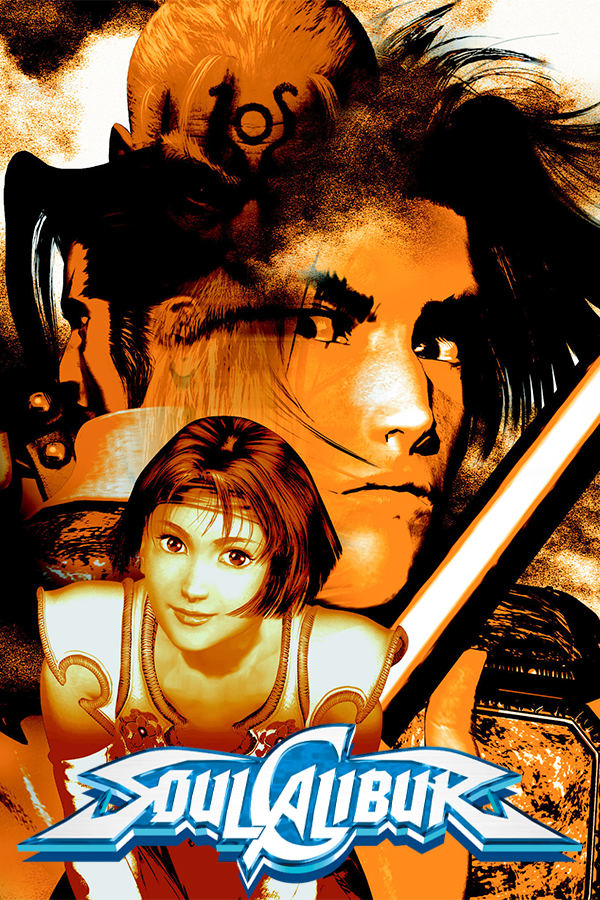
Sega-16: I remember reading that Namco wouldn’t really support the Dreamcast beyond Soul Calibur. It sold a million copies, but I think Mr. Driller was one of its only other titles and then and Namco shifted to making PlayStation 2 games.
Mike Fischer: Mr. Driller was not exactly a technical showcase. I still remember the ad campaign. “To get on top, you have to dig down deep.” Good old Mr. Driller. Those those platform decisions were not conversations that I was part of, but I do remember the team not wanting anything to do with Dreamcast. This was grounds up. They were just – and I don’t know if they didn’t want to make another Dreamcast game because they didn’t think the machine was going to be big enough or because it was difficult to develop for. It was probably a little bit of both.
Sega-16: I remember that I was like really hopeful that they would make more games, and then months went by and nothing was announced. Then, we got Mr. Driller, and I was like, “Oh no, this is it. They’re not going to make any more games.”
Mike Fischer: It was a really important milestone because I mean… enough years have gone by… I think it’s fine to say that there was a a very special partnership and arrangement between Namco and PlayStation. They were a very close third-party developer, and all of their games were exclusive. So, by going non-exclusive and putting that game on on Dreamcast, they they broke a very long-term special arrangement that the two companies had. That was a bridge that could never be rebuilt once it was undone.
Sega-16: Well, Namco had done that once for Sega and got burned. It went back because when Nintendo released the NES, Namco was one of the the big original companies to license. So, it got a sweetheart deal. Then when that deal expired and Namco went to renew, (founder) Nakamura expected to get the same deal. By then, however, the NES was hugely successful and Nintendo offered Namco the same deal it offered every other company. So, Nakamura got really mad and said he was going to go to NEC and Sega, and they released four games on the on the Genesis in 1990. That was at the absolute peak of the NES, so, he’s looking at all the money he’s left on the table, and he went back to Nintendo and took the regular deal. I think he just didn’t want to do that again.
Mike Fischer: That’s interesting. It was it was a different era back then because you had these guys like Nakamura from Namco, Tsujimoto from Capcom (the senior Tsujimoto), and Nakayama from Sega; and these were all guys who basically built – Nakayama didn’t found Sega, but effectively built it up – they built these companies up from nothing. I mean Nakamura especially, out of the ashes of World War II. I’m sure you know the story. He started by having like, one rocking horse coin-op machine on a department store roof, and if you ever met Nakamura, the guy was just like straight out of The Godfather. He was a tough old gangster. So, all of these old school arcade guys were just street fighters: tough, fearless, self-made men – very different from the typical image of the Japanese salary man, middle manager in the suit. I think that’s why the Japanese games companies have never really risen to the heights that they had during that era. And, of course, Yamauchi from Nintendo was from the same generation… what an incredible generation they all were! I think Nakamura was probably the last man standing… maybe the senior Tsujimoto is still alive. I’m not sure, but I was really happy I could at least see them. Nakayama’s still around and man, I haven’t seen him recently, but I’ve crossed paths with him over the years and he’s as feisty as ever. He has not lost his edge.
Sega-16: I think he’s around 93 now.
Mike Fischer: I ended up working with him again at Xbox when his team developed Blue Dragon with us and Sakaguchi. Yeah, that’s a good point. I didn’t remember if Nakayama was still out there, but I think he was a little bit younger than the others, too.
Sega-16: What was it like going back to Sega? I mean by then Sega had gone software only. They were now a part of Sammy. It wasn’t the same Sega it was before.
Mike Fischer: Oh, it was the same Sega it was before. Sega hadn’t changed a bit! (laughs). I don’t think so. I mean the U.S. team was very different, of course, because turnover is higher in the U.S. By that point, it was very much Peter Moore’s company, so that part I loved. I love working with Peter enough that I followed him to Xbox, but the Japan team was the same people by and large. It was my younger generation of peers who had now become more senior managers, but it was still very much the same, in good and bad. I remember going back and I was a vice-president. I went back, and they took my business card, and they’re rubbing it. I go, “What are you doing?” They replied, “There must be a mistake. They wrote ‘vice-president’ on your business card.”
So, it was wonderful to go back and and reconnect with those people. It was less pleasant to deal with Naka-san (Yuji Naka). I didn’t miss him and wasn’t happy to work with him again. But by and large, the Japan team were still the same because turnover is less in Japan. People are more focused on on long-term careers. So, a lot of the junior guys that I worked with were senior guys, and that part was wonderful. I liked that a lot.
I mean, there were some challenging times, right? Peter sent me back… I think it was in some of his interviews and in Console Wars. He sent me back to deliver this “Gamer’s Manifesto.” I’m like, “Hey, here are the trends in the U.S. Here are some of the things we need to pick up on. The gamer market has become more mature, M-rated games are important. It’s really good really important to have a multi-player component so people will play the games longer. You can’t just do arcade ports because people will buy the game on Tuesday and then return it by the weekend to GameStop to get the maximum money back, and then we’re just recycling secondhand sales.” I made the mistake of delivering it in Japanese. My Japanese wasn’t as good as it had been at its peak, but they got the point. And a few people like Toshihiro Nagoshi got it. I don’t think that he made Yakuza based on the input that I gave him. I think he already wanted to make Yakuza, but it was interesting that after Monkey Ball, his next game was Yakuza. Naka just went fucking ballistic on me, yelling at me, saying I wanted to make porno games. Literally, I’ve never seen someone foam at the mouth, but he had literally like foamy spit at the corners of his mouth. “How many games have you made? How many hits have you delivered? Who are you to come here and tell us?” And I’m like, “Dude, I’m just here to tell you where the hockey puck is going. These are the trends in the U.S. We are diverging in the games we make and the games that the market wants” and did not go wrong. Yeah, Naka-san was a challenge. That’s when he made Billy Hatcher and the Giant Egg, if you recall that.
Sega-16: Oh yeah, I remember that game, on GameCube.
Mike Fischer: Yeah, I remember looking at the game. He wanted to call it Giant Eggs, and we’re like, “Well, to lay a big egg in the U.S. just means a failure.”
Sega-16: True!
Mike Fischer: If you look back, like eggs played an odd part in a lot of Naka-san’s content. It’s like, “What’s the obsession with eggs?” Anyway, one of the guys on my team said, “Well, let’s call it Billy Hatcher” because it’s a hatching game with a cute character. The main character is the the boy, not the egg. Of course, Naka-san hated it. We called it Billy Hatcher and the Giant Egg, which he still hated. We at one point – I promise you, I am not making up this story; I have two witnesses! At one point, he he visited the U.S. Sometimes, I translated, and sometimes other people translated. He goes, “Well, I know another name for the boy wearing a rooster suit. Another name for rooster is cock. Can we call the game Giant Cock in English?”
Sega-16: Oh my god! I would have been half-tempted to agree, just to see what happened.
Mike Fischer: I should have. He is literally the most miserable person I have ever worked with in games or anything else in my life, just a a horrible human being, and you can quote me on that. As you know, he’s also now also a convicted felon.
Sega-16: Yeah, he has quite the colorful reputation.
Mike Fischer: Well, the thing for me was that I saw him at one point get up on stage and receive a lifetime achievement award for creating Sonic the Hedgehog. I saw him give an interview where he talked about why he decided to make Sonic blue, and, as you know, he wasn’t responsible for any of that. That was all Naoto Ōshima, and Ōshima-san is one of the most wonderful, kindhearted people you’ll ever meet in your life. The only reason that I agreed to talk to the guy who wrote Console Wars was because I wanted to set the record straight, and I’m really proud that it is now on the record. There were three of them right? There was Ōshima, who was the character creator…
Sega-16: … and there was Hirokazu Yasuhara.
Mike Fischer: Yeah, Yasuhara-san was the designer, and Naka-san was sort of like the team leader. I guess he was also the programmer. He certainly had had a hand in it.
Sega-16: There are so many people. I teach college game study courses, and the introductory course is all game history, and of course, we talk about Mario and Sonic. My students are all raised on Sonic, but they’re all 18 or 19, so they’re all post-console Sonic and they know Eugene. We talk about Rieko Kodama’s role and about Flicky – the flicky birds in the Sonic games. Most don’t know that he had his own game in 1984 that was designed by Yuji Ishii, and it’s where Ishii perfected the technique of making a fast side-scrolling screen. If it hadn’t been for Flicky, there might not be a Sonic the Hedgehog. There are all these other people that are so deeply involved in making a game. It’s like when Atari when people say that Nolan Bushnell was the founder of Atari. He wasn’t the only one! So, when they talk about like Naka being the creator of Sonic the Hedgehog, it just drives me crazy.
Mike Fischer: Well, he just was so malignant in trying to rewrite history. You know that Ōshima-san worked on Blinx the Cat. When we had the Xbox One debut, he was there, and Naka-san was invited and refused to sit in the same row as Ōshima-san because he accused Ōshima-san of trying to steal his credit.
The thing about Sega is, you know, again, they gave these talented women like Emiko and Kodama-san these chances to be creative leaders. They gave some goofy foreigner like me a chance to to really move up in the organization. They’re very un-Japanese, nontraditional in a lot of ways, which I don’t think they get enough credit for.
I did not realize Kodama-san had a role in Sonic. I always associate her with Phantasy Star, which is an incredible legacy on its own. What did she do on Sonic?
Sega-16: In the original Sonic the Hedgehog, Kodama did the background art, along with Jina Ishiwatari. Two years ago, I went to the Save the Games symposium in Rochester at the Strong Museum, and they had an exhibit on women in video games. She was one of the people that they honored. They had a monitor with an interview, and they had a little history on her. I was so pleased to see that they included her.
Mike Fischer: Oh, that’s wonderful! I wasn’t really involved with Sonic team at all, but I did tell the story. Actually, there’s an epilogue to it. I told the story in Console Wars about how I asked Ōshima-san where he got the inspiration from for Sonic, and he told me, “I put the head of Felix the Cat on the body of Mickey Mouse.” I was at dinner with him and other Sega guys, and I told the story. Ōshima-san just laughed, and he goes, “Actually, it wasn’t Mickey Mouse, it was Doraemon,” if you know the Japanese character Doraemon is. I think he must have just assumed that I didn’t know who Doraemon was at that time. So, the real story is he put the head of Felix the Cat on the body of Doraemon, but the story he told me was the head of Felix on the body of Mickey Mouse.
Sega-16: He westernized it.
Mike Fischer: Yeah, he westernized it for his American audience of one.
Sega-16: You were only at Sega this time for for a couple years. Why did you leave?
Mike Fischer: I was there there to basically put the Dreamcast to bed, but my real my real task was to shift Sega over from a first party to a third party. A big part of that was rebuilding the relationships with Nintendo and PlayStation and then forging the relationship with Xbox. It was tough all around, and I think credit goes to both Sony and Nintendo. Andy House was Vice-President of Marketing at Sony Computer Entertainment America (SCEA) at that time, and Peter had run some trade ads kind of making fun of the PlayStation shortage. I remember Andy calling me because I’ve known him from my Namco days, and he’s just yelling at me. He’s like, “This is not professional! We’re gentlemen in this industry! This is not how we treat each other.!” I had to call Andy back and say, “Listen, man. We have no money to market these games, you know? Can you help us out?” And he did. He gave us a million dollars of TV advertising for Virtua Fighter.
The sweetest thing was we we brought the the Sonic the Hedgehog mascot character up to Nintendo, and the Mario mascot character was there at the door of Nintendo of America and gave him a hug and welcomed him in. I think Arakawa-san from Nintendo of America was there. I’m not going to lie, I got a little teary-eyed when I saw that happen. It was really sweet. Of course, the Xbox guys danced from day one.
Look, after two years we had kind of run our course. Peter was on his way to Xbox, and he called me and said, “Listen, we need help in Japan.” He definitely underplayed the challenges, “There are challenges in Japan. Would you want to come work for us?” So, I loved Peter and still do. I had exhaustion of getting beaten up by Yuji Naka and dealing with the bureaucracy, and the chance to be an expat for Microsoft in Japan was also pretty tempting. So, there was a little bit of push and a little bit of pull, but working for Peter was a joy, and so that was a not a difficult decision to make.
Sega-16: I got to speak to him for my first book, Playing at the Next Level, which is on Sega of America’s history and and the games they made. That book ends with the with the Dreamcast being discontinued, so I got to speak with him. We scheduled the interview and then something came up at the last minute that forced him to leave to the airport. He actually had packed his bags and he had a driver outside, and I told him, “Well, we can reschedule. We can talk when you landed, or whatever.” He says, “No, I made a commitment. I told you it was today at this time. My driver can wait,” and he did the interview. completely. He didn’t rush it, and he answered all my questions. I sent him the transcript, and I think he went over it on the plane on the way back. He was just incredibly gracious and nice.
Mike Fischer: The thing about Peter is that he was a coach. He was an athletic coach, and it comes through in everything he does. The leadership that you need to motivate a soccer team is really not that different than what you need to to lead a business team. He did go on to lead Liverpool, but he as a coach, he was coaching college teams not millionaire star athlete teams, and so I think that same approach was why he was such a good leader back then. I was lucky. I got to work with both Tom and Peter, two incredibly talented leaders and influential people in my career as well.
Sega-16: The current Sega of America and Sega Europe CEO, Shuji Utsumi, has that Sega is not a retro company and that they should respect old intellectual properties, but that the developers should also think about innovation each of their products. You’ve had long tenures at Sega during its heyday. You’ve also been at companies in the modern era like Square/Enix, Microsoft, and Amazon. Looking back at what Sega does well and what they don’t do well, how would Sega be able to do this? Do you think Utsumi can bring the Sega of old to a new audience, a modern audience?
Mike Fischer: I think there are two components to to any kind of success in business. There’s strategy and leadership. Strategy is knowing what to do and and leadership is driving a team to accomplish that. Honestly, I think strategy is the easy part and getting it done is the hard part, right? I think Xbox is a great example where I thought people would disagree. I thought that Phil Spencer’s strategy for Xbox was great, but in spite of all that time and all that money, they never made a game after Halo and Gears of War that were just must-have games.
The interesting thing about Sega is I really do think that Shuji is the right leader for the team. I’ve known Shuji on and off for many years. We’re not close, but I’ve engaged with him when he was at Disney and when he was at Sega. The thing about Shuji is that he is very smart. He’s got a great strategy, but he’s also a leader. He’s very thoughtful. He’s a tough son-of-a-bitch. I think folks like Irimajiri and Sato-san were, if anything, maybe a little bit too gentle and a little bit too kind – not Shuji’s problem. He is tough and strong enough to make this elephant dance, and his philosophy is, “Yes, we do have a legacy that we’re we’re proud of, but we can’t just recycle that nostalgia.” I heard through a friend still at Sega that he actually had people watch the Console Wars documentary about how they turned around the company to give people a sense of urgency that they need to do it again. So, I’m pretty confident in that.
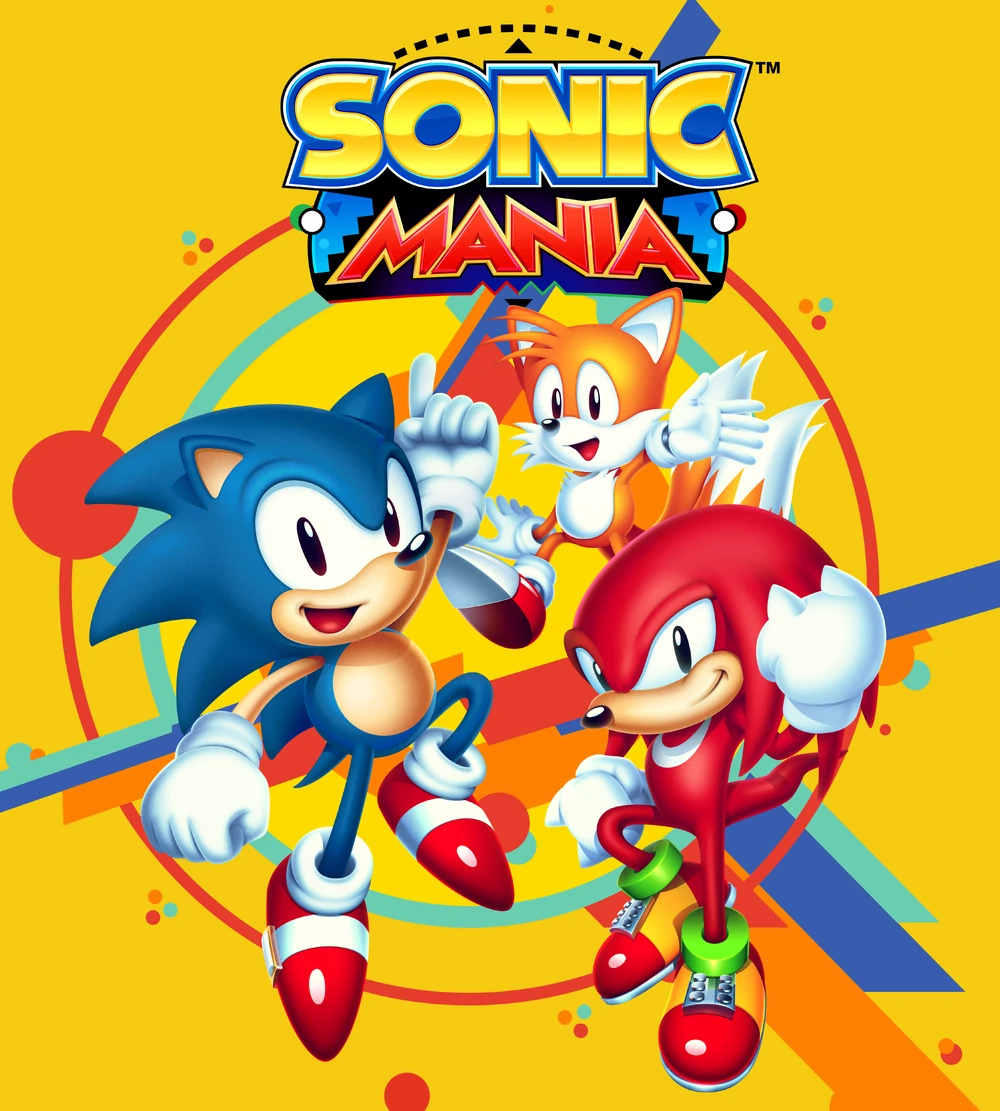
Although, I will say that it would be nice to see them bring some fresh blood to Sonic Team. I don’t think that they’ve ever really met the creative potential that Sonic really brings since that original generation of of 16-bit games and you know Takashi Iizuka has taken over from from Naka, and there’s some important handover legacy there, but the games just aren’t good. The only good Sonic game they had in a very long time was a fan-made game.
Sega-16: Sonic Mania.
Mike Fischer: Yeah, that’s the best Sonic game they’ve made, you know, since the 16-bit era and was from an external team, right? There’s a lesson there!
I’ve heard that they’re remaking Sonic CD, which would be wonderful. That was my favorite Sonic game. They’re going to have to innovate and create new IPs. It’s interesting to think about that the most successful game they’ve had in recent generations are in the Yakuza series, which was definitely not a made-for-consumer experience. It wasn’t part of that old legacy. The trailer for the new Yakuza game goes across like all of the 20th century. It’s really amazing. It’s almost like like the Godfather series. I think it starts out like a pre-World War II, like in the 1900s, and then they tell like the story of the game stuck in, and then the next chapter is like post-World War II or something. I look at it, I think, “Wow, they are they are taking the Yakuza series and innovating it in such an incredible way that I cannot wait to play it.” So, if that is a symbol of the new direction that they’re headed, then I’m pretty excited about it.
So, they can continue to work with this wonderful classic IP that they have, but they can’t rely on it. I do think that Shuji is is on the right track, and like I said, I think he’s the right person to do it. They could and put some crazy young person in charge of Sonic to do something really radical with it.
Sega-16: The guy behind Sonic Mania was by an Australian programmer named Christian Whitehead. He came to be known by Sega because he had done a fan port of Sonic CD for mobile, and the quality of that was so good that Sega noticed it. Where you’d normally expect a case-and-desist letter, they offered to work with him and did Sonic Mania. There’s another Sonic fan remake of Sonic Triple which came out for the Game Gear. It was recently remade by Noah Copeland, and he basically remade it like a Genesis game, 16-bit graphics and everything. It’s great.
Mike Fischer: Wow. Very cool.
Sega-16: It’s great. It’s amazing that some of the best Sonic work isn’t being done by Sega.
Mike Fischer: I will say one of the few redeeming stories I’ve heard about Naka was he became aware that there was this team of pirates in China that was taking his Dreamcast games and making bootleg versions for PlayStation. So, he bought their company and hired them to do all of his porting work. So, there is there is something to be said for that kind of out-of-the-box thinking, but I’m optimistic about Sega. I think they have good leadership. They have great IP. They still have talented people there. I’m very excited to see where they take it next.
Our thanks to Mr. Fischer for taking some time to chat with us.
Pingback: Os criadores de Sonic the Hedgehog criaram acidentalmente o melhor videogame de Natal de todos os tempos • jogosgratis.online
Pingback: 30 years ago, Sonic the Hedgehog’s creators made the best Christmas video game ever – Wukeer
Pingback: Φήμες για πλήρες remake του Sonic CD από τη SEGA.
Pingback: Is A Sonic CD Port Actually In Development? — Rectify Gaming
Pingback: Sonic CD Remake Rumor: Ex-Sega Exec Shares New Claim
Pingback: Mantan Bos Sega Sebut Yuji Naka Adalah Orang Paling Menyebalkan Yang Pernah Bekerja Dengannya | ReArchivu
Pingback: Yuji Naka’s Giant Egg – HitStop FM
Pingback: Os mascotes da Nintendo e da SEGA se abraçaram em uma reunião que definiu o período transicional da dona do Sonic! – NintendoBoy
Pingback: Rumour — Sonic CD Remake Is In The Pipeline – PlayStation Universe – Wukeer
Pingback: Sonic CD Remake is Reportedly in the Works, Says Mike Fischer
Pingback: “That Was My Favourite Sonic Game” – Former Sega Exec Says ‘Sonic CD’ Is Getting A Remake – Gamer Fridge
Pingback: Un remake de Sonic CD podría estar en desarrollo - psxb.us
Pingback: Former SEGA of America VP says he’s heard SEGA is remaking Sonic CD - My Nintendo News
Pingback: SEGA brought its Sonic mascot to Nintendo after it went third-party, was greeted by the Mario mascot and a hug
Pingback: Rumor: SEGA Planning To Remake Sonic CD – NintendoSoup
Pingback: Former Sega Executive Calls 'Sonic The Hedgehog' Creator Yuji Naka "A Horrible Human Being" And Shared A Hilarious Story Of Their Time Working At The Company - FandomFire
Pingback: Sonic co-creator Yuji Naka is "the most miserable person I have ever worked with," says former Sega VP | HXC PC GAMING
Pingback: Yuji Naka Tried To Give Billy Hatcher And The Giant Egg A Much Worse Name – Wukeer
Pingback: Yuji Naka Tried To Give Billy Hatcher And The Giant Egg A Much Worse Name - GigaPlayLaps
Pingback: Billy Hatcher and the Giant Egg was originally just going to be called Giant Egg - My Nintendo News
Pingback: Former SEGA executive: Yuji Naka is a “miserable person” and “a horrible human being” - My Nintendo News
Pingback: Sonic creator wanted to call Billy Hatcher And The Giant Egg a very filthy name – 🔑 Key Forge Store
Pingback: “I Am Not Making Up This Story” – You Won’t Believe What Yuji Naka Wanted To Call Billy Hatcher And The Giant Egg – Gamer Fridge
Pingback: “The Most Miserable Person I Have Ever Worked With” – This Former Sega Exec Has A Dim View Of Yuji Naka – Gamer Fridge